Maintenance Mode: Some services may turn out to be unavailable. We apologize for the inconvenience!

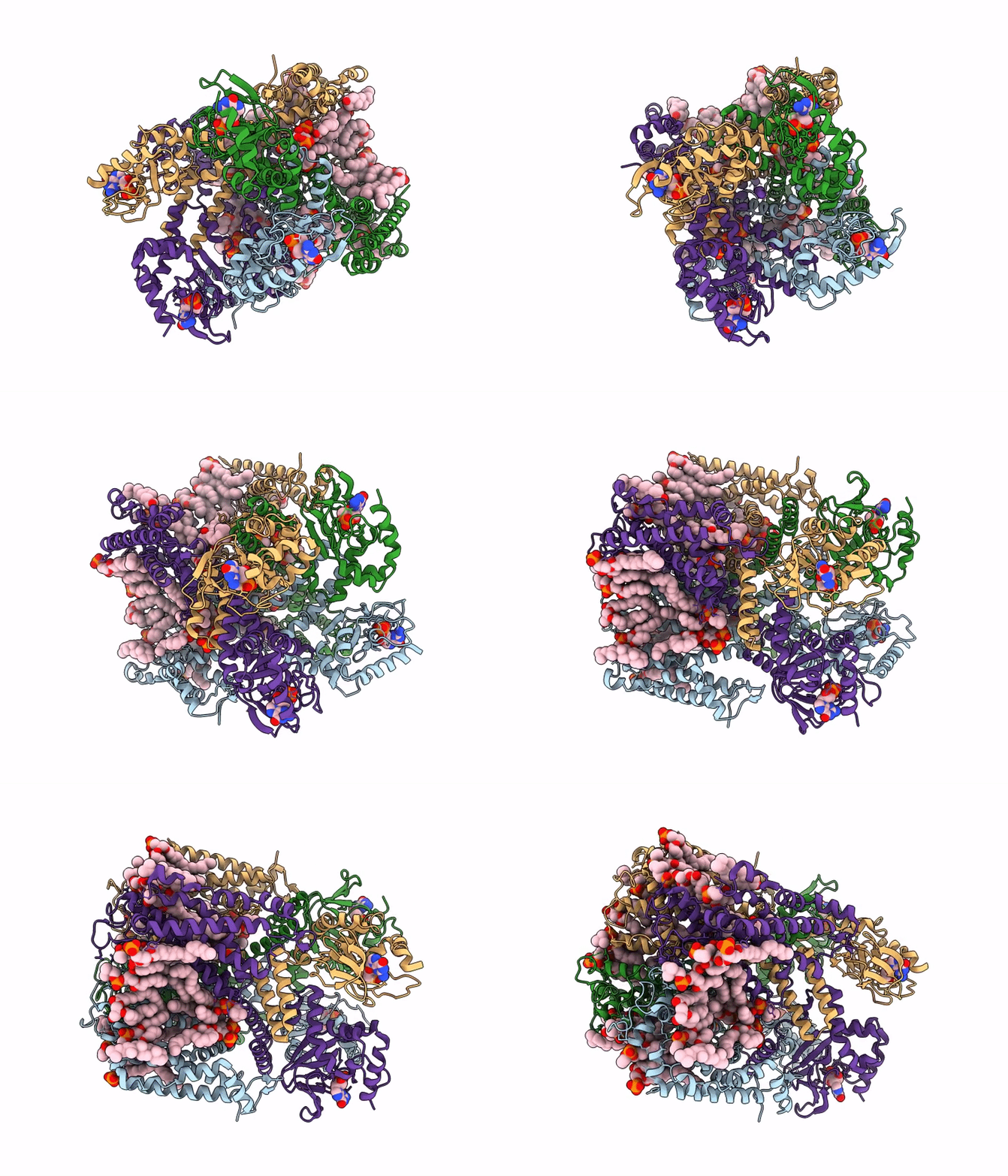
9ZPZ image
Deposition Date 2025-12-17
Release Date 2026-01-14
Last Version Date 2026-01-14
Entry Detail
PDB ID:
9ZPZ
Title:
CNGA1 channel intermediate state in nanodisc with brain PIP2 cGMP-bound
Biological Source:
Source Organism(s):
Homo sapiens (Taxon ID: 9606)
Expression System(s):
Method Details:
Experimental Method:
Resolution:
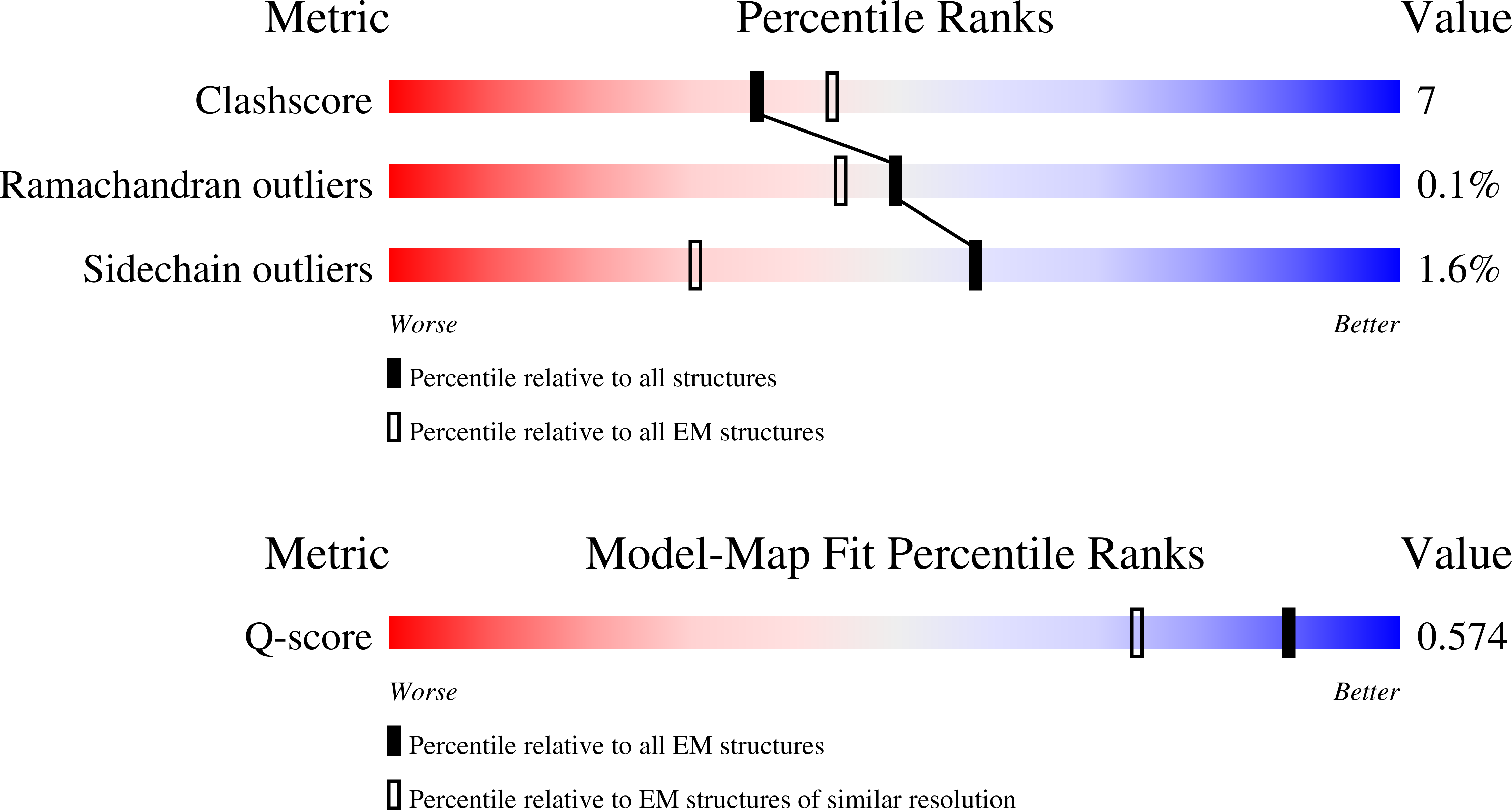
2.64 Å
Aggregation State:
PARTICLE
Reconstruction Method:
SINGLE PARTICLE
Macromolecular Entities
Structures with similar UniProt ID
Protein Blast
Polymer Type:polypeptide(L)
Molecule:Cyclic nucleotide-gated channel alpha-1
Gene (Uniprot):CNGA1
Chain IDs:A, B, C, D
Chain Length:559
Number of Molecules:4
Biological Source:Homo sapiens
Primary Citation
PIP2 Binding at Allosteric Site Blocks Activation in Human Rod CNG Channels.
Biorxiv ? ? ? (2025)
PMID: 41473327 DOI: 10.64898/2025.12.19.695557

Abstact

Phosphatidylinositol-4,5-bisphosphate (PIP2) is a ubiquitous signaling lipid that regulates multiple ion channels. In human cyclic nucleotide-gated (CNG) channels, including the rod photoreceptor channel, PIP2 has been reported to exert inhibitory effects, but the underlying mechanism has remained unclear. Because this inhibition lowers the apparent cGMP sensitivity of rod CNG channels, it can play a key role in controlling the light sensitivity and dynamic range of rod photoreceptors. Here we report how PIP2 modulates the function of human CNGA1 channels, the major subunit of human rod photoreceptor CNG channels. Ensemble ion flux assays with liposome-reconstituted purified CNGA1 channels demonstrated robust inhibition by PIP2 via a reduction in apparent cGMP sensitivity, and single-channel recordings revealed PIP2 reduces the channel's open probability without altering unitary conductance. To uncover the structural basis, we determined cryo-EM structures of CNGA1 in lipid nanodiscs under multiple ligand conditions. In PIP2-free conditions, closed, intermediate, and open conformations were observed, whereas in the presence of PIP2, the open state was absent. Density consistent with bound PIP2 was detected at inter-protomer grooves between the voltage-sensing and pore domains indicating that PIP2 binding stabilizes non-conductive conformations by sterically preventing C-linker elevation and outward movement of helix S6, conformational changes needed for pore dilation. Collectively, our results establish a structural mechanism for PIP2-mediated inhibition of rod CNG channels, define a mechanistic framework for phosphoinositide control of ligand-gated channels across the CNG superfamily, and provide an inhibitory allosteric binding site for future drug targeting in this channel family.

Legend

Protein

Chemical

Disease

Primary Citation of related structures
Feedback Form
Name
Email
Institute
Feedback