9ZNN image
Deposition Date 2025-12-14
Release Date 2026-02-04
Last Version Date 2026-02-04
Entry Detail
PDB ID:
9ZNN
Keywords:
Title:
Cryo-EM structure of human UDP-N-acetylglucosamine-dolichyl-phosphate N-acetylglucosaminephosphotransferase (DPAGT1) in complex with APPB
Biological Source:
Source Organism(s):
Homo sapiens (Taxon ID: 9606)
Expression System(s):
Method Details:
Experimental Method:
Resolution:
2.90 Å
Aggregation State:
PARTICLE
Reconstruction Method:
SINGLE PARTICLE
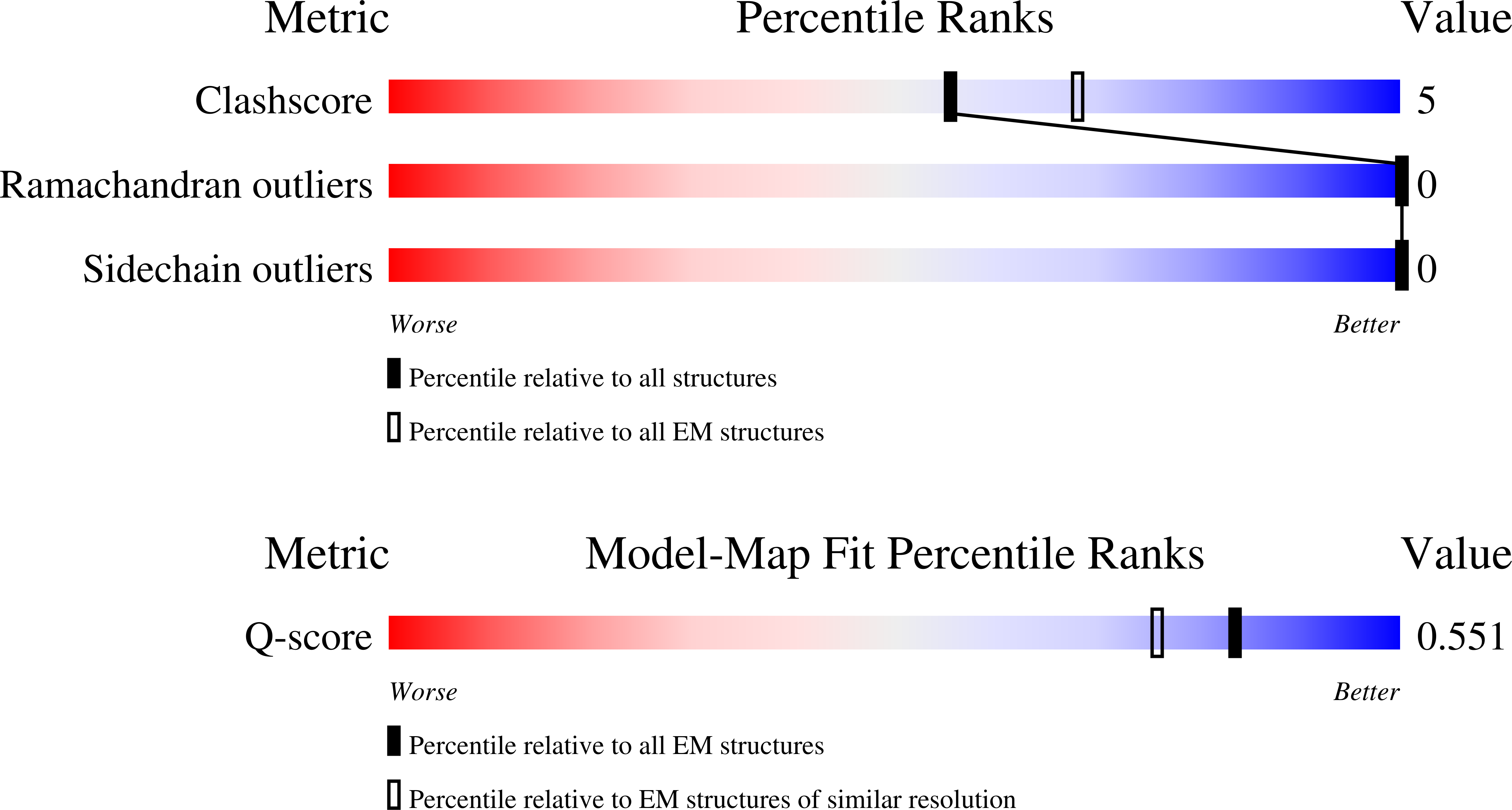
Macromolecular Entities
Structures with similar UniProt ID
Protein Blast
Polymer Type:polypeptide(L)
Molecule:UDP-N-acetylglucosamine--dolichyl-phosphate N-acetylglucosaminephosphotransferase
Gene (Uniprot):DPAGT1
Chain IDs:A, B
Chain Length:419
Number of Molecules:2
Biological Source:Homo sapiens
Ligand Molecules
Primary Citation
Structures of bacterial and human phosphoglycosyltransferases bound to a common inhibitor inform selective therapeutics.
Biorxiv ? ? ? (2025)
PMID: 41446129 DOI: 10.64898/2025.12.16.694696

Abstact

Glycoconjugates facilitate myriad biological processes, including cell-cell recognition and immune response, and they are generated by enzymes that transfer glycans. The orthologs MraY and DPAGT1 are dimeric phosphoglycosyltransferases involved in oligosaccharide biosynthesis for either bacterial peptidoglycan or eukaryotic N-linked glycans, respectively. Both enzymes play central regulatory roles, making them attractive targets for antibacterial and anticancer therapies. In our prior studies, a muraymycin A1-derived inhibitor termed APPB (aminouridyl phenoxypiperidinbenzyl butanamide) was developed. It exhibits sub-100 nM IC50 values against both MraY and DPAGT1 and has demonstrated efficacy against DPAGT1-dependent cancers, making it an excellent starting point for next-generation small molecules. To guide inhibitor development, we determined cryo-EM structures of APPB bound to MraY or DPAGT1 at 2.9 Å resolution using single-particle analysis. The structures reveal that APPB, composed of a nucleoside, a central amide, and a lipid-mimetic, adopts two conformations in each protein, which correlate with local hydrogen-bonding contacts of the central amide carbonyl. Examination of the amide carbonyl environments guides conformer selection for future DPAGT1-targeting anticancer agents. Further, comparisons of APPB-bound geometries and nucleoside interactions inform opportunities for antibacterial agents targeting MraY. Overall, our study provides design principles for MraY- or DPAGT1-specific drugs and motivates the utility of simultaneously characterizing inhibitor-bound orthologs for selective therapeutics.

Legend

Protein

Chemical

Disease

Primary Citation of related structures
Feedback Form
Name
Email
Institute
Feedback