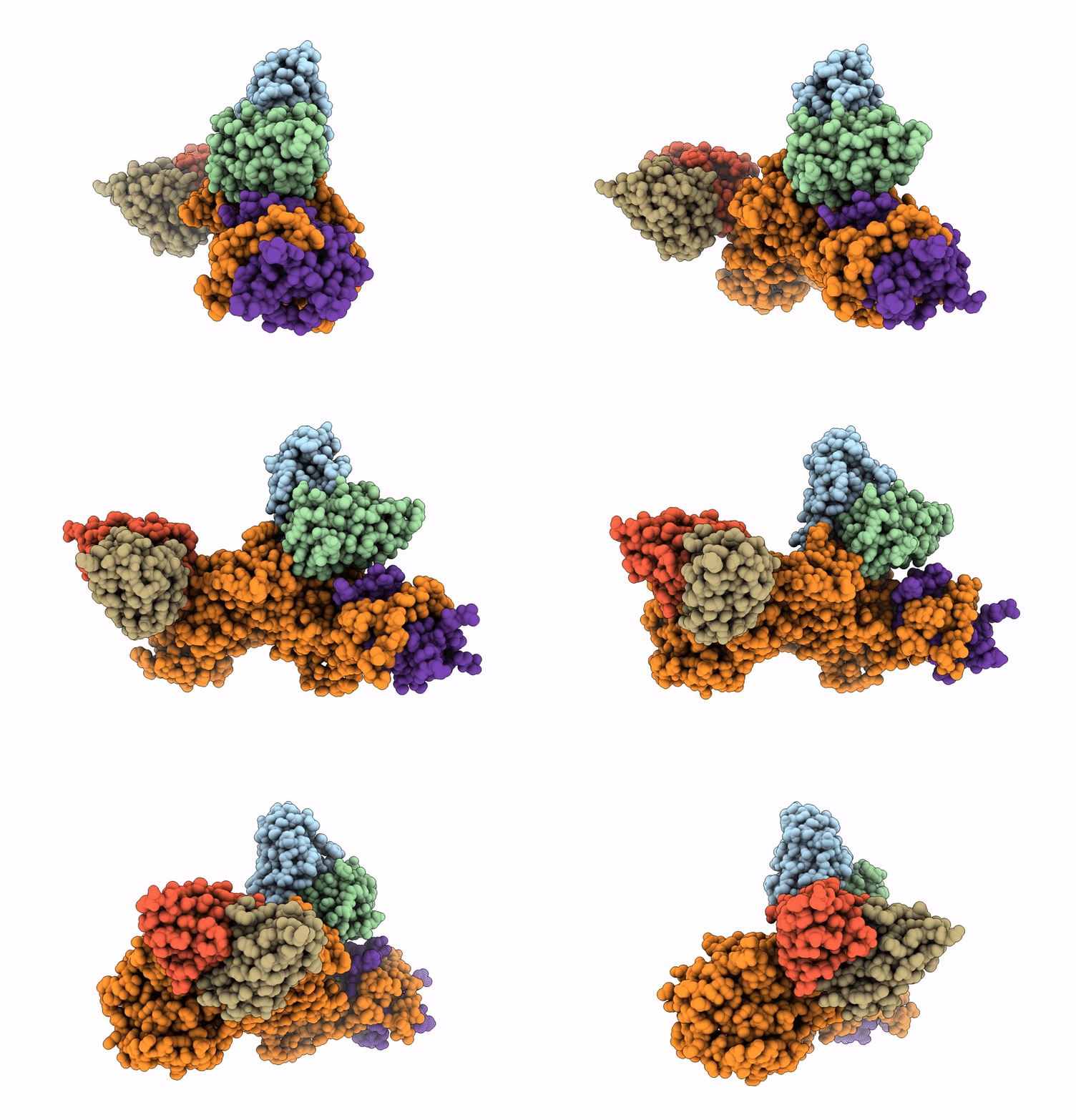
9Z3Q image
Deposition Date 2025-11-07
Release Date 2025-12-10
Last Version Date 2026-01-21
Entry Detail
PDB ID:
9Z3Q
Keywords:
Title:
Cryo-EM structure of KSHV glycoprotein gHgL in complex with MLKH3 and MLKH10 FABs
Biological Source:
Source Organism(s):
Expression System(s):
Method Details:
Experimental Method:
Resolution:
3.51 Å
Aggregation State:
PARTICLE
Reconstruction Method:
SINGLE PARTICLE
Macromolecular Entities
Polymer Type:polypeptide(L)
Molecule:MLKH10 Light chain FV
Chain IDs:A
Chain Length:112
Number of Molecules:1
Biological Source:Mus musculus
Polymer Type:polypeptide(L)
Molecule:MLKH10 Heavy chain FV
Chain IDs:B
Chain Length:121
Number of Molecules:1
Biological Source:Mus musculus
Polymer Type:polypeptide(L)
Molecule:MLKH3 Light chain FV
Chain IDs:C
Chain Length:107
Number of Molecules:1
Biological Source:Mus musculus
Polymer Type:polypeptide(L)
Molecule:MLKH3 Heavy chain FV
Chain IDs:D
Chain Length:122
Number of Molecules:1
Biological Source:Mus musculus
Structures with similar UniProt ID
Protein Blast
Polymer Type:polypeptide(L)
Molecule:Envelope glycoprotein H
Gene (Uniprot):gH
Chain IDs:E
Chain Length:728
Number of Molecules:1
Biological Source:Human gammaherpesvirus 8
Structures with similar UniProt ID
Protein Blast
Polymer Type:polypeptide(L)
Molecule:Envelope glycoprotein L
Gene (Uniprot):gL
Chain IDs:F
Chain Length:176
Number of Molecules:1
Biological Source:Human gammaherpesvirus 8
Ligand Molecules
Primary Citation
Monoclonal neutralizing antibodies elicited by infection with Kaposi sarcoma-associated herpesvirus reveal critical sites of vulnerability on gH/gL.
Plos Pathog. 22 e1013772 e1013772 (2026)
PMID: 41499715 DOI: 10.1371/journal.ppat.1013772

Abstact

Kaposi sarcoma-associated herpesvirus (KSHV) is an oncogenic virus that causes Kaposi sarcoma, primary effusion lymphoma and multicentric Castleman disease. A vaccine that prevents KSHV infection or serves in the treatment of KSHV-related diseases represents a critical unmet need, however, the types of immune responses a vaccine should elicit have not been well defined. The gH/gL glycoprotein complex is an important target of KSHV-neutralizing antibodies, but the epitope specificities targeted by these antibodies remain unknown. Here, we isolated 12 gH/gL-specific monoclonal antibodies (mAbs) from KSHV-infected donors and performed structure/function analyses. These mAbs bind recombinant gH/gL with nanomolar affinities and epitope binning analyses revealed that the mAbs bind to 5 epitope clusters on gH/gL. Seven mAbs were able to neutralize KSHV infection of epithelial cell lines. Two potent neutralizing mAbs mapped to the EphA2 binding site as determined by inhibition of the receptor-ligand interaction and negative stain electron microscopy (nsEM) of the mAb/gH/gL complex. The epitopes of other neutralizing mAbs targeting novel sites of vulnerability were determined by a combination of cryogenic electron microscopy and nsEM. Together, these mAbs help to define the relevant epitope targets for KSHV vaccine design, have utility in understanding the role of antibodies in preventing KSHV infection, enable the development of immunotherapy approaches, and provide valuable tools to understand the molecular details of the KSHV entry process.

Legend

Protein

Chemical

Disease

Primary Citation of related structures
Feedback Form
Name
Email
Institute
Feedback