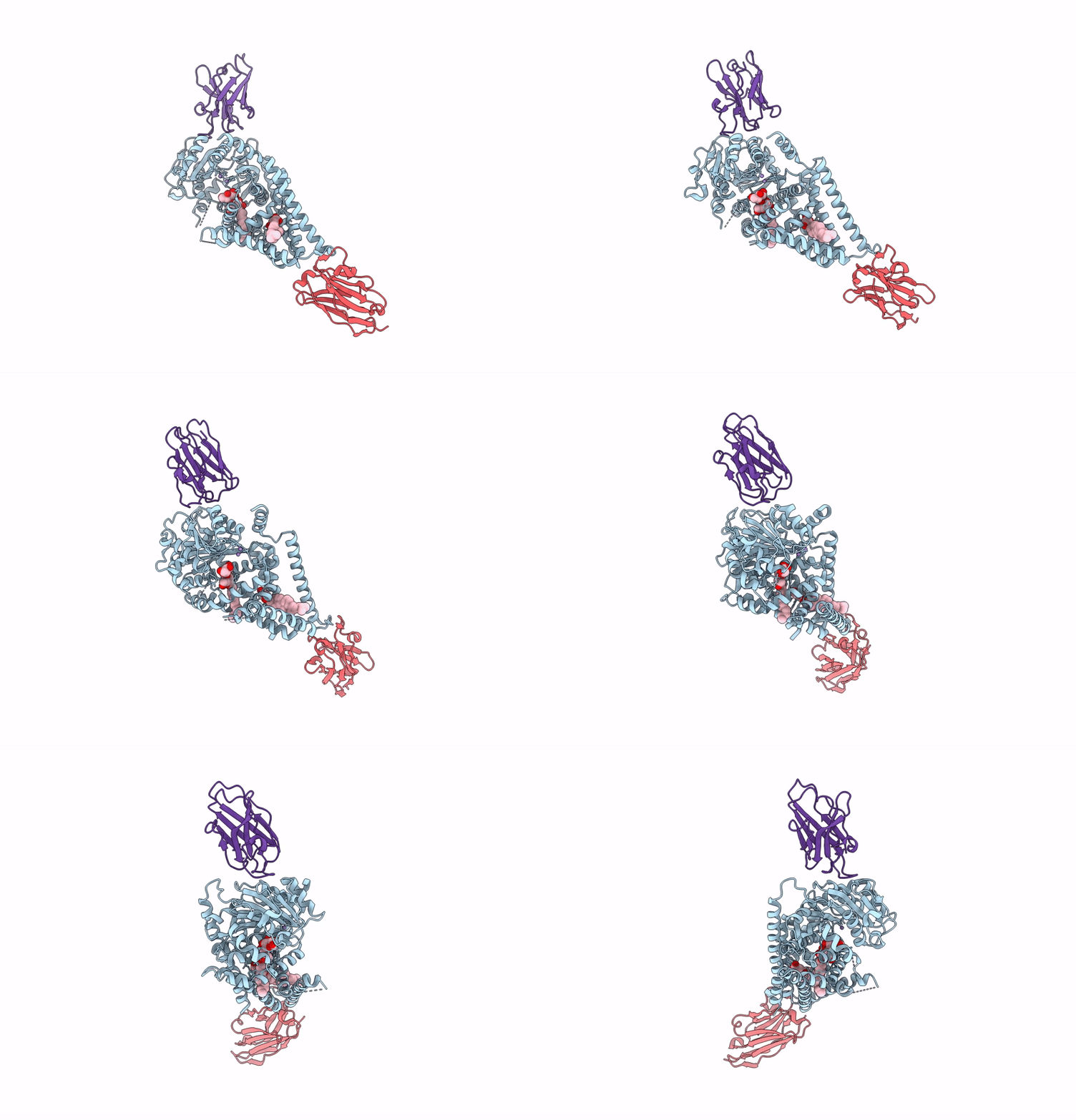
9YQ2 image
Deposition Date 2025-10-15
Release Date 2025-12-10
Last Version Date 2025-12-10
Entry Detail
PDB ID:
9YQ2
Title:
Chlorella virus hyaluronan synthase bound to DDM
Biological Source:
Source Organism:
Method Details:
Experimental Method:
Resolution:
2.90 Å
Aggregation State:
PARTICLE
Reconstruction Method:
SINGLE PARTICLE
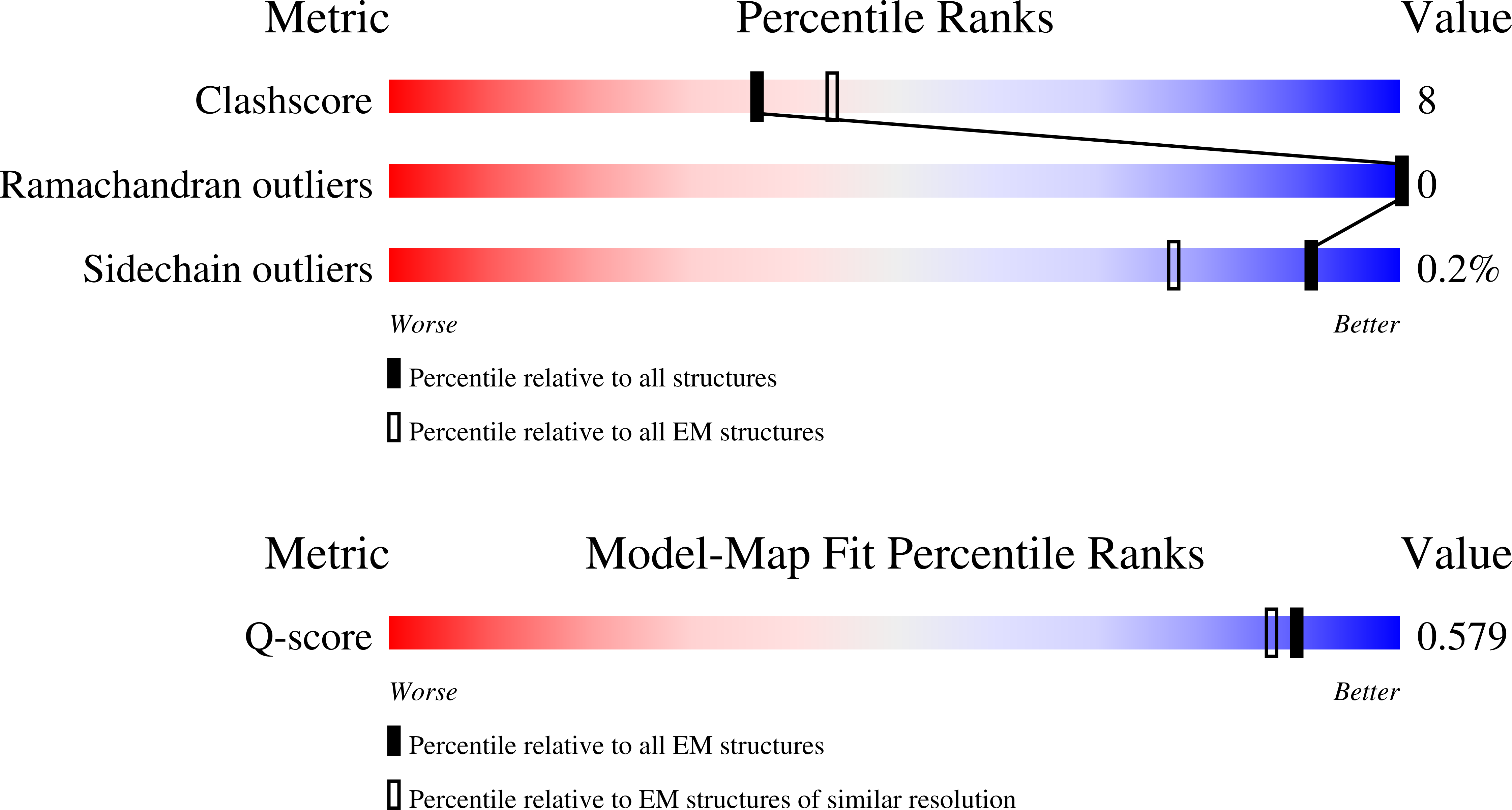
Macromolecular Entities
Polymer Type:polypeptide(L)
Molecule:Hyaluronan synthase
Chain IDs:A
Chain Length:574
Number of Molecules:1
Biological Source:Paramecium bursaria Chlorella virus CZ-2
Polymer Type:polypeptide(L)
Molecule:nanobody Nb872
Chain IDs:B
Chain Length:134
Number of Molecules:1
Biological Source:Lama glama
Polymer Type:polypeptide(L)
Molecule:nanobody Nb881
Chain IDs:C
Chain Length:134
Number of Molecules:1
Biological Source:Lama glama
Primary Citation
Insights into substrate binding and utilization by hyaluronan synthase.
Biorxiv ? ? ? (2025)
PMID: 41280022 DOI: 10.1101/2025.10.17.683186

Abstact

Hyaluronan (HA) is an essential polysaccharide of the vertebrate extracellular matrix. It serves as an adhesive, lubricant, signaling molecule, and spatial filler without which embryogenesis would not complete. HA is synthesized by a membrane-integrated glycosyltransferase (HAS) that polymerizes UDP-activated N-acetylglucosamine and glucuronic acid (GlcA) in an alternating fashion. The nascent HA chain is secreted across the plasma membrane during this process. How HAS couples these tasks remains poorly understood. Here, we employ a combination of structural biology, biochemistry and glycobiology to delineate how HAS recognizes and utilizes UDP-GlcA. Using single-particle cryo-EM, we reveal a two-step process by which HAS binds its substrate UDP-GlcA. Prior to proper insertion into the catalytic pocket, the substrate is bound in a proofreading pose that may increase substrate selectivity. This state is accompanied by conformational changes of active site residues surrounding the UDP-binding pocket and involves a pair of basic residues that sense the substrate's carboxyl group. Further, we establish that HAS is unable to catalyze UDP-GlcA turnover in the absence of an acceptor sugar, emphasizing the role of a priming GlcNAc in glycosyl transfer. Lastly, cryo-EM snapshots of a dodecylmaltoside molecule trapped in the active site provide novel insights into substrate promiscuity. Here, our studies demonstrate that HAS catalyzes semi-selective GlcA-transfer to non-canonical β-linked acceptors.

Legend

Protein

Chemical

Disease

Primary Citation of related structures
Feedback Form
Name
Email
Institute
Feedback