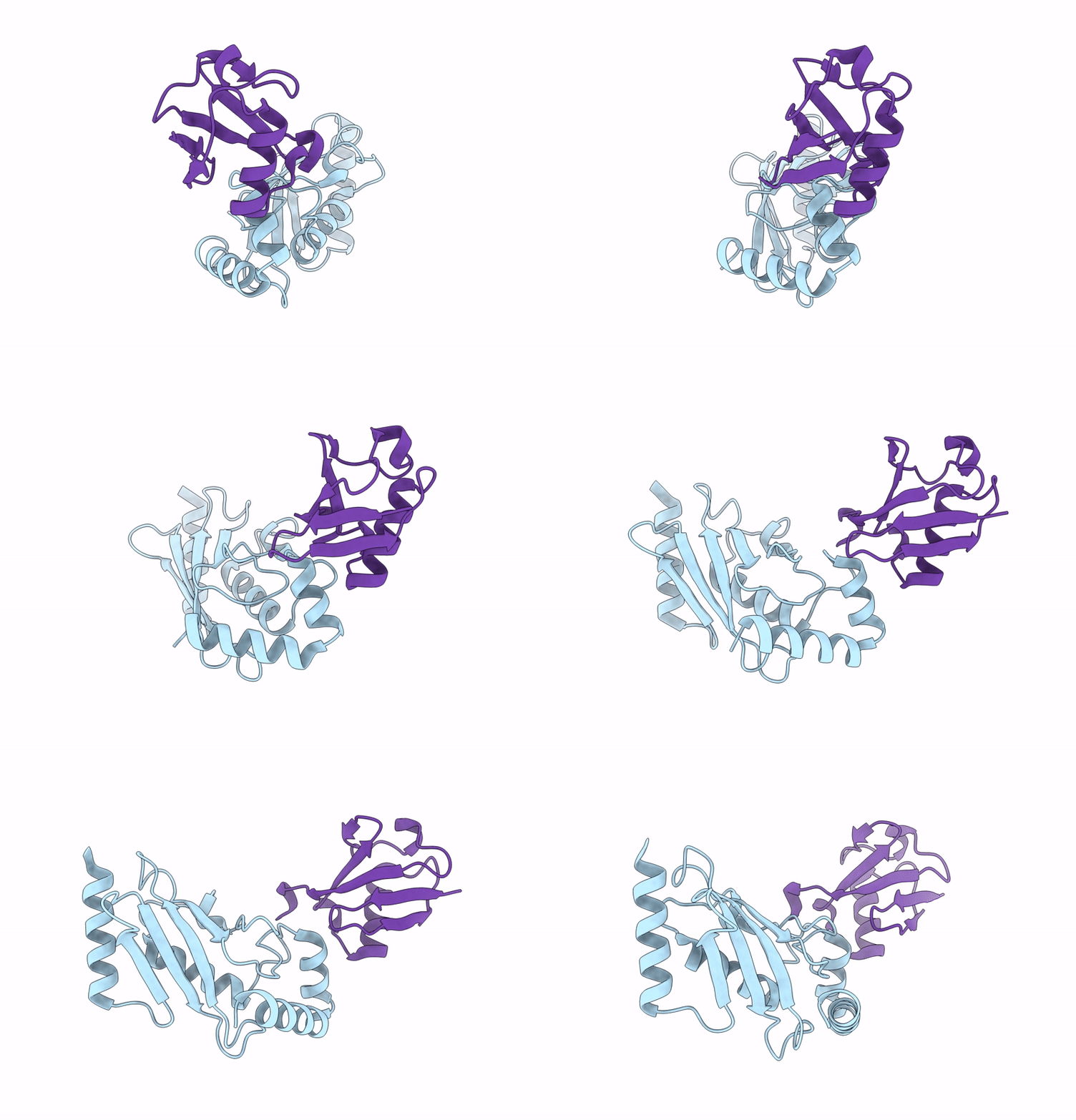
9YEA image
Deposition Date 2025-09-23
Release Date 2025-11-05
Last Version Date 2025-11-12
Entry Detail
PDB ID:
9YEA
Keywords:
Title:
Structure of the isopeptide bond-linked UbcH5b~Ubiquitin conjugate complex for an M1K/C85K UbcH5b mutant
Biological Source:
Source Organism:
Homo sapiens (Taxon ID: 9606)
Method Details:
Experimental Method:
Resolution:
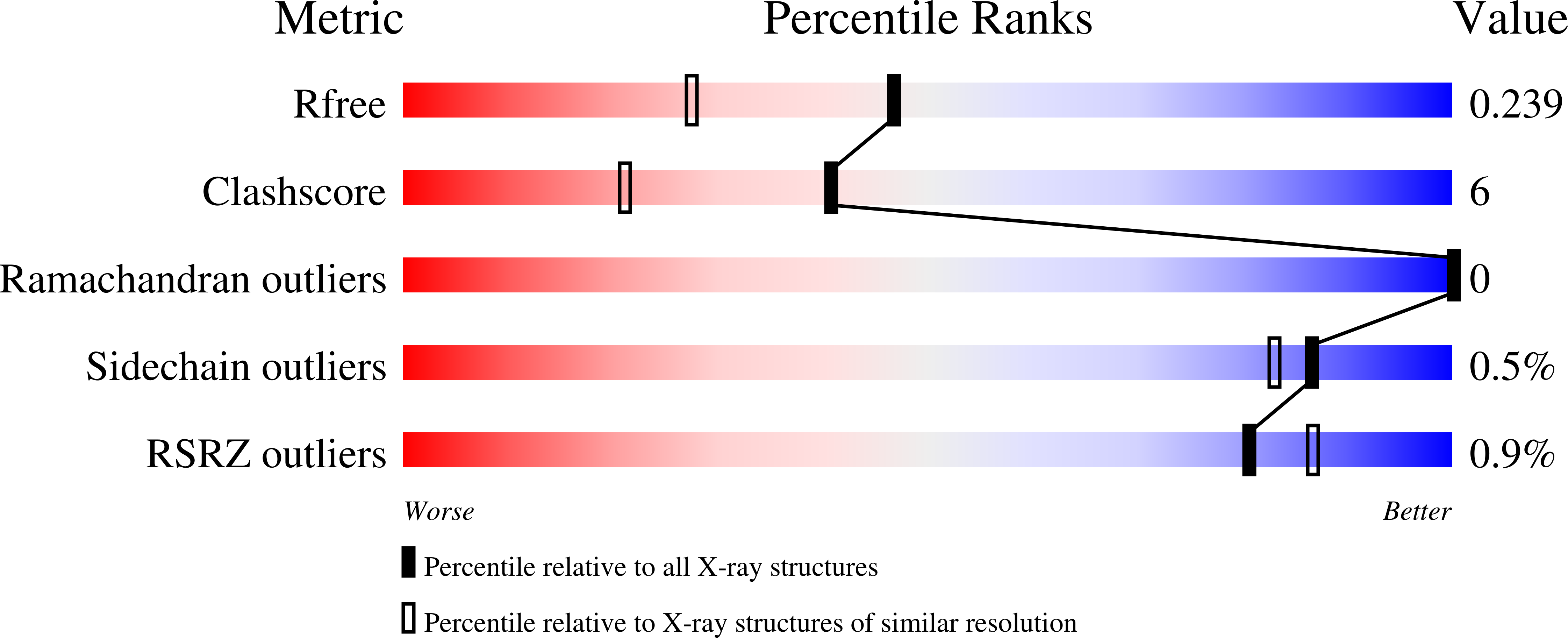
1.83 Å
R-Value Free:
0.23
R-Value Work:
0.19
R-Value Observed:
0.20
Space Group:
P 1 21 1
Macromolecular Entities
Structures with similar UniProt ID
Protein Blast
Polymer Type:polypeptide(L)
Molecule:Ubiquitin-conjugating enzyme E2 D2
Gene (Uniprot):UBE2D2
Mutagens:M1K, C85K
Chain IDs:A
Chain Length:152
Number of Molecules:1
Biological Source:Homo sapiens
Structures with similar UniProt ID
Protein Blast
Polymer Type:polypeptide(L)
Molecule:Ubiquitin
Gene (Uniprot):UBC
Chain IDs:B
Chain Length:76
Number of Molecules:1
Biological Source:Homo sapiens
Primary Citation
Functional and structural analyses of UbcH5 mutants with enhanced binding to the E3 ubiquitin ligase CHIP.
Biochem.Biophys.Res.Commun. 789 152873 152873 (2025)
PMID: 41167006 DOI: 10.1016/j.bbrc.2025.152873

Abstact

The E3 ubiquitin ligase CHIP ubiquitinates substrates in chaperone-dependent or -independent manners. Structural studies, particularly by cryo-electron microscopy, would aid in understanding the mechanisms governing CHIP-mediated ubiquitination. Key among necessary components is the E2 enzyme UbcH5b, which facilitates the transfer of ubiquitin from the E2∼ubiquitin conjugate to a target lysine residue. However, the affinity of CHIP for UbcH5b is approximately 4 μM, presenting a challenge for cryo-electron microscopy, which is typically conducted at concentrations below 5 μM. Herein, we report structure-guided UbcH5b mutants that substantially improve the affinity for CHIP. Bio-layer interferometry demonstrates a ten-fold improvement in affinity, while our crystal structure of mutant UbcH5b in complex with CHIP indicates conservation of the canonical E2/E3 interaction. E2∼ubiquitin conjugate formation assays and a mutant, isopeptide-linked E2∼ubiquitin conjugate structure demonstrate compatibility of the mutants with the E1 enzyme. Assays of CHIP auto-ubiquitination and CHIP-mediated ubiquitination of Hsp70 demonstrate full compatibility of the mutants with all components of the ubiquitination cascade. Thus, our structure-guided UbcH5b mutants retain native activity profiles and structures while improving the affinity for CHIP, thereby enabling future structural studies.

Legend

Protein

Chemical

Disease

Primary Citation of related structures
Feedback Form
Name
Email
Institute
Feedback