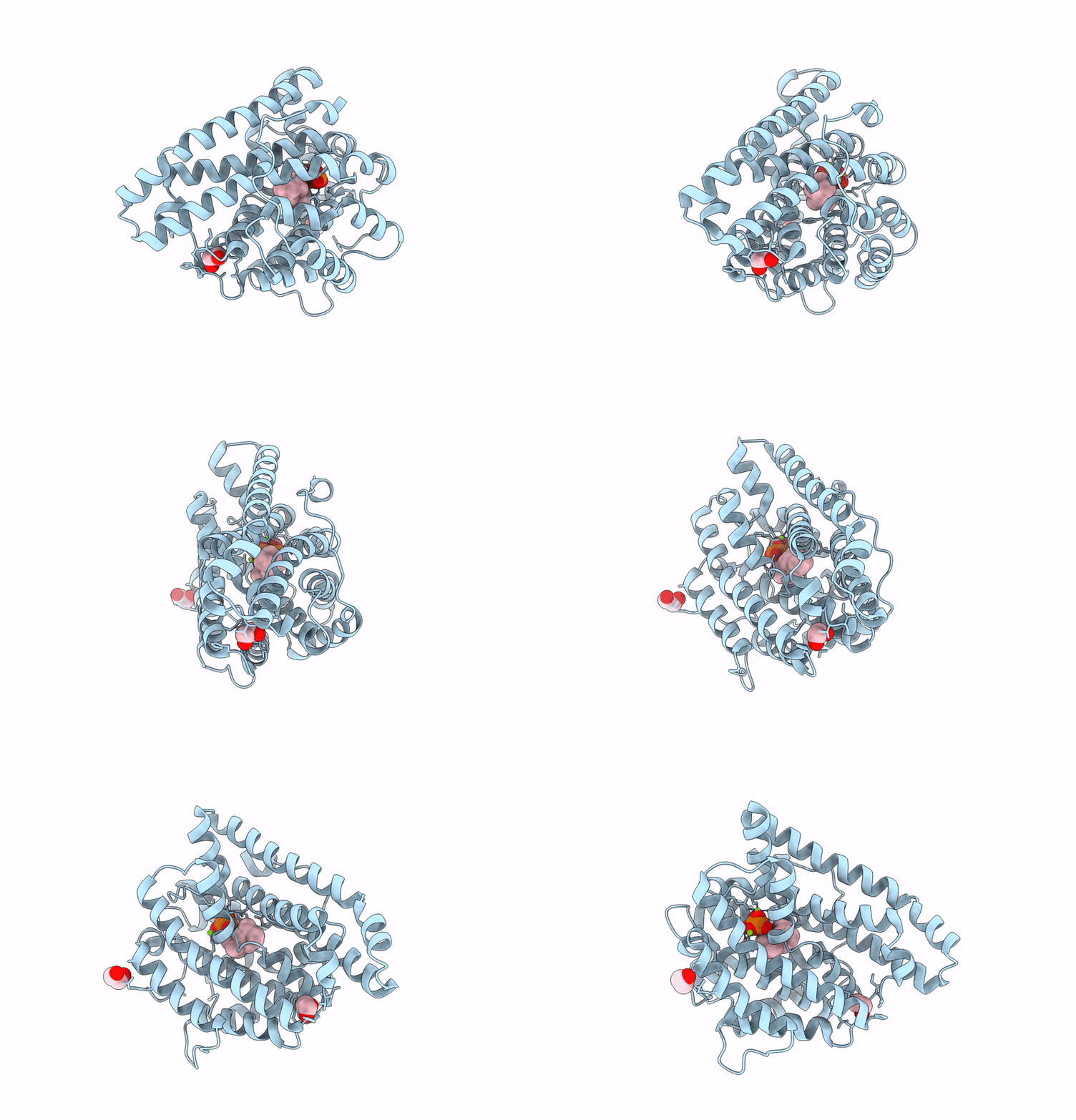
9Y6M image
Deposition Date 2025-09-08
Release Date 2025-12-17
Last Version Date 2025-12-31
Entry Detail
PDB ID:
9Y6M
Keywords:
Title:
Avermitilol synthase: Complex with Mg, inorganic pyrophosphate, and adamantane cation
Biological Source:
Source Organism(s):
Expression System(s):
Method Details:
Experimental Method:
Resolution:
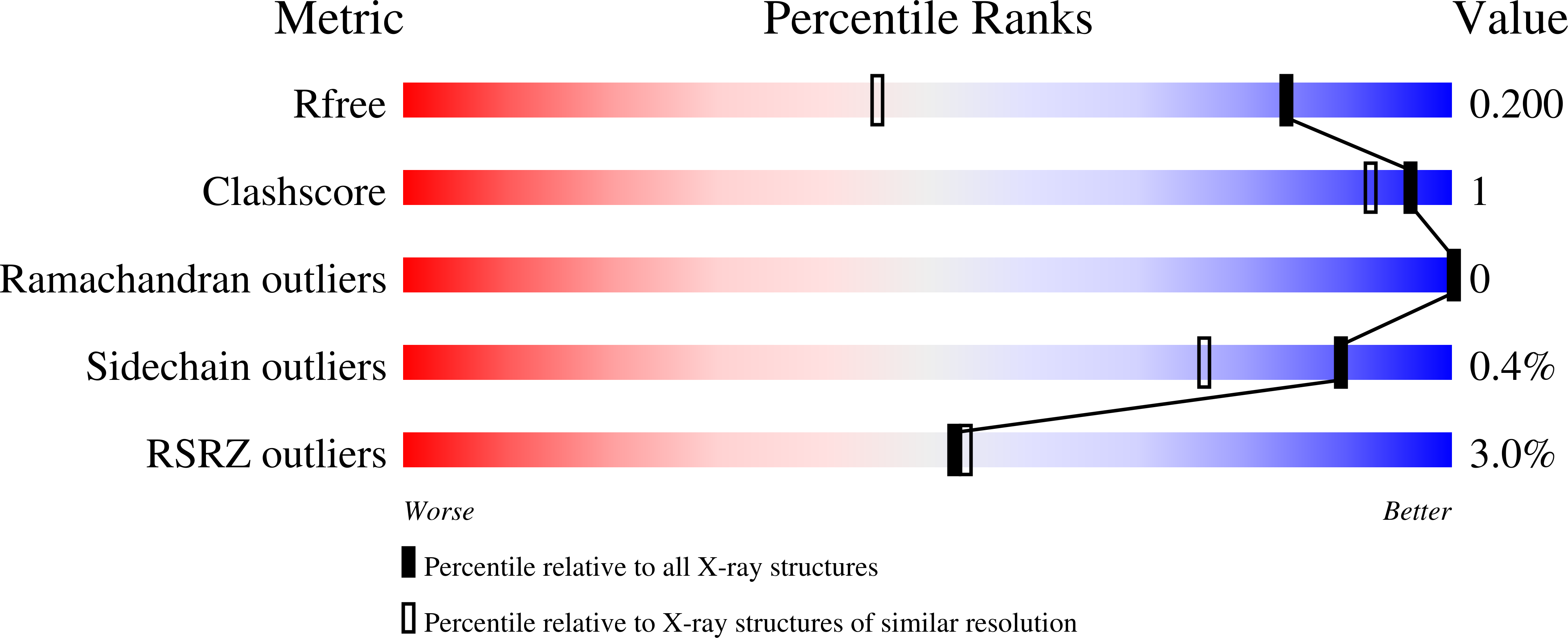
1.42 Å
R-Value Free:
0.20
R-Value Work:
0.15
R-Value Observed:
0.16
Space Group:
C 1 2 1
Macromolecular Entities
Structures with similar UniProt ID
Protein Blast
Polymer Type:polypeptide(L)
Molecule:Avermitilol synthase
Gene (Uniprot):tpc1
Chain IDs:A
Chain Length:338
Number of Molecules:1
Biological Source:Streptomyces avermitilis
Primary Citation
Structure and Mechanism of Avermitilol Synthase, a Sesquiterpene Cyclase That Generates a Highly Strained 6-6-3 Tricyclic Alcohol.
Biochemistry 64 4830 4840 (2025)
PMID: 41326024 DOI: 10.1021/acs.biochem.5c00565

Abstact

Avermitilol synthase from Streptomyces avermitilis (SaAS) is a high-fidelity class I terpene cyclase that converts farnesyl diphosphate into a highly strained, 6-6-3 tricyclic sesquiterpene alcohol. The mechanism of avermitilol formation proceeds through a 10-3 bicyclic intermediate, bicyclogermacrene, which undergoes proton-initiated anti-Markovnikov addition to two separate C═C bonds in a transannulation mechanism that forms the 6-6-3 tricyclic skeleton, with quenching by water to yield avermitilol. Small amounts of a side product, viridifloral, result from Markovnikov addition to one of the reactive C═C bonds. Here, we present enzymological studies of SaAS to establish the substrate scope and metal ion dependence for catalysis, and we present crystal structures of SaAS complexed with a variety of ligands that partially mimic carbocation intermediates in catalysis. Interestingly, these structures show that two water molecules remain trapped in a polar crevice in the active site regardless of the ligand bound. Structure-activity relationships for site-specific mutants yield key insight into the catalytic importance of these trapped water molecules. Specifically, T215 normally hydrogen bonds with water molecule W1, but the T215V substitution breaks this hydrogen bond and causes W1 to shift by 1.3 Å to form a hydrogen bond with W300. Avermitilol generation is completely lost in this mutant, but the generation of viridifloral and another side product is enhanced. We conclude that the T215V substitution causes water molecule W1 to align for reaction with the tertiary and not the secondary carbon in the reactive C═C bond of bicyclogermacrene.

Legend

Protein

Chemical

Disease

Primary Citation of related structures
Feedback Form
Name
Email
Institute
Feedback