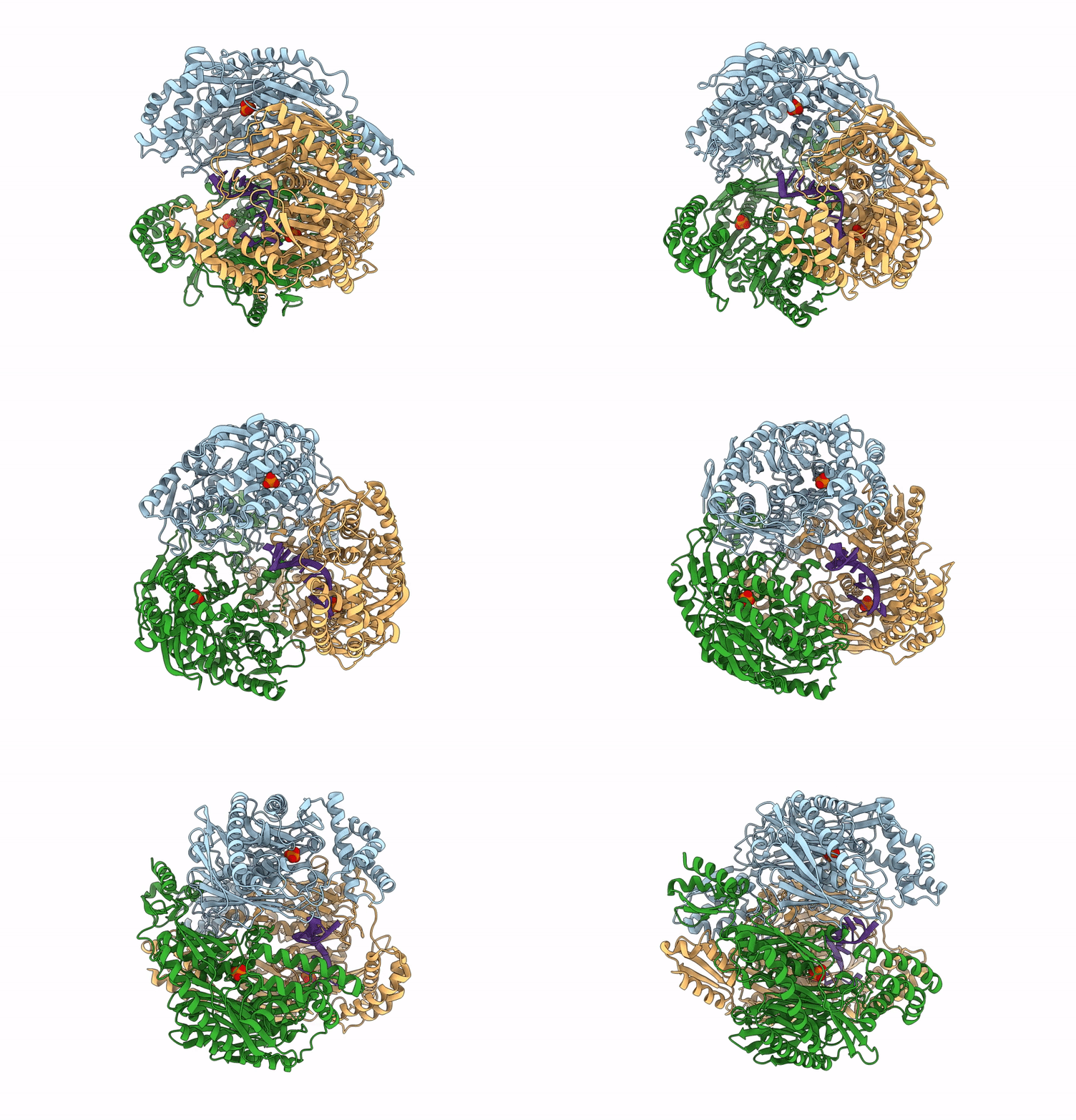
9XZF image
Deposition Date 2025-08-27
Release Date 2025-12-10
Last Version Date 2025-12-24
Entry Detail
PDB ID:
9XZF
Title:
hPNPase RNA loading state with extended RNA in the bottom
Biological Source:
Source Organism(s):
Homo sapiens (Taxon ID: 9606)
Expression System(s):
Method Details:
Experimental Method:
Resolution:
2.65 Å
Aggregation State:
PARTICLE
Reconstruction Method:
SINGLE PARTICLE
Macromolecular Entities
Structures with similar UniProt ID
Protein Blast
Polymer Type:polypeptide(L)
Molecule:Polyribonucleotide nucleotidyltransferase 1, mitochondrial
Gene (Uniprot):PNPT1
Chain IDs:A, B, C
Chain Length:773
Number of Molecules:3
Biological Source:Homo sapiens
Polymer Type:polyribonucleotide
Molecule:RNA (31-MER)
Chain IDs:D
Chain Length:31
Number of Molecules:1
Biological Source:Homo sapiens
Ligand Molecules
Primary Citation
Loop-mediated regulation and base flipping drive RNA cleavage by human mitochondrial PNPase.
Nucleic Acids Res. 53 ? ? (2025)
PMID: 41361968 DOI: 10.1093/nar/gkaf1296

Abstact

Human polynucleotide phosphorylase (hPNPase), a trimeric exoribonuclease, is crucial for maintaining mitochondrial RNA metabolism, including the regulated degradation of RNA. Mutations in hPNPase have been linked to mitochondrial pathologies, underscoring its importance in mitochondrial RNA homeostasis. Despite this significance, the molecular basis of its catalytic mechanism and the structural consequences of active-site mutations remain poorly understood. We employed high-resolution electron cryo-microscopy to capture three distinct functional states of hPNPase during RNA degradation. In the loading state, flexible loops facilitate the recruitment of the substrate RNA and guide it toward the active site. During the pre-catalytic state, terminal nucleotides reorient within the active site, positioning the RNA backbone for cleavage, which is stabilized by Mg2+. Finally, the catalytic state reveals a nucleophilic attack of phosphate on the RNA backbone, mediated by key active-site residues. These results offer a clear biochemical framework for hPNPase-mediated RNA turnover, clarifying its catalytic mechanism and highlighting how active-site integrity is crucial for efficient RNA degradation.

Legend

Protein

Chemical

Disease

Primary Citation of related structures
Feedback Form
Name
Email
Institute
Feedback