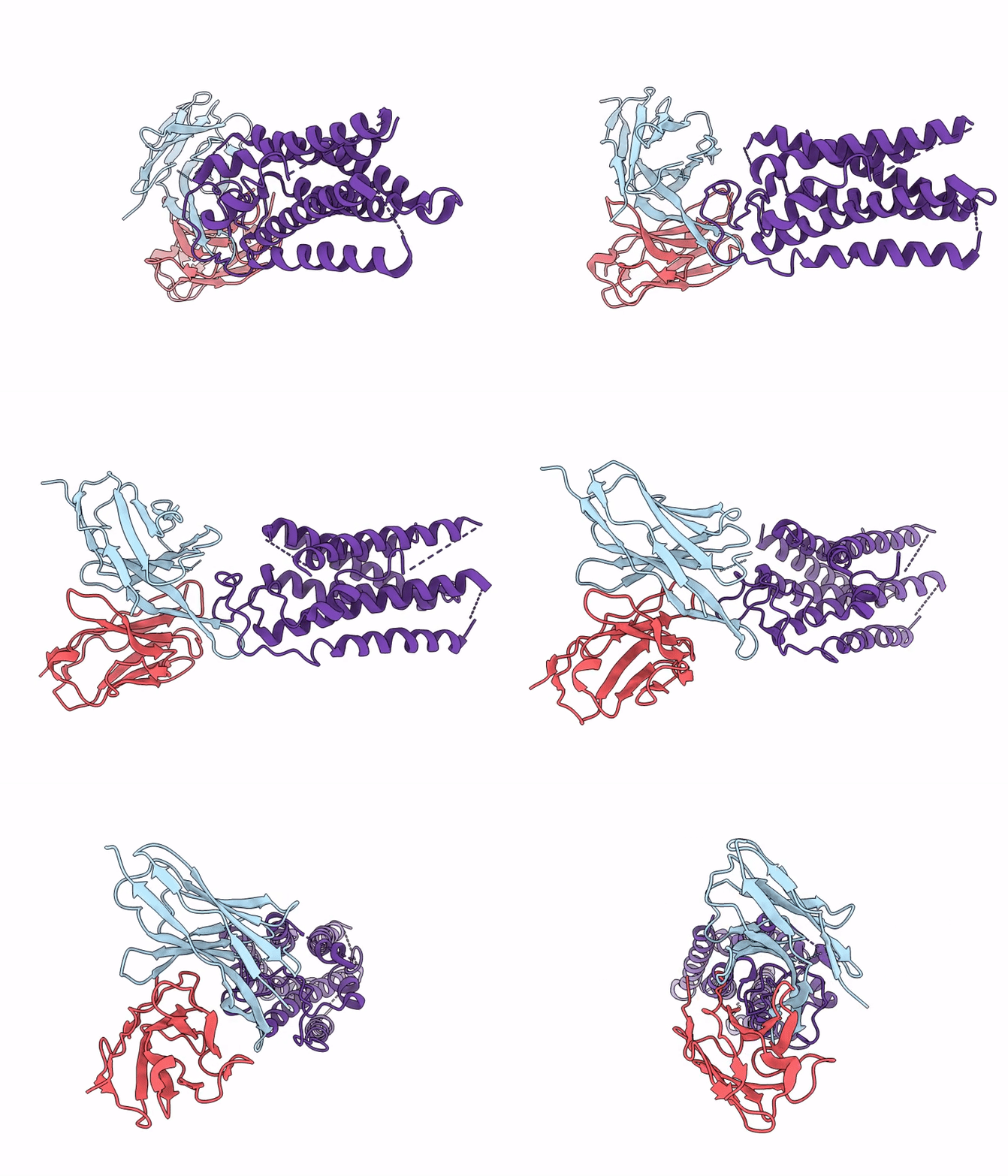
9XQB image
Deposition Date 2025-11-18
Release Date 2026-01-07
Last Version Date 2026-02-04
Entry Detail
PDB ID:
9XQB
Title:
Cryo-EM structure of the human A2A adenosine receptor in complex with a Fab antibody fragment
Biological Source:
Source Organism(s):
Mus musculus (Taxon ID: 10090)
Homo sapiens (Taxon ID: 9606)
Expression System(s):
Method Details:
Experimental Method:
Resolution:
3.45 Å
Aggregation State:
PARTICLE
Reconstruction Method:
SINGLE PARTICLE

Macromolecular Entities
Polymer Type:polypeptide(L)
Molecule:Fab Heavy chain
Chain IDs:C (auth: A)
Chain Length:136
Number of Molecules:1
Biological Source:Mus musculus
Polymer Type:polypeptide(L)
Molecule:Fab Light chain
Chain IDs:A (auth: B)
Chain Length:127
Number of Molecules:1
Biological Source:Mus musculus
Polymer Type:polypeptide(L)
Molecule:A2A receptor-BRIL
Chain IDs:B (auth: C)
Chain Length:431
Number of Molecules:1
Biological Source:Homo sapiens
Ligand Molecules
Primary Citation
Rapid and Label-Free Structural Proteomics Using One-Step Swift Trypsin LiP-MS.
Acs Omega 11 2152 2162 (2026)
PMID: 41552556 DOI: 10.1021/acsomega.5c11109

Abstact

Limited proteolysis mass spectrometry (LiP-MS) is a powerful approach for probing protein conformational changes on a proteome-wide scale. However, conventional workflows rely on a two-step digestion with proteinase K and trypsin, which increases complexity and reduces reproducibility and sensitivity. This study aimed to develop a simplified one-step protocol, termed Swift Trypsin LiP-MS (STLiP-MS), which uses a trypsin-immobilized spin column and high-speed centrifugation to achieve rapid and reproducible surface-limited proteolysis. Using HEK293 cell extracts, STLiP-MS identified 286 proteins exhibiting conformational changes upon phosphatase inhibition, including 37 enriched in phosphatase-related Gene Ontology categories. The method improvements, including suppression of predigestion and immediate enzyme inactivation, further increased sensitivity, enabling the detection of 799 proteins with structural alterations, of which 77 were enriched in phosphatase-related categories. Comparison with the single-pot solid-phase-enhanced sample preparation (SP3) method confirmed that these changes originated from structure-selective proteolysis and were not detectable under fully denaturing conditions. To demonstrate its broader applicability, we applied STLiP-MS to the adenosine A2A receptor (A2A-BRIL) and observed antibody-induced protection of extracellular loop 2 (residues 147-176). Cryogenic electron microscopy validated Fab fragment binding to the same region, confirming the correspondence between STLiP-MS signals and actual antibody-antigen interfaces. Collectively, these results show that STLiP-MS is a rapid and robust platform that enables sensitive, label-free detection of local structural changes under near-physiological conditions and accurate prediction of protein-protein interaction sites. This method holds great promise for applications in structural proteomics and drug target identification.

Legend

Protein

Chemical

Disease

Primary Citation of related structures
Feedback Form
Name
Email
Institute
Feedback