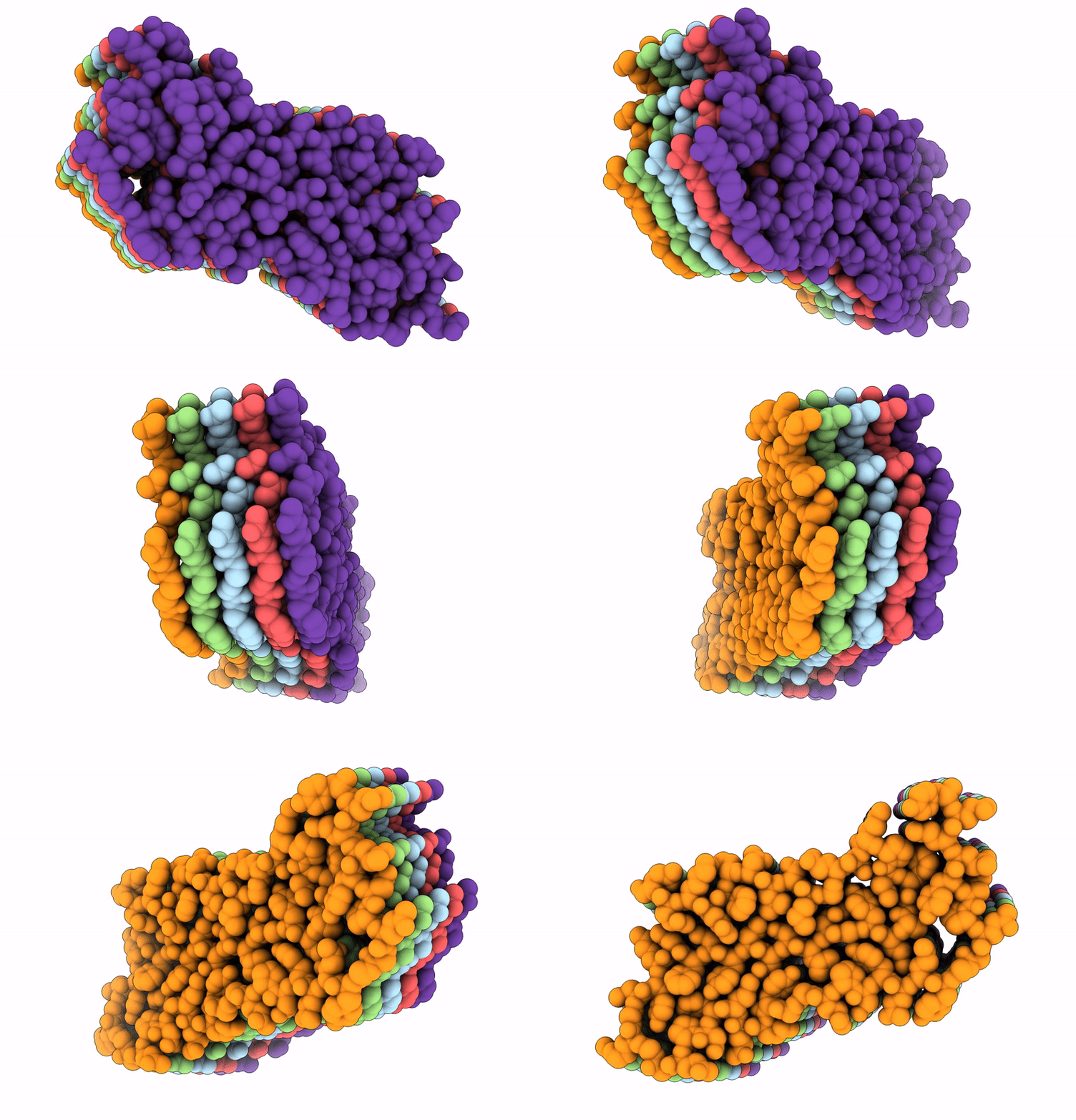
9XBM image
Deposition Date 2025-10-24
Release Date 2025-12-10
Last Version Date 2025-12-10
Entry Detail
PDB ID:
9XBM
Keywords:
Title:
Cryo-EM structure of Sup35NM S17R fibril formed at 37 degrees (S17R37C)
Biological Source:
Source Organism:
Host Organism:
Method Details:
Experimental Method:
Resolution:
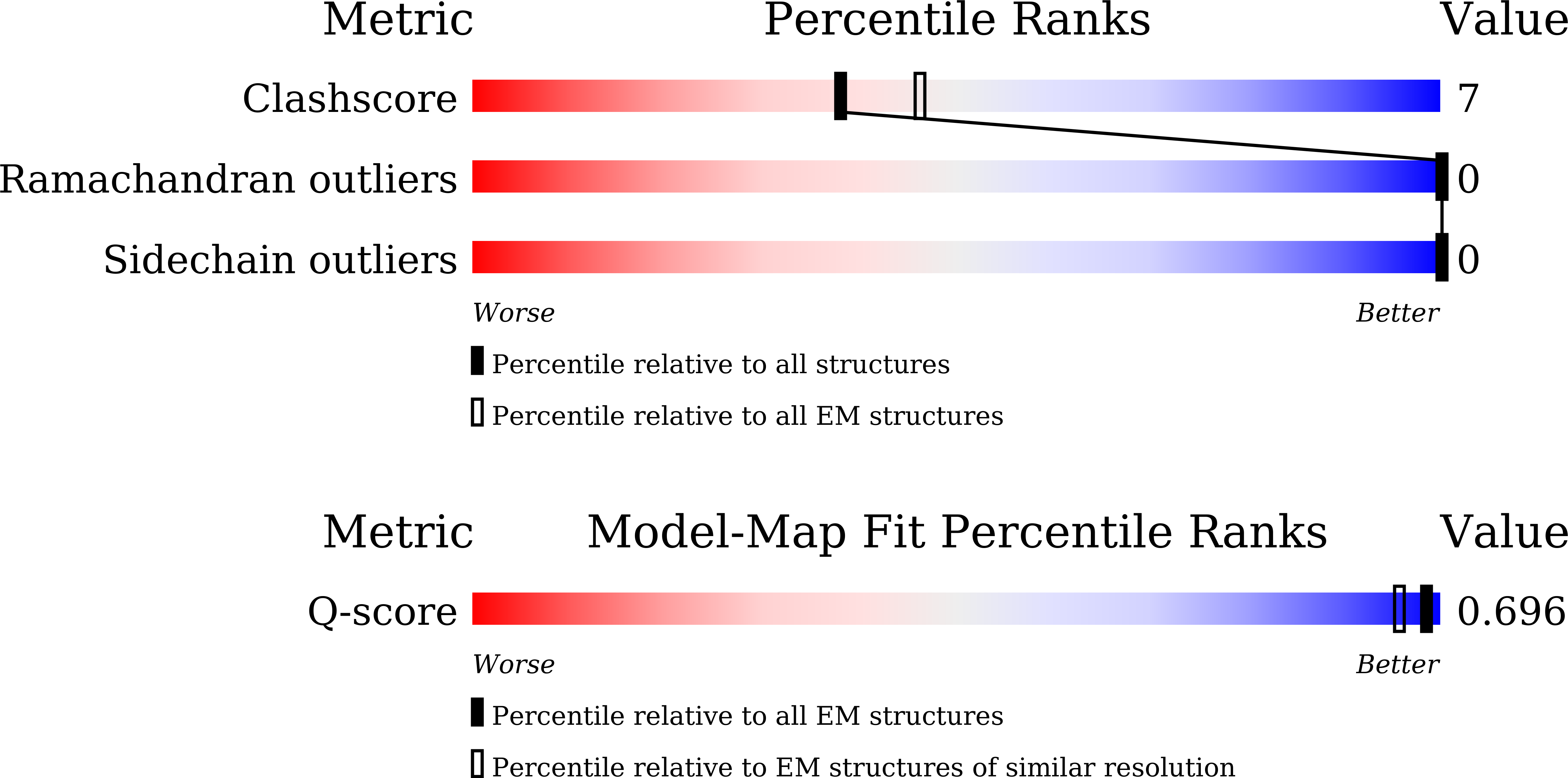
2.40 Å
Aggregation State:
FILAMENT
Reconstruction Method:
HELICAL
Macromolecular Entities
Structures with similar UniProt ID
Protein Blast
Polymer Type:polypeptide(L)
Molecule:Eukaryotic peptide chain release factor GTP-binding subunit
Gene (Uniprot):SUP35
Chain IDs:A, B, C, D, E
Chain Length:260
Number of Molecules:5
Biological Source:Saccharomyces cerevisiae
Ligand Molecules
Primary Citation
How Sup35 monomer conformation and amyloid fibril polymorphism determine yeast strain phenotypes.
Res Sq ? ? ? (2025)
PMID: 41282265 DOI: 10.21203/rs.3.rs-7945345/v1

Abstact

In the [ PSI + ] prion system, the yeast prion protein Sup35 can form structurally distinct amyloid fibrils that lead to distinct transmissible prion states, or strains. However, our understanding of how different Sup35 fibril structures arise and translate to phenotypic variations is limited. Here, using cryo-EM and single-monomer force spectroscopy with optical tweezers, we reveal the structural basis of yeast prion propagation in four wild-type and S17R mutant variants of Sup35 that underlie different [ PSI + ] strains. Cryo-EM structures show that the four variants form strikingly distinct fibril structures, which exhibit varying stability and chaperone-accessibility. Force spectroscopy suggests the different distinct fibril structures are derived from distinct monomer conformational ensembles. Further, cryo-EM structures indicate that prion strain strength is correlated with enhanced fibril propagation caused by a combination of low fibril stability and a large separation between the Sup35 fibril core and the Ssa1/Sis1 chaperone-binding region. These results provide a structure-based mechanism for the yeast prion strain phenomenon with implications for understanding amyloid propagation in human neurodegenerative diseases.

Legend

Protein

Chemical

Disease

Primary Citation of related structures
Feedback Form
Name
Email
Institute
Feedback