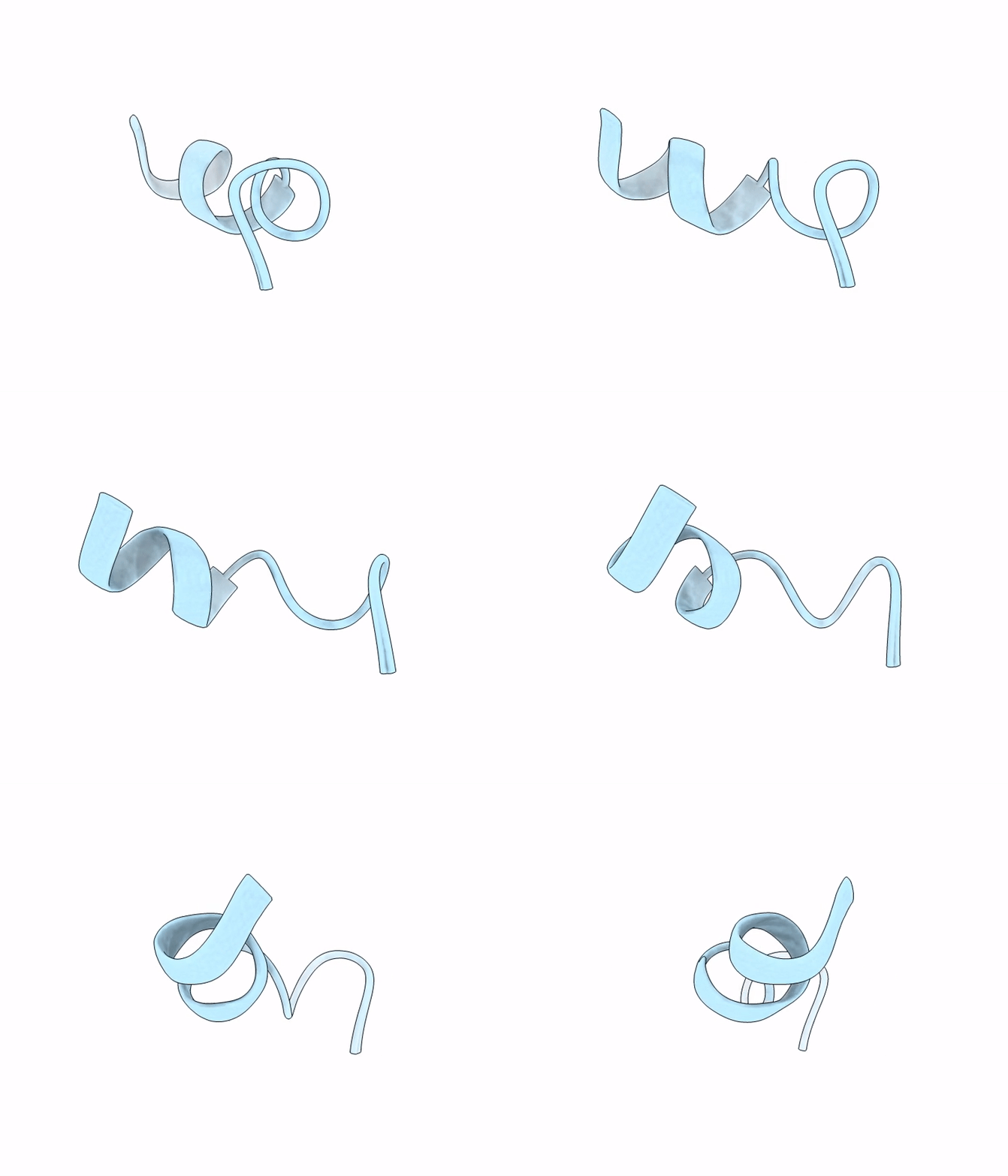
9WXK image
Deposition Date 2025-09-25
Release Date 2026-01-21
Last Version Date 2026-01-21
Entry Detail
PDB ID:
9WXK
Title:
Linear fragment of lycosin9I with anti-MRSA activity
Biological Source:
Source Organism(s):
Method Details:
Experimental Method:
Conformers Calculated:
200
Conformers Submitted:
20
Selection Criteria:
structures with the least restraint violations

Macromolecular Entities
Structures with similar UniProt ID
Protein Blast
Polymer Type:polypeptide(L)
Molecule:Lycosin 9i 3k
Chain IDs:A
Chain Length:14
Number of Molecules:1
Biological Source:Lycosa erythrognatha
Ligand Molecules
Primary Citation
NMR Unveils Activity Mechanism of Linear Spider Venom Peptide Fragments Selected by Neural Networks Against Staphylococci Including MRSA.
Pharmaceutics 17 ? ? (2025)
PMID: 41471040 DOI: 10.3390/pharmaceutics17121526

Abstact

Background/Objectives: Methicillin-resistant Staphylococcus aureus (MRSA) poses a significant global health threat due to its increasing resistance to conventional antibiotics. Antimicrobial peptides (AMPs) derived from natural sources represent a promising alternative. Fragments of spider membrane-active toxins can serve as AMPs with anti-MRSA activity. Methods: To demonstrate this, amino acid sequences of approximately 2000 linear spider venom peptides were fragmented into 9-22-residue-long moieties (75,235 in total) and pre-trained neural networks were used to predict their anti-MRSA activity. As many as 15 peptides with high predicted activity were synthesized, and three AMPs with high anti-MRSA and low hemolytic activities were selected. One of these peptides was studied using high-resolution 1H-, 13C-, and 15N-NMR spectroscopy in an aqueous solution and lyso-palmitoylphosphatidylglycerol (LPPG) micelles. Wide-line 31P-NMR was applied to multilamellar phospholipid liposomes composed of phosphatidylcholine (PC) or phosphatidylglycerol (PG). Results: Low hemolytic activity is explained by non-specific interaction with PC whereas high antibacterial activity arises from specific interaction with PG accompanied with the formation of a tight complex between the N-terminal tripeptide fragment and PG headgroup. The structure of a such complex, stabilized by an ionic interaction between the N-terminal NH3+ group and the lipid phosphate, was determined based on peptide-LPPG NOEs. The most favorable ratio between anti-MRSA and hemolytic activities, i.e., selectivity of the peptides, is attained when the tripeptide consists exclusively of phenylalanine and tryptophan residues. Confocal microscopy confirmed that the most selective peptide deteriorates the plasma membrane of S. aureus. Conclusions: This approach may enable the production of highly selective AMPs against Stapylococci, including MRSA.

Legend

Protein

Chemical

Disease

Primary Citation of related structures
Feedback Form
Name
Email
Institute
Feedback