Planned Maintenance: Some services may turn out to be unavailable from 15th January, 2026 to 16th January, 2026. We apologize for the inconvenience!

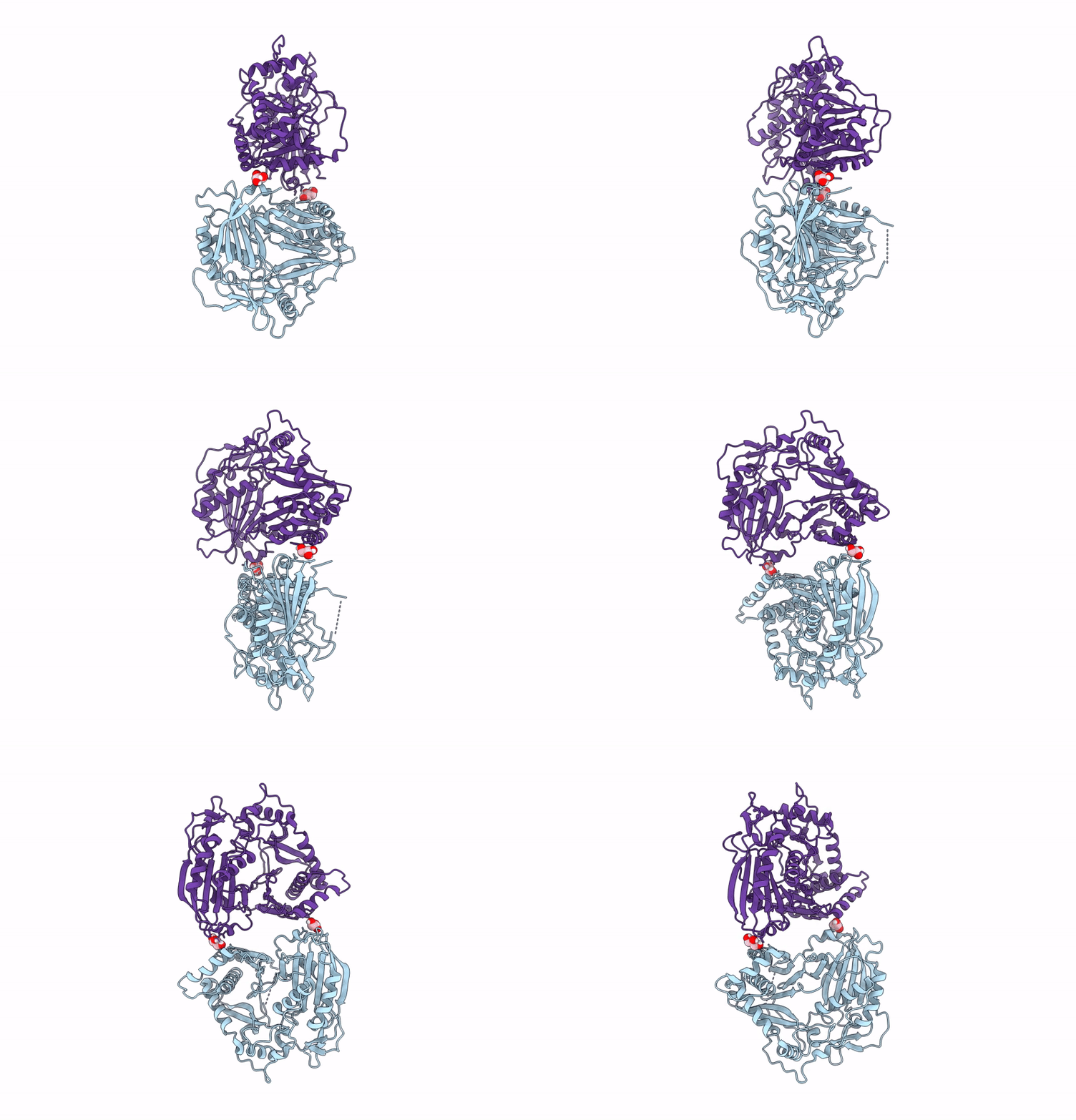
9WTS image
Deposition Date 2025-09-16
Release Date 2025-10-29
Last Version Date 2026-01-07
Entry Detail
PDB ID:
9WTS
Keywords:
Title:
Structure of the EpHTT from Echinacea purpurea
Biological Source:
Source Organism(s):
Method Details:
Experimental Method:
Resolution:
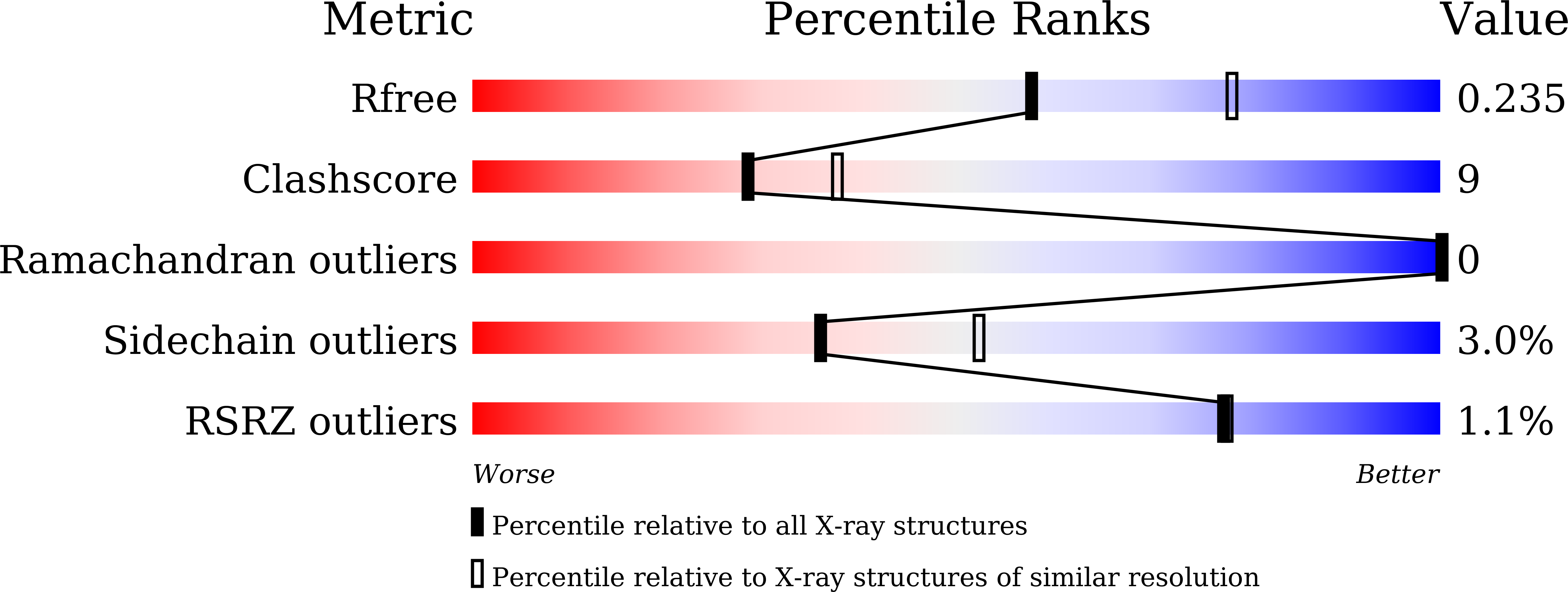
2.29 Å
R-Value Free:
0.23
R-Value Work:
0.18
R-Value Observed:
0.18
Space Group:
C 2 2 21
Macromolecular Entities
Structures with similar UniProt ID
Protein Blast
Polymer Type:polypeptide(L)
Molecule:Hydroxycinnamoyl-CoA: tartaric acid hydroxycinnamoyl transferase
Chain IDs:A, B
Chain Length:428
Number of Molecules:2
Biological Source:Echinacea purpurea
Ligand Molecules
Primary Citation
The crystal structure of EpHTT, a hydroxycinnamoyl transferase from Echinacea purpurea.
Acta Crystallogr D Struct Biol 82 43 52 (2026)
PMID: 41328548 DOI: 10.1107/S205979832501023X

Abstact

Echinacea purpurea hydroxycinnamoyl-CoA:tartaric acid hydroxycinnamoyl transferase (EpHTT) is a cytosolic BAHD acyltransferase that catalyzes the transfer of caffeoyl groups to tartaric acid, a key step in chicoric acid biosynthesis. Understanding the structure of EpHTT is essential to elucidate the molecular basis of substrate recognition and catalytic specificity. Here, we report the crystal structure of apo-form EpHTT at 2.38 Å resolution, revealing a compact, globular architecture typical of the BAHD superfamily. The enzyme adopts a two-domain fold with conserved HXXXD and DFGWG motifs, forming a V-shaped catalytic cleft characteristic of BAHD acyltransferases. Structural comparison with homologous hydroxycinnamoyl transferase enzymes shows high conservation of the overall fold, while EpHTT exhibits unique adaptations that confer specificity for tartaric acid. These results provide a molecular framework for understanding the function and substrate specificity of HTT, offering insights for the metabolic engineering of chicoric acid production.

Legend

Protein

Chemical

Disease

Primary Citation of related structures
Feedback Form
Name
Email
Institute
Feedback