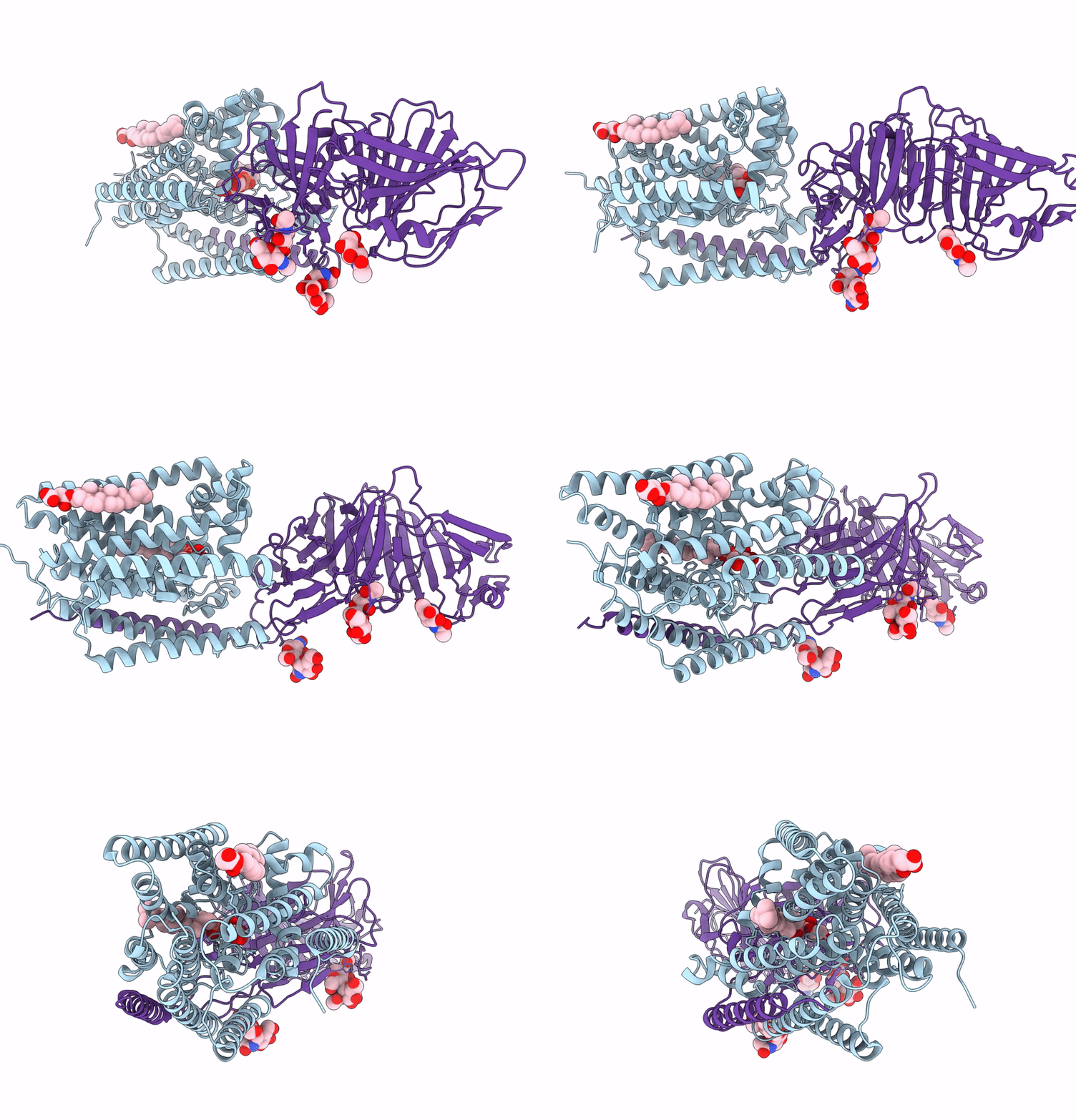
9WNO image
Deposition Date 2025-09-05
Release Date 2025-12-03
Last Version Date 2025-12-10
Entry Detail
PDB ID:
9WNO
Title:
Cryo-EM structure of Candida glabrata GPI mannosyltransferase I bound to Dol-P-Man
Biological Source:
Source Organism(s):
Expression System(s):
Method Details:
Experimental Method:
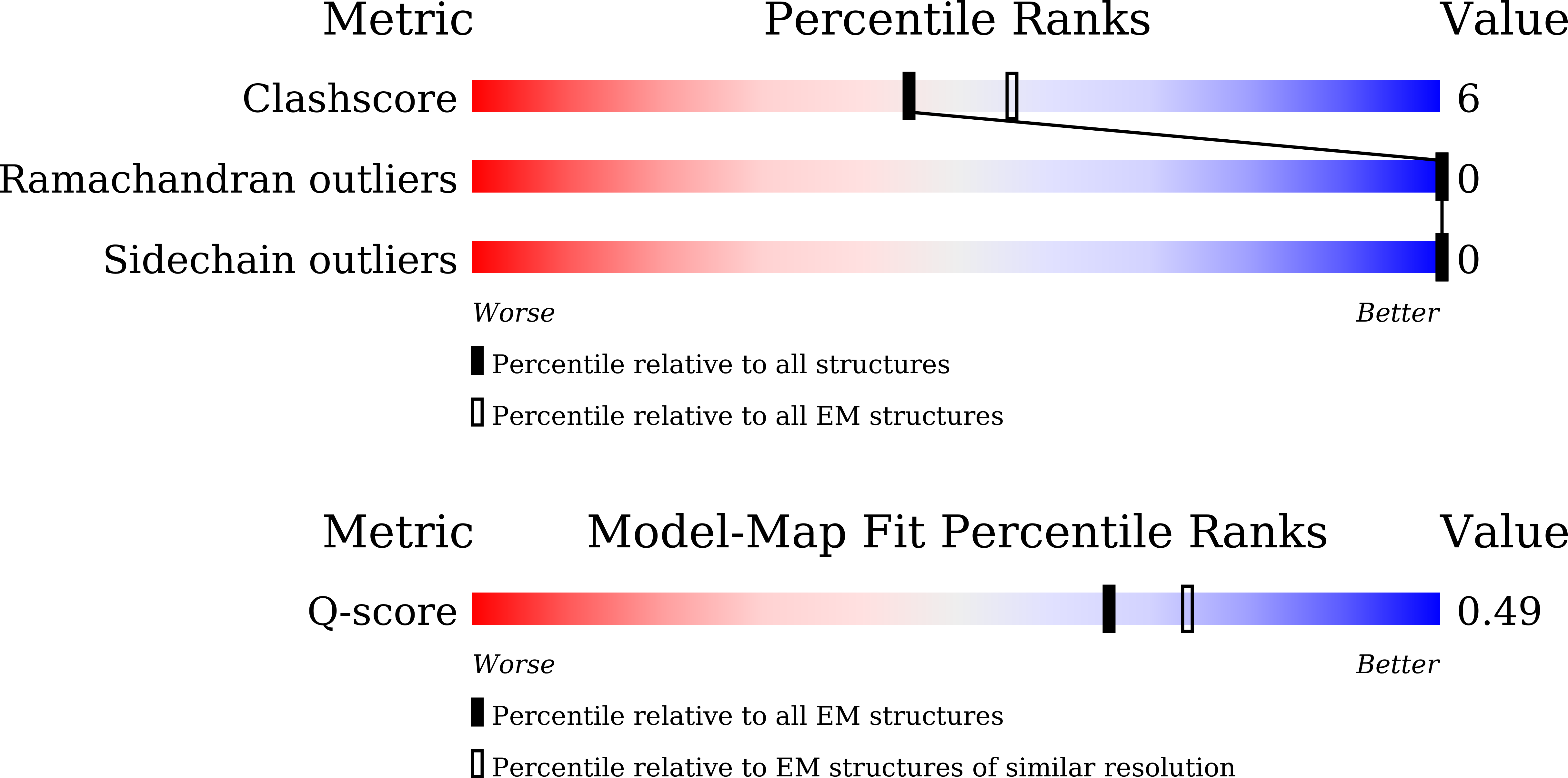
Resolution:
3.48 Å
Aggregation State:
PARTICLE
Reconstruction Method:
SINGLE PARTICLE
Macromolecular Entities
Structures with similar UniProt ID
Protein Blast
Polymer Type:polypeptide(L)
Molecule:GPI mannosyltransferase 1
Gene (Uniprot):GPI14
Chain IDs:A
Chain Length:431
Number of Molecules:1
Biological Source:Nakaseomyces glabratus
Structures with similar UniProt ID
Protein Blast
Polymer Type:polypeptide(L)
Molecule:Protein PBN1
Gene (Uniprot):PBN1
Chain IDs:B
Chain Length:416
Number of Molecules:1
Biological Source:Nakaseomyces glabratus
Primary Citation
Structural Insights into the Glycosylphosphatidylinositol Mannosyltransferase I Complex from Candida glabrata .
J Fungi 11 ? ? (2025)
PMID: 41295199 DOI: 10.3390/jof11110819

Abstact

The global rise in resistance to first-line antifungal agents highlights the urgent need for new therapeutic strategies. Glycosylphosphatidylinositol (GPI)-anchored protein biosynthesis is an attractive target. The GPI mannosyltransferase I (GPI-MT-I), composed of Gpi14 and Pbn1, catalyzes the essential first mannose transfer from dolichol-phosphomannose (Dol-P-Man) to the GPI precursor. This initial mannosylation is critical for fungal cell wall integrity, yet the molecular basis of GPI-MT-I assembly and substrate recognition remains poorly understood. Here, we present the cryo-EM structure of Candida glabrata GPI-MT-I in complex with Dol-P-Man, revealing how Gpi14 and Pbn1 form a stable complex and engage the mannose donor. An AlphaFold3-predicted acceptor-bound model further defines the structural basis of acceptor substrate recognition and suggests a plausible catalytic mechanism. Comparison with structural homologs highlights a distinct mode of substrate engagement by GPI-MT-I. Together, these findings establish a mechanistic framework for GPI-MT-I function with broader implications for the GPI-MT family.

Legend

Protein

Chemical

Disease

Primary Citation of related structures
Feedback Form
Name
Email
Institute
Feedback