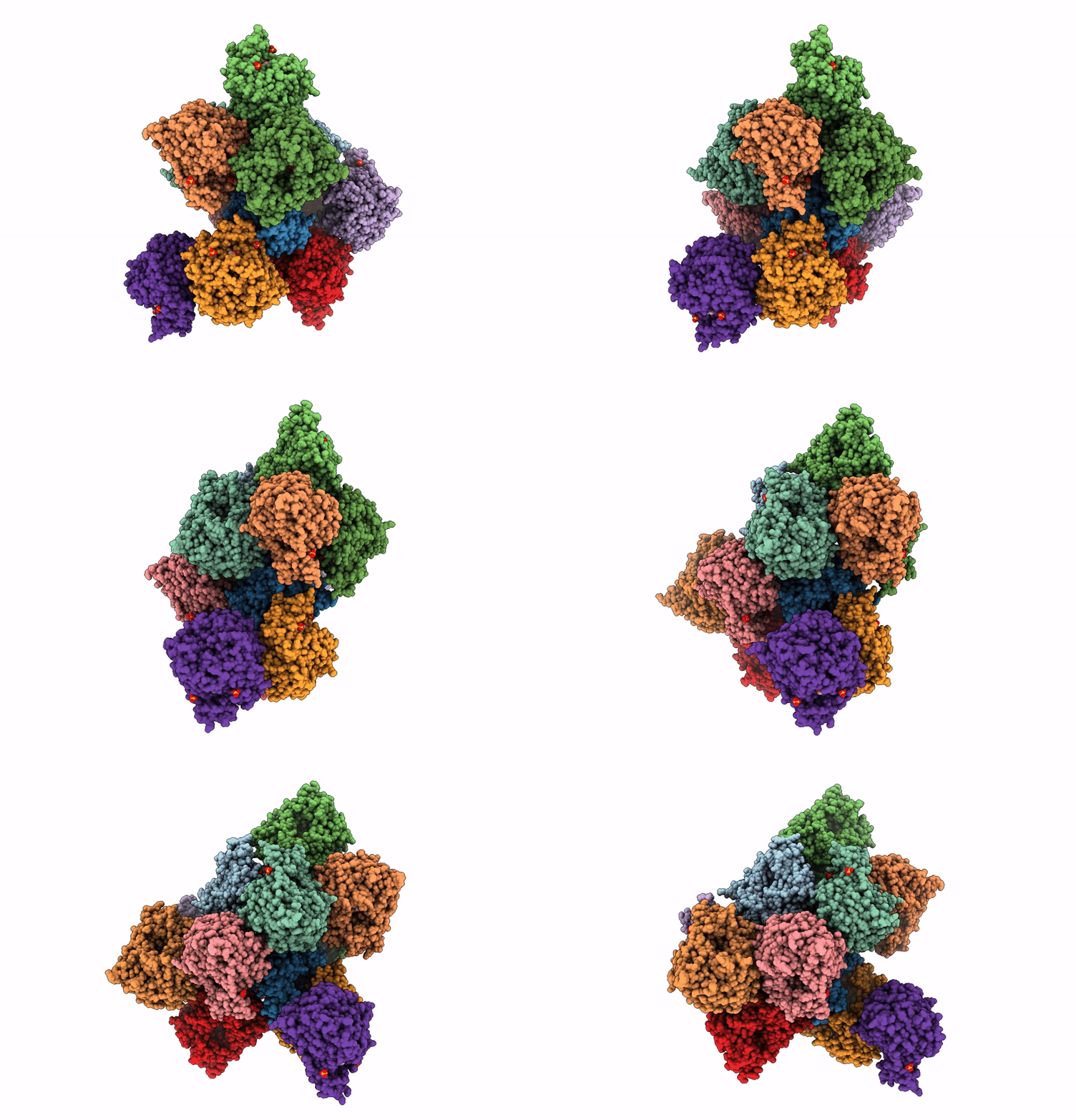
9W4F image
Deposition Date 2025-07-31
Release Date 2025-10-15
Last Version Date 2025-10-22
Entry Detail
PDB ID:
9W4F
Keywords:
Title:
Crystal structure of beta-glucosidase CaBGL mutant E163Q in complex with glucose
Biological Source:
Source Organism:
Host Organism:
Method Details:
Experimental Method:
Resolution:
2.26 Å
R-Value Free:
0.22
R-Value Work:
0.20
R-Value Observed:
0.20
Space Group:
P 21 21 21
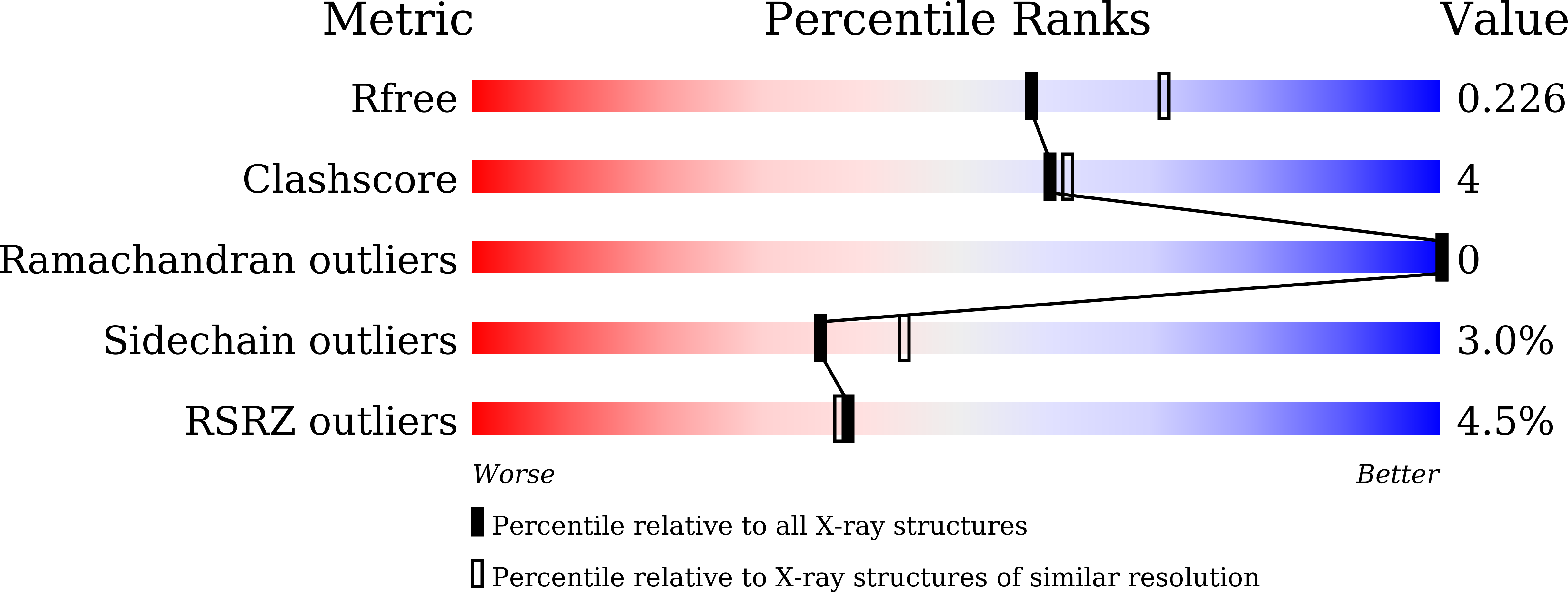
Macromolecular Entities
Structures with similar UniProt ID
Protein Blast
Polymer Type:polypeptide(L)
Molecule:beta-glucosidase
Mutagens:E163Q
Chain IDs:A, B, C, D, E, F, G, H, I, J, K, L
Chain Length:454
Number of Molecules:12
Biological Source:Caldicellulosiruptor sp.
Primary Citation
Engineering of beta-glucosidase CaBGL with improved performance in cellulose hydrolysis.
Bioresour Technol 440 133424 133424 (2025)
PMID: 41043783 DOI: 10.1016/j.biortech.2025.133424

Abstact

β-Glucosidase (BGL) plays a crucial role in lignocellulose utilization by alleviating cellobiose inhibition of cellulases. Incorporation of the BGL from Caldicellulosiruptor sp. F32 (CaBGL) enhanced the overall efficiency of the consolidated bio-saccharification process. To optimize BGL performance under industrial conditions, we established a thermostable green fluorescent protein-based high-throughput screening platform coupled with structure-informed semi-rational design, enabling the generation of functionally enhanced CaBGL mutants. This approach identified mutant M418T, which exhibited more than two-fold catalytic activity compared to that of wild type in both the absence and presence of glucose at various concentrations. In vitro cellulose saccharification showed that M418T increased the saccharification rate coefficient by 43.27 % compared to the wild-type. The mechanisms underlying its improved property were further elucidated through structural analysis and molecular docking. Consequently, this work presents an effective approach for enhancing the performance of CaBGL and demonstrates the potential of a promising catalyst in lignocellulose conversion.

Legend

Protein

Chemical

Disease

Primary Citation of related structures
Feedback Form
Name
Email
Institute
Feedback