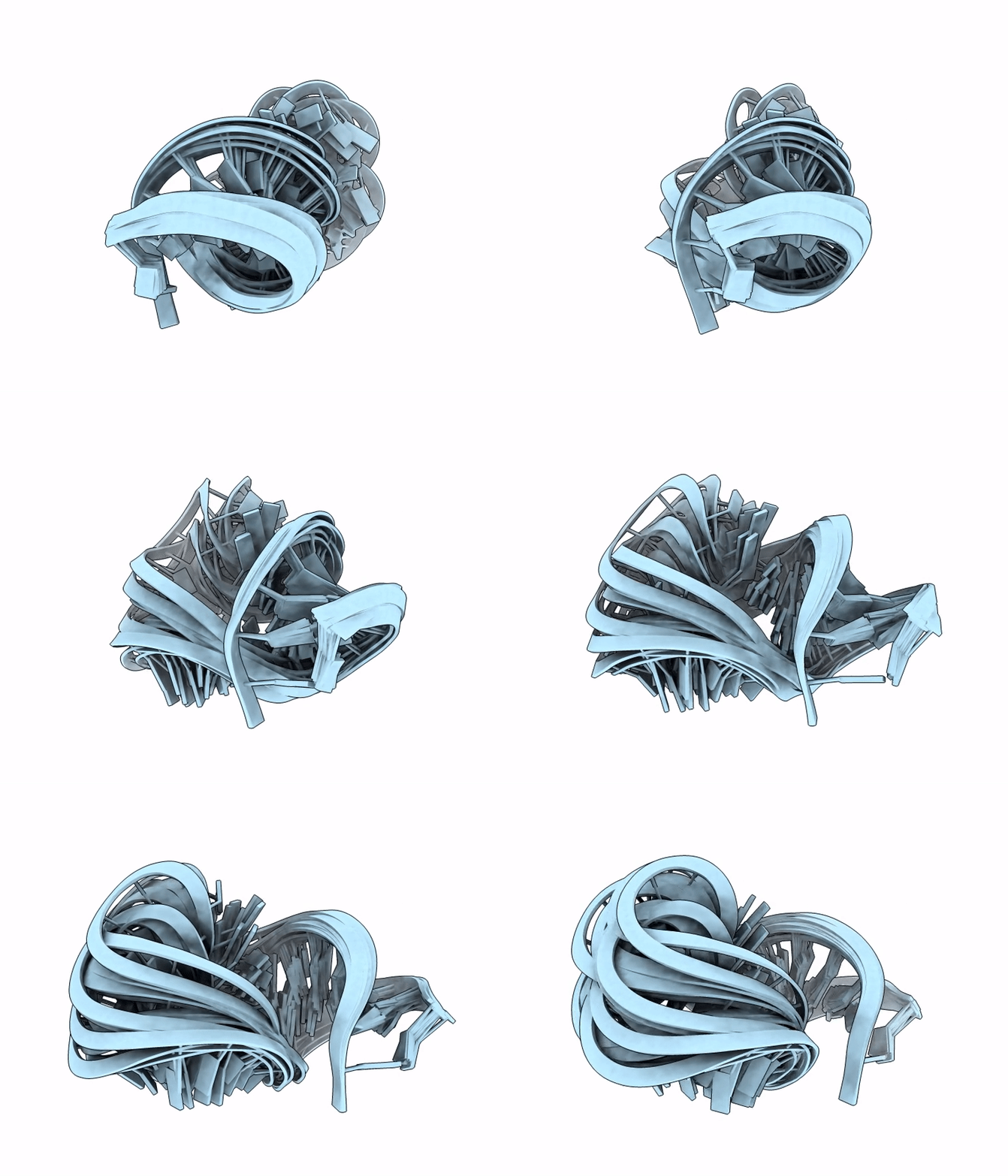
9W1L image
Deposition Date 2025-07-26
Release Date 2026-01-28
Last Version Date 2026-01-28
Entry Detail
PDB ID:
9W1L
Keywords:
Title:
NMR Structure of the 5BSL3.2 Apical Stem-Loop RNA from HCV
Biological Source:
Source Organism(s):
Method Details:
Experimental Method:
Conformers Calculated:
10240
Conformers Submitted:
15
Selection Criteria:
structures with the lowest energy

Macromolecular Entities
Polymer Type:polyribonucleotide
Molecule:RNA (26-MER)
Chain IDs:A
Chain Length:26
Number of Molecules:1
Biological Source:Hepatitis C virus (isolate 1)
Ligand Molecules
Primary Citation
Loop of fate: structural and mechanistic insights into hnRNPA1 binding to the hepatitis C virus RNA.
Rna 32 215 236 (2026)
PMID: 41285614 DOI: 10.1261/rna.080770.125

Abstact

Hepatitis C virus (HCV) is a major global health burden, associated with chronic liver diseases, including cirrhosis and hepatocellular carcinoma. Viral replication critically depends on conserved cis-acting replication elements (CREs), such as the 5BSL3.2 stem-loop near the 3' end of the open reading frame. This element forms a long-range kissing-loop interaction with the SL2 domain of the 3'X tail, essential for efficient genome replication. However, the role of host RNA-binding proteins (RBPs) in regulating this RNA-RNA interaction remains poorly understood. To explore this, we investigated whether the host RBP hnRNPA1 modulates HCV replication by targeting the 5BSL3.2 element. Using an integrated approach combining structural biology, biophysics, and biochemical assays, we identify the terminal loop of 5BSL3.2 as a high-affinity binding site for the tandem RNA recognition motifs (RRMs) of hnRNPA1. Our data reveal that adenine-rich residues within the loop are critical for binding specificity. Our results uncover a structural mechanism by which hnRNPA1 binding perturbs the kissing-loop interaction between 5BSL3.2 and the SL2 element of the viral 3'X-tail, which impacts viral replication. This study highlights a previously unrecognized role of hnRNPA1 in modulating viral RNA structure and suggests a novel interface for host-directed antiviral intervention.

Legend

Protein

Chemical

Disease

Primary Citation of related structures
Feedback Form
Name
Email
Institute
Feedback