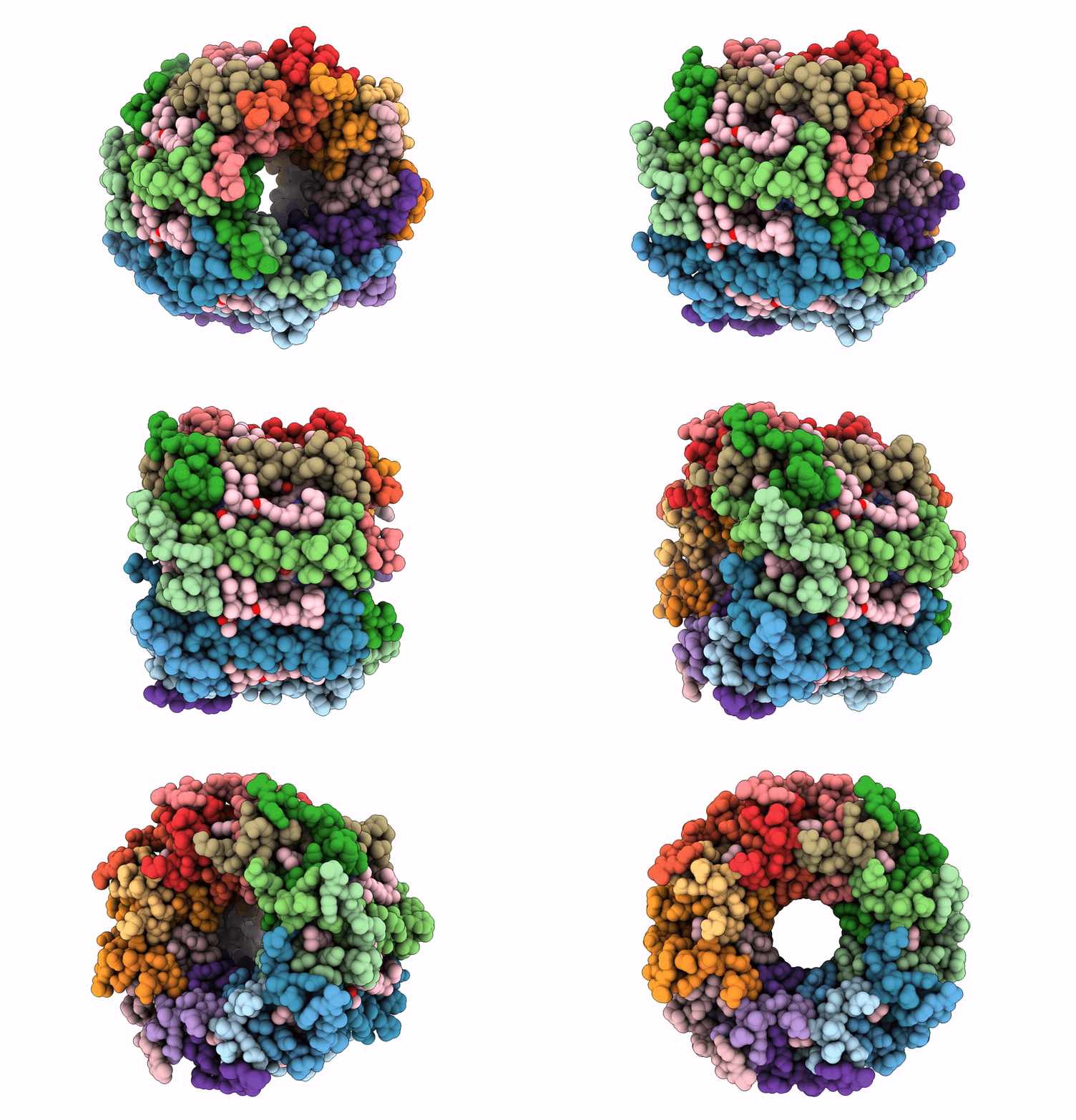
9W1C image
Deposition Date 2025-07-25
Release Date 2025-10-22
Last Version Date 2025-12-10
Entry Detail
PDB ID:
9W1C
Keywords:
Title:
LH2 complex from Ectothiorhodospira haloalkaliphila with inhibited carotenoid biosynthesis
Biological Source:
Method Details:
Experimental Method:
Resolution:
1.92 Å
Aggregation State:
PARTICLE
Reconstruction Method:
SINGLE PARTICLE
Macromolecular Entities
Structures with similar UniProt ID
Protein Blast
Polymer Type:polypeptide(L)
Molecule:Light-harvesting protein B:800-850 subunit beta
Gene (Uniprot):M911_00310
Chain IDs:A, C (auth: D), E (auth: G), G (auth: J), I (auth: M), K (auth: P), M (auth: S), O (auth: V)
Chain Length:46
Number of Molecules:8
Biological Source:Ectothiorhodospira haloalkaliphila ATCC 51935
Structures with similar UniProt ID
Protein Blast
Polymer Type:polypeptide(L)
Molecule:Light-harvesting protein B-800/850 alpha chain
Gene (Uniprot):M911_00315, M911_01000
Chain IDs:B (auth: C), D (auth: E), F (auth: H), H (auth: K), J (auth: N), L (auth: Q), N (auth: T), P (auth: W)
Chain Length:70
Number of Molecules:8
Biological Source:Ectothiorhodospira haloalkaliphila ATCC 51935
Primary Citation
Structural insights into LH2 complexes formed by a purple sulfur bacterium with inhibited carotenoid biosynthesis.
Febs Lett. ? ? ? (2025)
PMID: 41313718 DOI: 10.1002/1873-3468.70242

Abstact

The LH2 complex is essential for light harvesting in many photosynthetic bacteria. To elucidate the specific structural role of carotenoids, we analyzed LH2 complexes from Ectothiorhodospira haloalkaliphila with inhibited carotenoid biosynthesis. This approach allowed us to study complexes incorporating the colorless carotenoid phytoene instead of the native, colored pigments. A 1.92 Å cryo-EM reconstruction revealed that phytoene fully substitutes for the native carotenoids while maintaining the octameric symmetry of the complex and the precise arrangement of bacteriochlorophylls. These results demonstrate that the architectural function of carotenoids in LH2 complexes is maintained even when their light-absorption capability is altered, providing new mechanistic insight into the structural basis of pigment-protein interactions in photosynthetic antenna complexes.

Legend

Protein

Chemical

Disease

Primary Citation of related structures
Feedback Form
Name
Email
Institute
Feedback