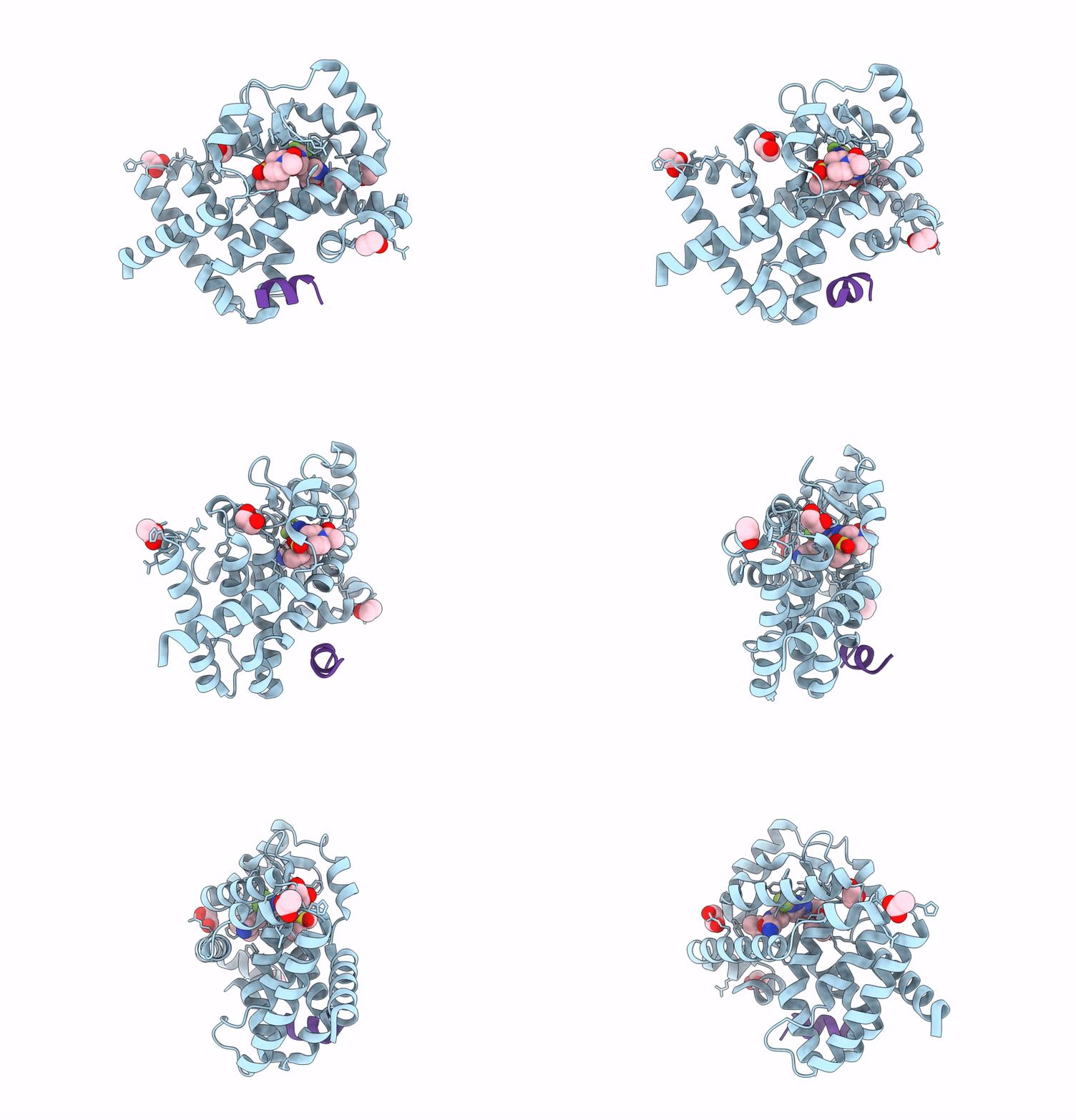
9VNX image
Deposition Date 2025-07-01
Release Date 2025-07-30
Last Version Date 2025-08-27
Entry Detail
PDB ID:
9VNX
Keywords:
Title:
Crystal Structure of the mutant ROR gamma LBD With Compound 28
Biological Source:
Source Organism:
Homo sapiens (Taxon ID: 9606)
Host Organism:
Method Details:
Experimental Method:
Resolution:
1.93 Å
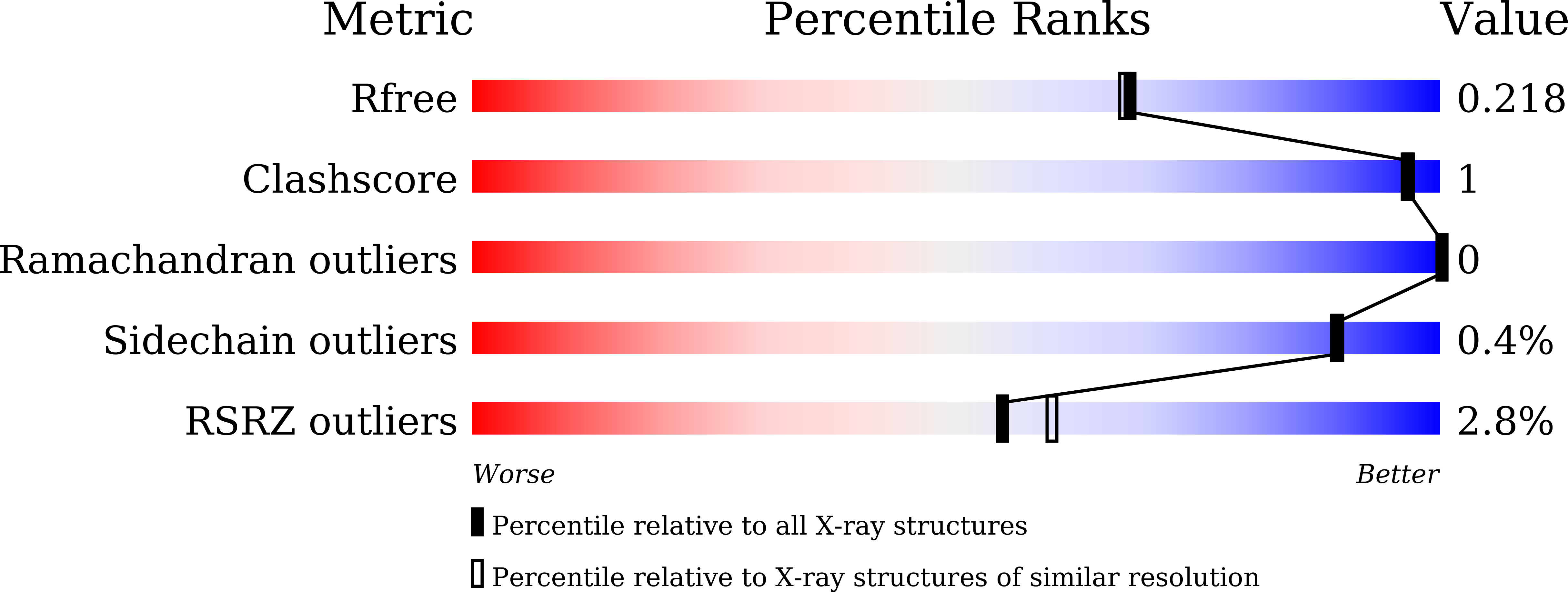
R-Value Free:
0.21
R-Value Work:
0.18
R-Value Observed:
0.18
Space Group:
P 41 21 2
Macromolecular Entities
Structures with similar UniProt ID
Protein Blast
Polymer Type:polypeptide(L)
Molecule:Nuclear receptor ROR-gamma
Gene (Uniprot):RORC
Mutagens:K469A/R473A
Chain IDs:A
Chain Length:258
Number of Molecules:1
Biological Source:Homo sapiens
Structures with similar UniProt ID
Protein Blast
Polymer Type:polypeptide(L)
Molecule:Nuclear receptor coactivator 1
Gene (Uniprot):NCOA1
Chain IDs:B
Chain Length:15
Number of Molecules:1
Biological Source:Homo sapiens
Primary Citation

Abstact

A variety of RORγ inhibitors have been identified, including clinical compounds such as VTP-43742 and JTE-151. In contrast, RORγ agonists have been less explored and LYC-55716 is, to the best of our knowledge, the sole example reached a human clinical investigation. To generate a novel RORγ agonist, functionality switching from preceding RORγ inhibitors has been considered as a rational strategy. Such reported earlier attempts have been hampered by a loss of physicochemical properties to elevated lipophilicity. Starting from RORγ inhibitors, corresponding agonists were generated virtually to assess their druglike characters. Based on their ligand efficiency and lipophilicity, a cyclic amine carboxylate core was regarded as the best for maintaining favorable physicochemical properties. This scaffold was subjected to final optimization by attaching function-oriented modules retaining druglike properties. After multiparameter optimization, novel selective RORγ agonists were discovered, and their in vivo effects were confirmed in a syngeneic mouse model after oral administration.

Legend

Protein

Chemical

Disease

Primary Citation of related structures
Feedback Form
Name
Email
Institute
Feedback