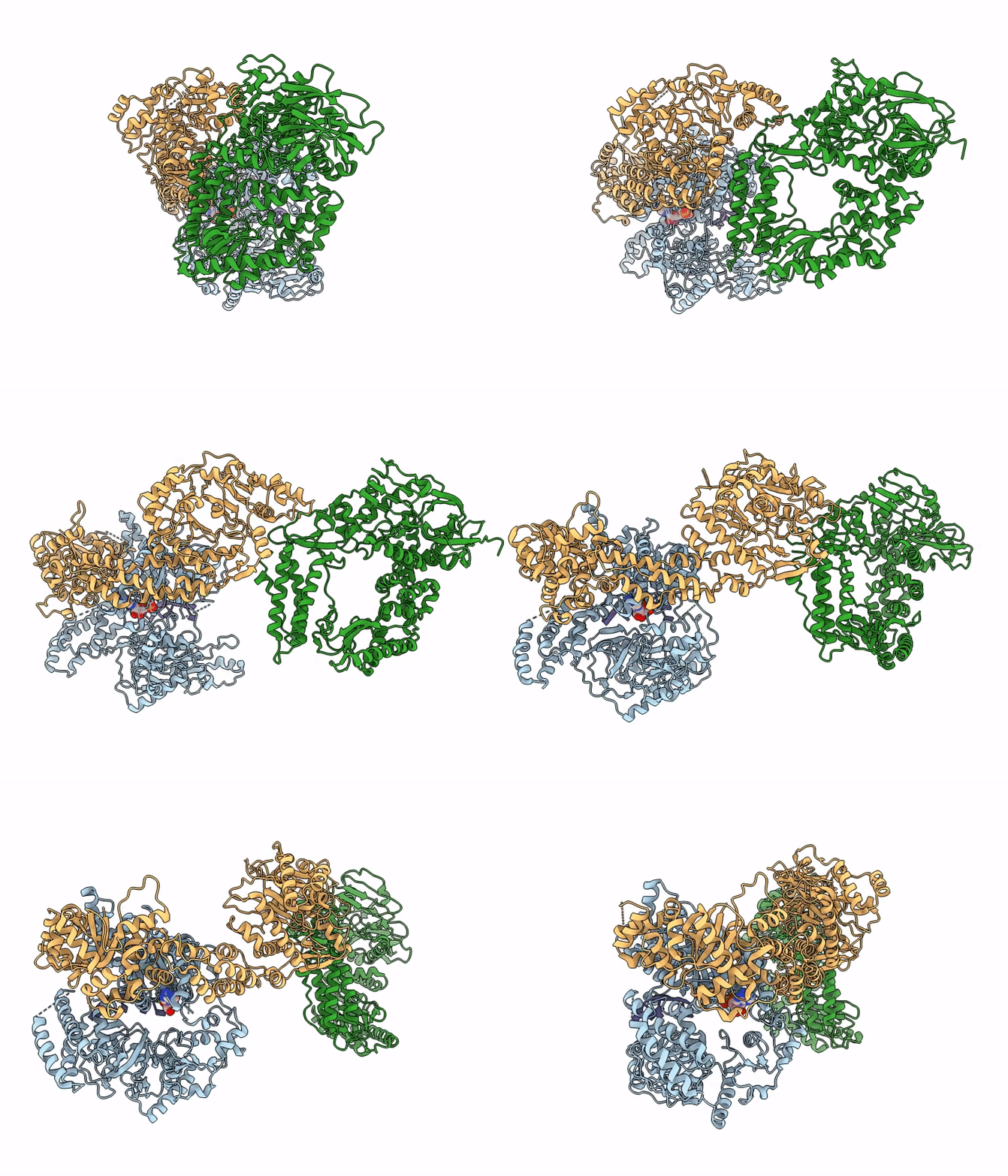
9VLQ image
Deposition Date 2025-06-26
Release Date 2026-01-21
Last Version Date 2026-01-21
Entry Detail
PDB ID:
9VLQ
Keywords:
Title:
herpes simplex virus type 1 helicase-primase structure in complex with ssDNA, ADP and magnesium ion
Biological Source:
Source Organism(s):
Method Details:
Experimental Method:
Resolution:
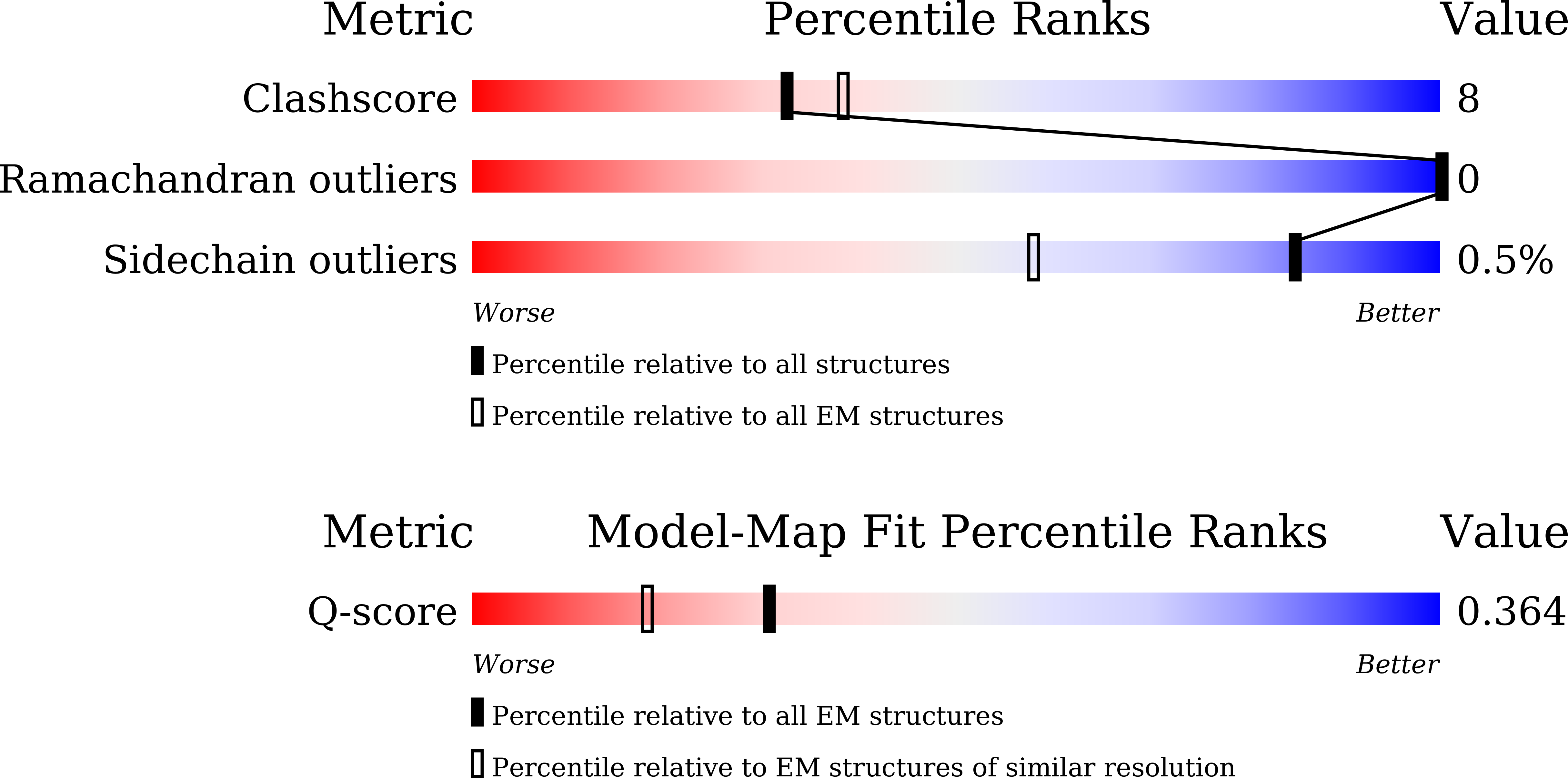
3.40 Å
Aggregation State:
PARTICLE
Reconstruction Method:
SINGLE PARTICLE
Macromolecular Entities
Structures with similar UniProt ID
Protein Blast
Polymer Type:polypeptide(L)
Molecule:DNA replication helicase
Gene (Uniprot):HELI
Chain IDs:A
Chain Length:907
Number of Molecules:1
Biological Source:Human alphaherpesvirus 1 strain 17
Structures with similar UniProt ID
Protein Blast
Polymer Type:polypeptide(L)
Molecule:Helicase-primase subunit
Gene (Uniprot):UL8
Chain IDs:B
Chain Length:775
Number of Molecules:1
Biological Source:Human alphaherpesvirus 1 strain 17
Structures with similar UniProt ID
Protein Blast
Polymer Type:polypeptide(L)
Molecule:DNA primase
Gene (Uniprot):UL52
Chain IDs:C
Chain Length:1058
Number of Molecules:1
Biological Source:Human alphaherpesvirus 1 strain 17
Polymer Type:polydeoxyribonucleotide
Molecule:DNA (44-MER)
Chain IDs:D (auth: X)
Chain Length:44
Number of Molecules:1
Biological Source:ssDNA virus sp.
Primary Citation
Structural and mechanistic insights into the herpes simplex virus type 1 helicase-primase primosome.
Cell Discov 11 100 100 (2025)
PMID: 41372195 DOI: 10.1038/s41421-025-00855-4

Abstact

DNA unwinding and primer synthesis are fundamental processes in genome replication. The human herpes simplex virus type 1 (HSV-1) helicase-primase forms a unique heterotrimeric primosome that is essential for viral DNA unwinding and primer synthesis and represents an ideal drug target. However, its molecular mechanism remains poorly understood. Here we report the cryo-electron microscopic structure of the primosome in complex with single-stranded DNA, ADP and Mg2+ to 3.47 Å resolution, which reveals that the primosome forms an unprecedented architecture in a fully open DNA binding groove between the helicase domains 1A and 2A-2B and that the primase subunit UL52 interacts extensively with the helicase subunit UL5 and accessory protein subunit UL8. Integrating mutagenesis, biochemical assays, structural analysis and 3D variability display analysis, we have identified the active sites of the ATPase, helicase and primase and critical interfaces between UL52, UL5 and UL8. Our work suggests that the primosome unwinds and translocates DNA via bidirectional rotation, and proposes a mechanistic model for DNA-dependent ATPase activation and alternating activity between helicase and primase. Herpesviridae family viruses pose significant threats to human health worldwide, and this trimeric assembly of primosomes is conserved. Our work provides a framework for understanding replication mechanisms across related viruses and for the rational design of broad-spectrum antivirals.

Legend

Protein

Chemical

Disease

Primary Citation of related structures
Feedback Form
Name
Email
Institute
Feedback