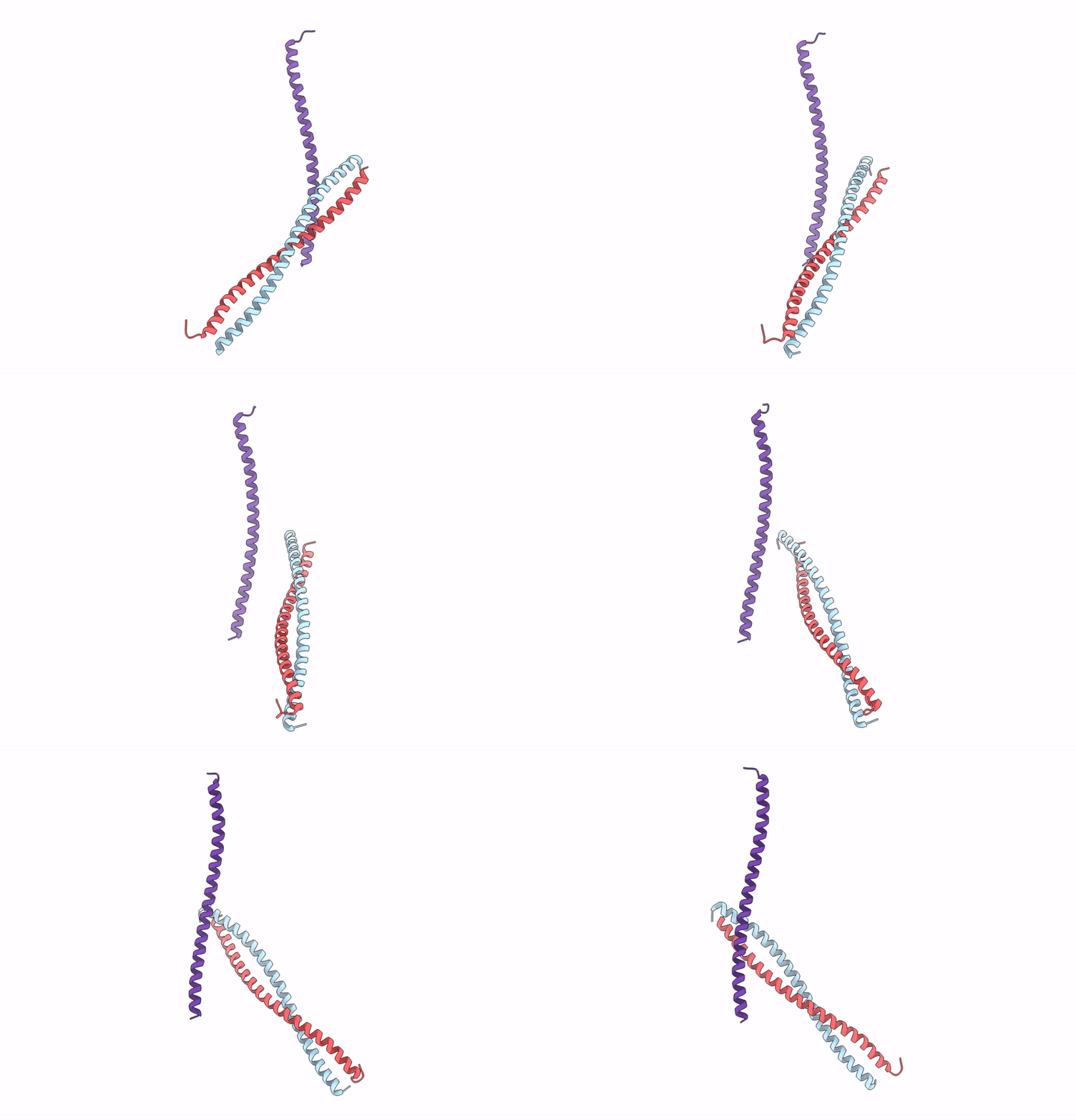
9VBS image
Deposition Date 2025-06-04
Release Date 2025-12-10
Last Version Date 2026-01-14
Entry Detail
PDB ID:
9VBS
Keywords:
Title:
Crystal structure of the coiled-coil of ALLO-1a
Biological Source:
Source Organism(s):
Expression System(s):
Method Details:
Experimental Method:
Resolution:
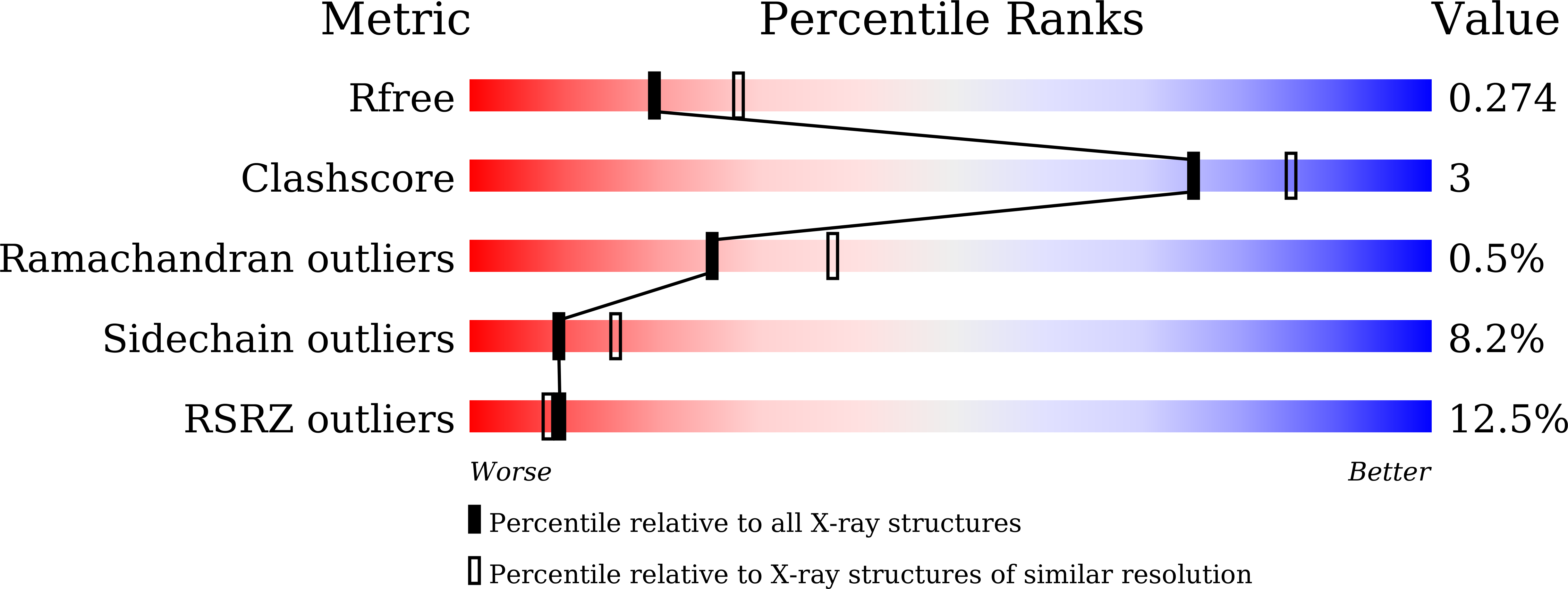
2.40 Å
R-Value Free:
0.26
R-Value Work:
0.23
R-Value Observed:
0.23
Space Group:
C 2 2 21
Macromolecular Entities
Structures with similar UniProt ID
Protein Blast
Polymer Type:polypeptide(L)
Molecule:Isoform a of Allophagy receptor allo-1
Gene (Uniprot):allo-1
Mutagens:L282M
Chain IDs:A, B, C
Chain Length:116
Number of Molecules:3
Biological Source:Caenorhabditis elegans
Primary Citation
ALLO-1a is a ubiquitin-binding adaptor for allophagy in Caenorhabditis elegans.
J.Cell.Sci. 138 ? ? (2025)
PMID: 41234204 DOI: 10.1242/jcs.264252

Abstact

In the nematode Caenorhabditis elegans, sperm-derived mitochondria and membranous organelles (MOs) are selectively degraded by autophagy in embryos in a process termed allophagy. For this process, ALLO-1 functions as an autophagy adaptor. The allo-1 gene encodes two splice isoforms, ALLO-1a and b, which have different C-terminal sequences and are predominantly targeted to MOs and paternal mitochondria, respectively. However, the mechanism by which ALLO-1 targets the paternal organelles remains unknown. In this study, X-ray crystallography analysis reveals that the C-terminal region of ALLO-1a forms a parallel coiled-coil structure. In addition, Alphafold-Multimer predicts that this region directly interacts with ubiquitin. We showed that ALLO-1a interacts with K48- and K63-linked polyubiquitin in vitro and found that the 355th Asp residue of ALLO-1a at the predicted interface with ubiquitin is important for its ubiquitin binding in vitro and also for its MO-targeting and MO degradation in embryos. These results suggest that ubiquitin is a marker for the recognition of MOs by the autophagy machinery in C. elegans embryos.

Legend

Protein

Chemical

Disease

Primary Citation of related structures
Feedback Form
Name
Email
Institute
Feedback