9V8E image
Deposition Date 2025-05-29
Release Date 2025-11-05
Last Version Date 2025-12-03
Entry Detail
PDB ID:
9V8E
Keywords:
Title:
PPARgamma ligand-binding domain in complex with PG11
Biological Source:
Source Organism:
Host Organism:
Method Details:
Experimental Method:
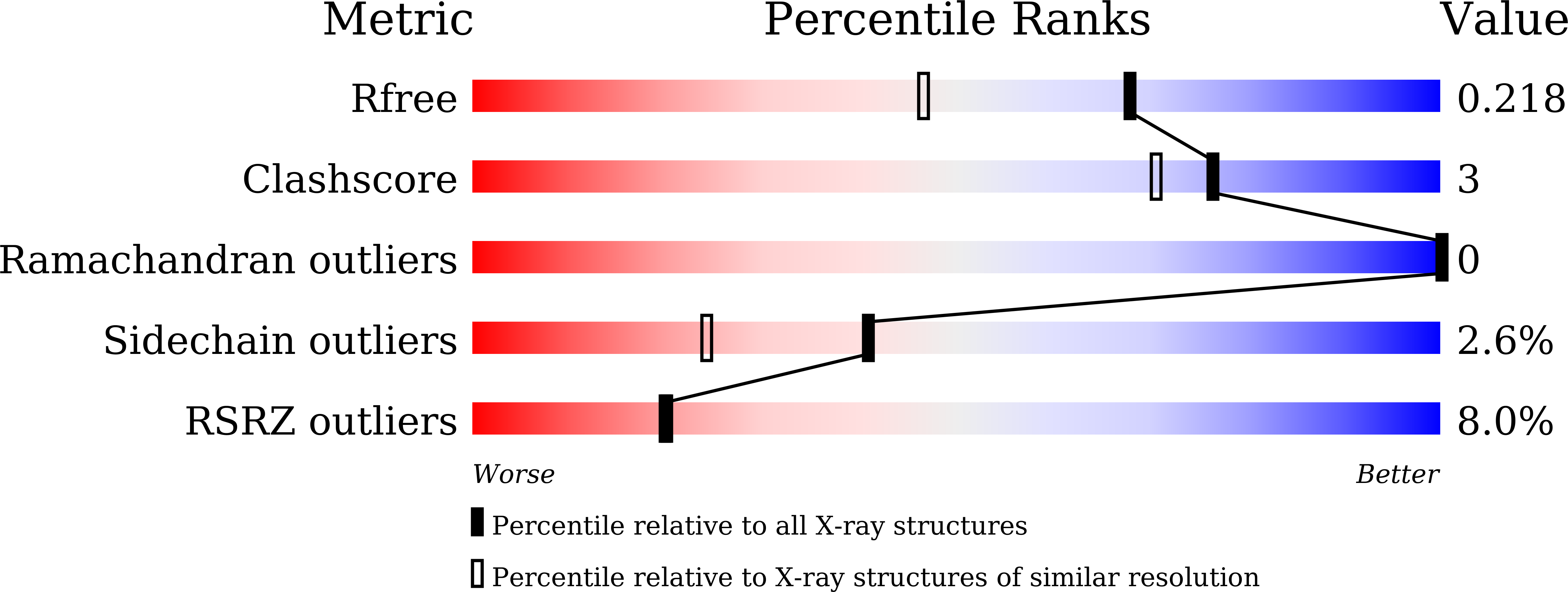
Resolution:
1.70 Å
R-Value Free:
0.21
R-Value Work:
0.17
R-Value Observed:
0.17
Space Group:
P 65
Macromolecular Entities
Structures with similar UniProt ID
Protein Blast
Polymer Type:polypeptide(L)
Molecule:Peroxisome proliferator-activated receptor gamma
Gene (Uniprot):PPARG
Chain IDs:A
Chain Length:275
Number of Molecules:1
Biological Source:Homo sapiens
Polymer Type:polypeptide(L)
Molecule:PG11
Chain IDs:B
Chain Length:19
Number of Molecules:1
Biological Source:synthetic construct
Ligand Molecules
Primary Citation
De Novo Discovery of alpha , alpha-Disubstituted alpha-amino Acid-Containing alpha-helical Peptides as Competitive PPAR gamma PPI Inhibitors.
J.Am.Chem.Soc. 147 42607 42617 (2025)
PMID: 41188059 DOI: 10.1021/jacs.5c13803

Abstact

α,α-Disubstituted α-amino acids (dαAAs) are important building blocks for peptidomimetics as they are strong inducers of helicity and protect against proteolytic degradation. However, de novo discovery of dαAA-containing peptides with genetically encoded libraries is limited due to their poor incorporation efficiency. Here, we report the optimized ribosomal incorporation of multiple achiral dαAAs into peptide libraries and their application to high-throughput (>1012 members) affinity selection against the nuclear receptor peroxisome proliferator-activated receptor-gamma (PPARγ). This dαAA-based screening methodology discovered potent linear and macrocyclic α-helical peptides with low-to-sub nanomolar binding affinities. Hit peptides were proteolytically stable in serum and cell permeable, allowing for in cellulo antagonism of PPARγ. X-ray crystallography revealed that dαAA-containing peptides bound at the α-helical protein-protein interaction (PPI) interface via an α-helical conformation. This work validates the potential of a dαAA-based, α-helical discovery platform, providing access to new chemical and conformational space to de novo identify novel α-helical peptidomimetics.

Legend

Protein

Chemical

Disease

Primary Citation of related structures
Feedback Form
Name
Email
Institute
Feedback