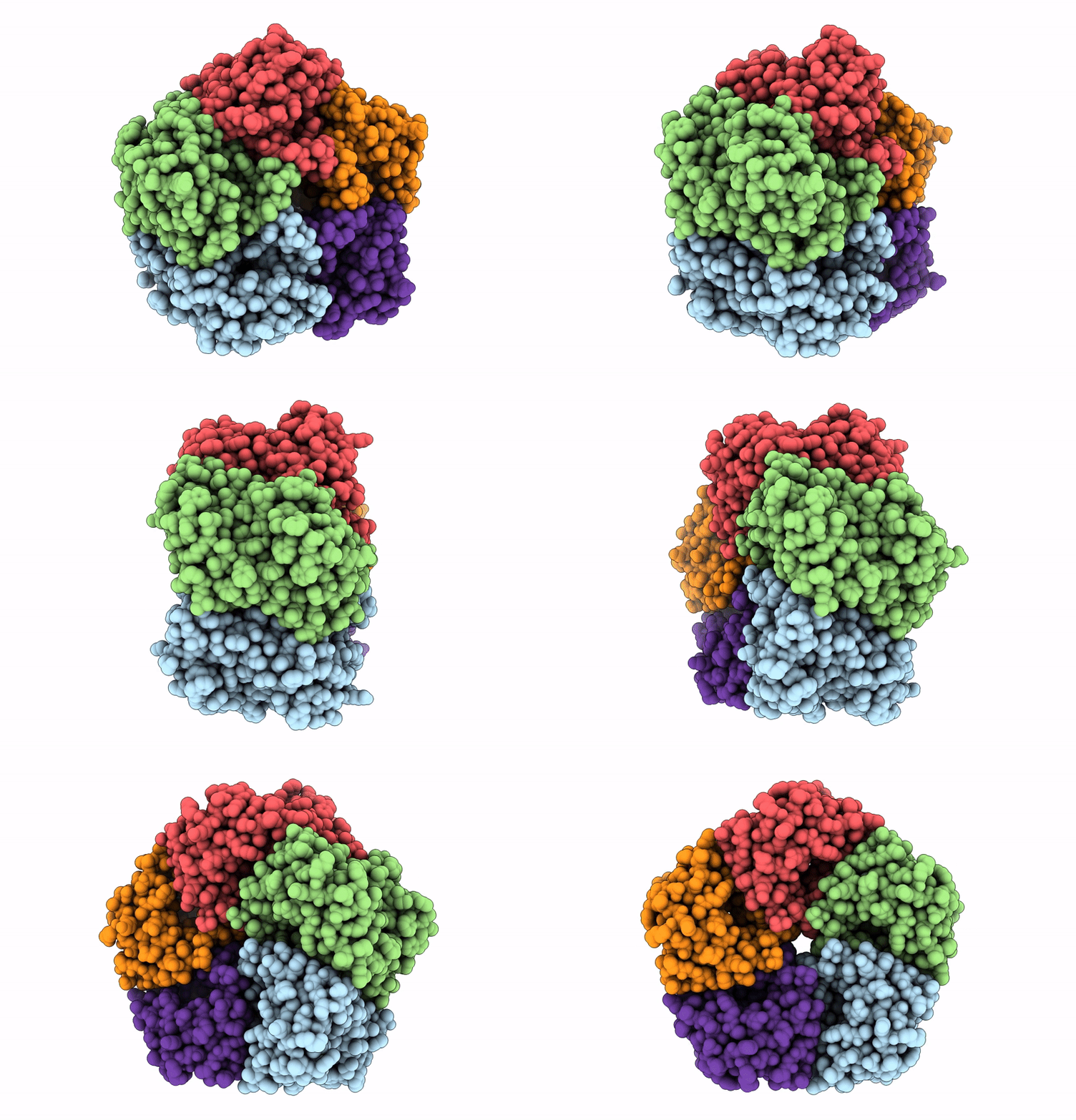
9V2A image
Deposition Date 2025-05-19
Release Date 2025-11-26
Last Version Date 2026-01-28
Entry Detail
PDB ID:
9V2A
Title:
The Chlamydomonas reinhardtii bicarbonate transporter LciA
Biological Source:
Source Organism(s):
Expression System(s):
Method Details:
Experimental Method:
Resolution:
2.37 Å
Aggregation State:
PARTICLE
Reconstruction Method:
SINGLE PARTICLE
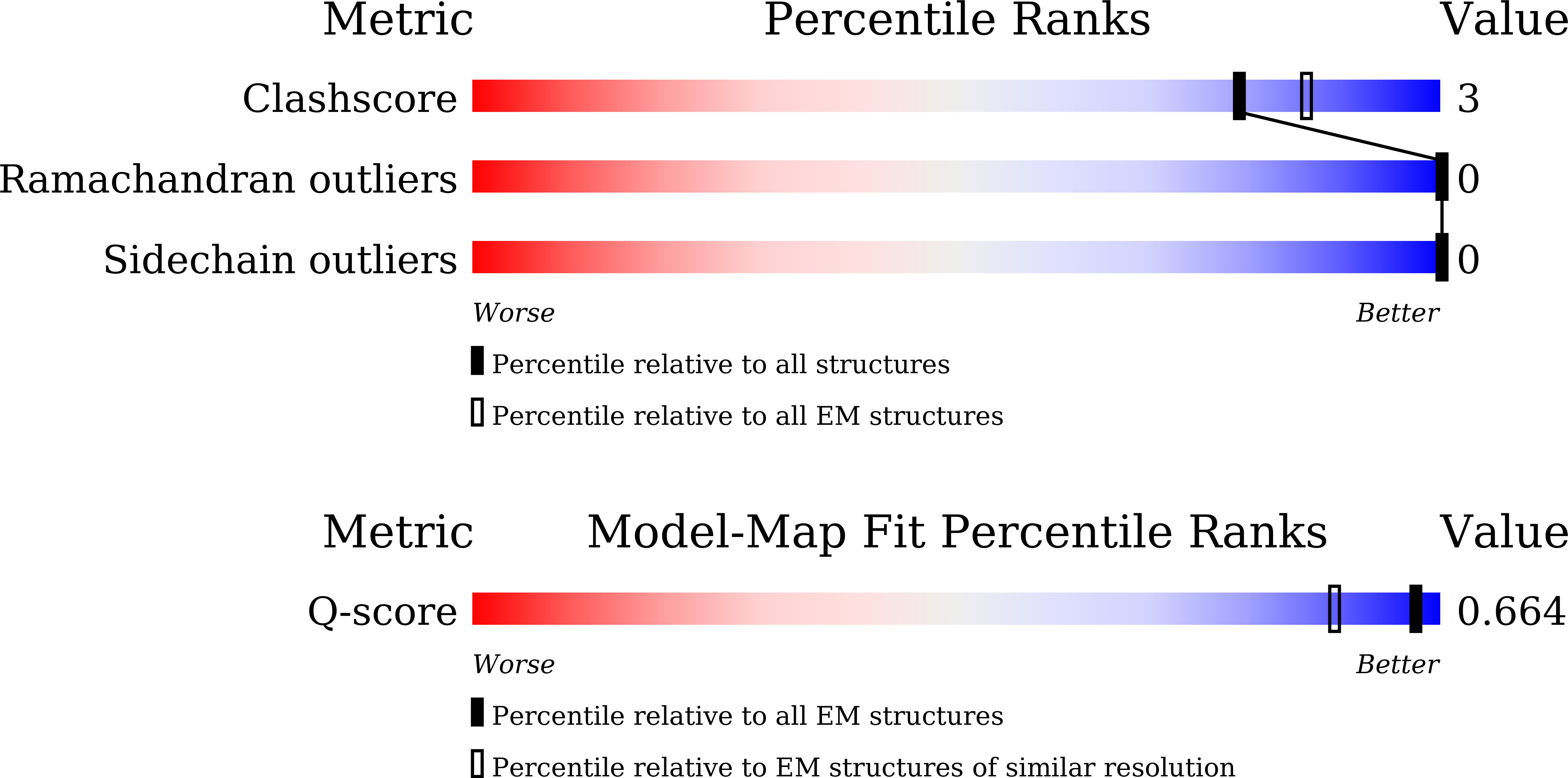
Macromolecular Entities
Structures with similar UniProt ID
Protein Blast
Polymer Type:polypeptide(L)
Molecule:Low-CO2 inducible protein LCIA
Gene (Uniprot):LciA
Chain IDs:A, B, C, D, E
Chain Length:309
Number of Molecules:5
Biological Source:Chlamydomonas reinhardtii
Ligand Molecules
Primary Citation
Structure of Chlamydomonas reinhardtii LciA guided the engineering of FNT family proteins to gain bicarbonate transport activity.
Nat.Plants ? ? ? (2026)
PMID: 41507353 DOI: 10.1038/s41477-025-02200-9

Abstact

Engineering functional CO2-concentrating mechanisms into C3 crops holds great potential for enhancing photosynthetic efficiency. Limited CO2-inducible A (LciA), a chloroplast envelope bicarbonate channel belonging to the formate/nitrite transporter (FNT) family, is a key algal CO2-concentrating mechanism component and has been considered as a prime candidate for introduction into C3 plants. However, its application has been hindered by an incomplete mechanistic understanding. Here we report the cryogenic electron microscopy structure of Chlamydomonas reinhardtii LciA. Combining structural analysis and growth assays, we determined key residues governing substrate access and permeation, and identified two substitutions (K136A/A114F) that enhance LciA activity. We found that bicarbonate selectivity is governed by electrostatic coordination mediated by Lys220 and steric constraint imposed by Ala117 and Val267 within the selectivity filter. Leveraging these insights, we successfully engineered the bacterial FNT family nitrite channel NirC through site-directed mutagenesis to gain bicarbonate transport activity, and we characterized the bicarbonate transport capacity of the Chlamydomonas nitrite channels NAR1.1/NAR1.5, which were amenable to further enhancement. Taken together, our study establishes LciA as a fundamental template for engineering and identifying FNT proteins with bicarbonate transport capability, thereby greatly expanding the molecular toolkit for synthetic biology approaches aimed at boosting photosynthetic efficiency in both algae and crops.

Legend

Protein

Chemical

Disease

Primary Citation of related structures
Feedback Form
Name
Email
Institute
Feedback