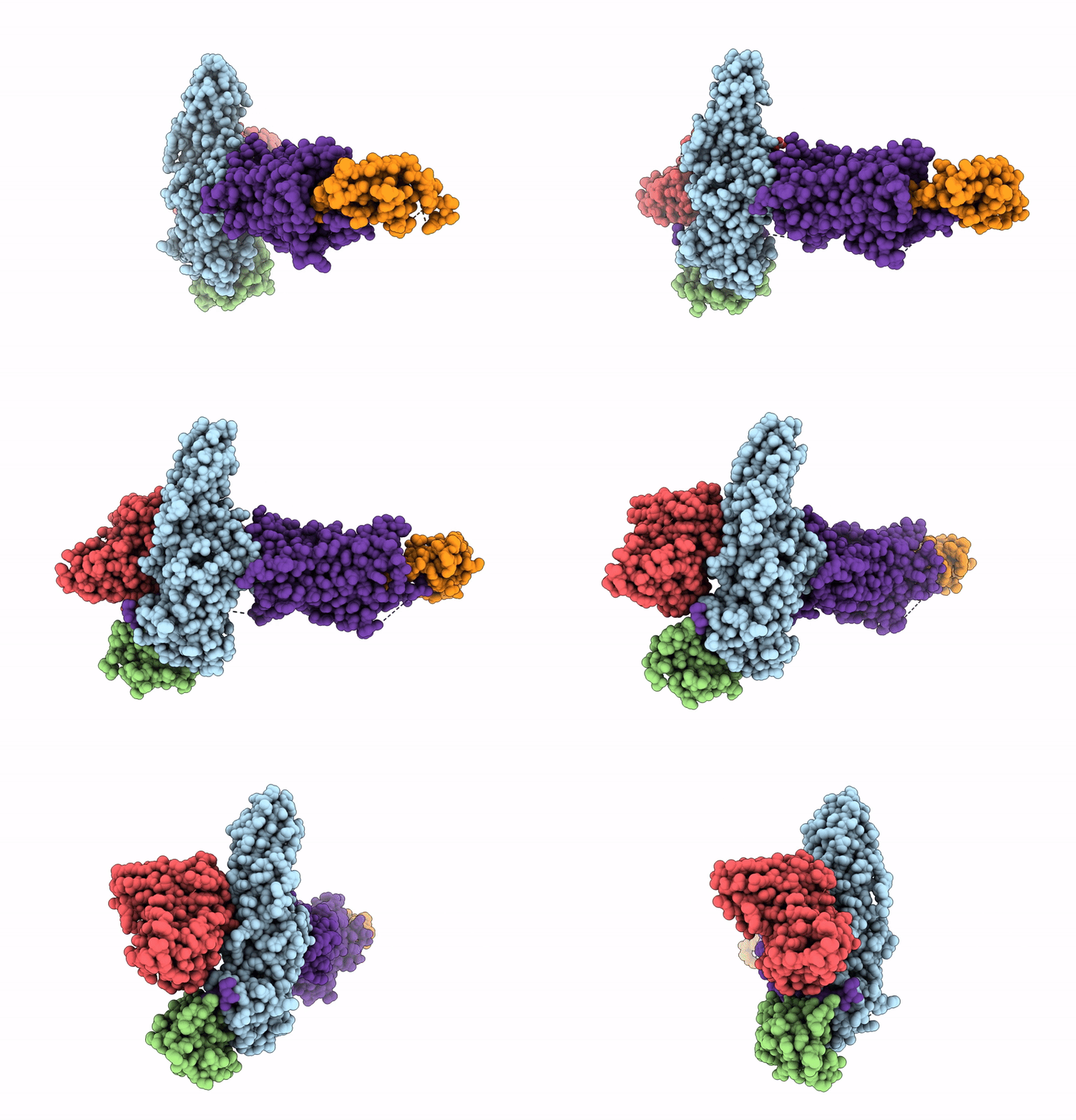
9UYM image
Deposition Date 2025-05-15
Release Date 2025-11-19
Last Version Date 2025-12-03
Entry Detail
PDB ID:
9UYM
Title:
Composite map of the G protein-coupled receptor 1 (GPR1) bound to chemerin and beta-arrestin 2
Biological Source:
Source Organism(s):
Method Details:
Experimental Method:
Resolution:
3.50 Å
Aggregation State:
PARTICLE
Reconstruction Method:
SINGLE PARTICLE
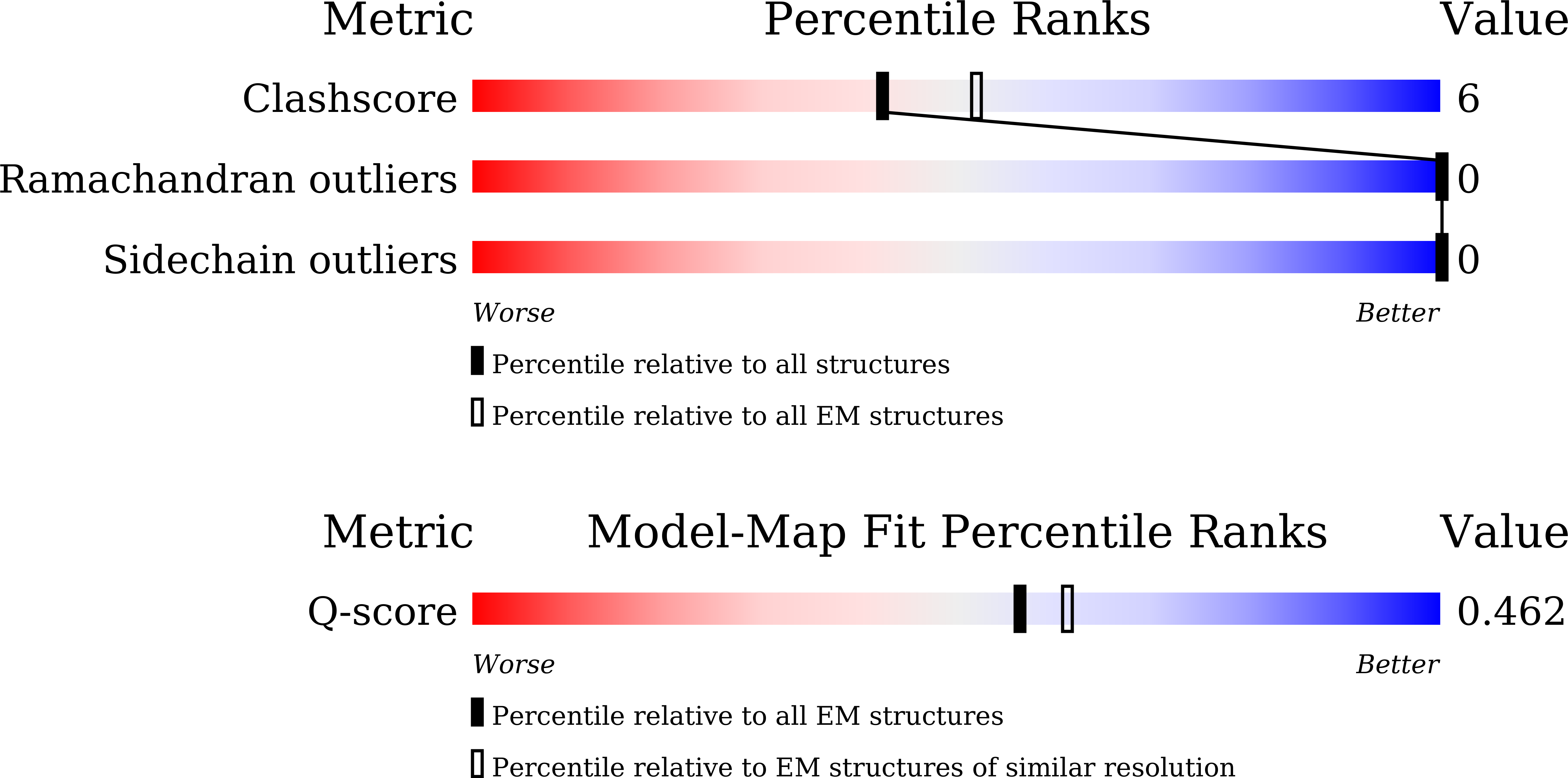
Macromolecular Entities
Protein Blast
Polymer Type:polypeptide(L)
Molecule:Beta-arrestin-2,Beta-arrestin-1
Gene (Uniprot):ARRB2, ARRB1
Mutagens:C17G,C60V,C126S,C141L,C151V,C243V,C252V and C270S
Chain IDs:D (auth: A)
Chain Length:369
Number of Molecules:1
Biological Source:Homo sapiens
Polymer Type:polypeptide(L)
Molecule:Nanobody 32
Chain IDs:B
Chain Length:120
Number of Molecules:1
Biological Source:Escherichia phage EcSzw-2
Polymer Type:polypeptide(L)
Molecule:Single-chain fragment variable 30 (scFv30)
Chain IDs:C
Chain Length:245
Number of Molecules:1
Biological Source:Homo sapiens
Structures with similar UniProt ID
Protein Blast
Polymer Type:polypeptide(L)
Molecule:Retinoic acid receptor responder protein 2
Gene (Uniprot):RARRES2
Chain IDs:A (auth: L)
Chain Length:153
Number of Molecules:1
Biological Source:Homo sapiens
Protein Blast
Polymer Type:polypeptide(L)
Molecule:Chemerin-like receptor 2,Vasopressin V2 receptor
Gene (Uniprot):AVPR2, CMKLR2
Chain IDs:E (auth: R)
Chain Length:414
Number of Molecules:1
Biological Source:Homo sapiens
Modified Residue
Compound ID Chain ID Parent Comp ID Details 2D Image
SEP E SER modified residue
TPO E THR modified residue
Ligand Molecules
Primary Citation
Noncanonical agonist-dependent and -independent arrestin recruitment of GPR1.
Science 390 eadt8794 eadt8794 (2025)
PMID: 41264711 DOI: 10.1126/science.adt8794

Abstact

G protein (heterotrimeric guanine nucleotide-binding protein)-coupled receptors have diverse signaling properties with differential preferences for downstream pathways. Certain receptors, such as the chemerin receptor GPR1, undergo arrestin-mediated internalization but weak G protein signaling. However, the mechanisms of this unusual signaling pattern and its physiological relevance are unclear. We report the structures of GPR1 bound to chemerin and β-arrestin 1 or β-arrestin 2 and an agonist-free GPR1-β-arrestin 1 complex. Upon agonist stimulation, the receptor binds the two arrestins in distinct interaction patterns, which may account for their differential cellular responses. Agonist-independent internalization was mediated by an inactive, constitutively phosphorylated GPR1 that accommodates β-arrestin 1 in an unconventional pocket together with a fatty acid, which potentially provides a basis for GPR1 modulating lipid accumulation in lipid-overloaded adipocytes.

Legend

Protein

Chemical

Disease

Primary Citation of related structures
Feedback Form
Name
Email
Institute
Feedback