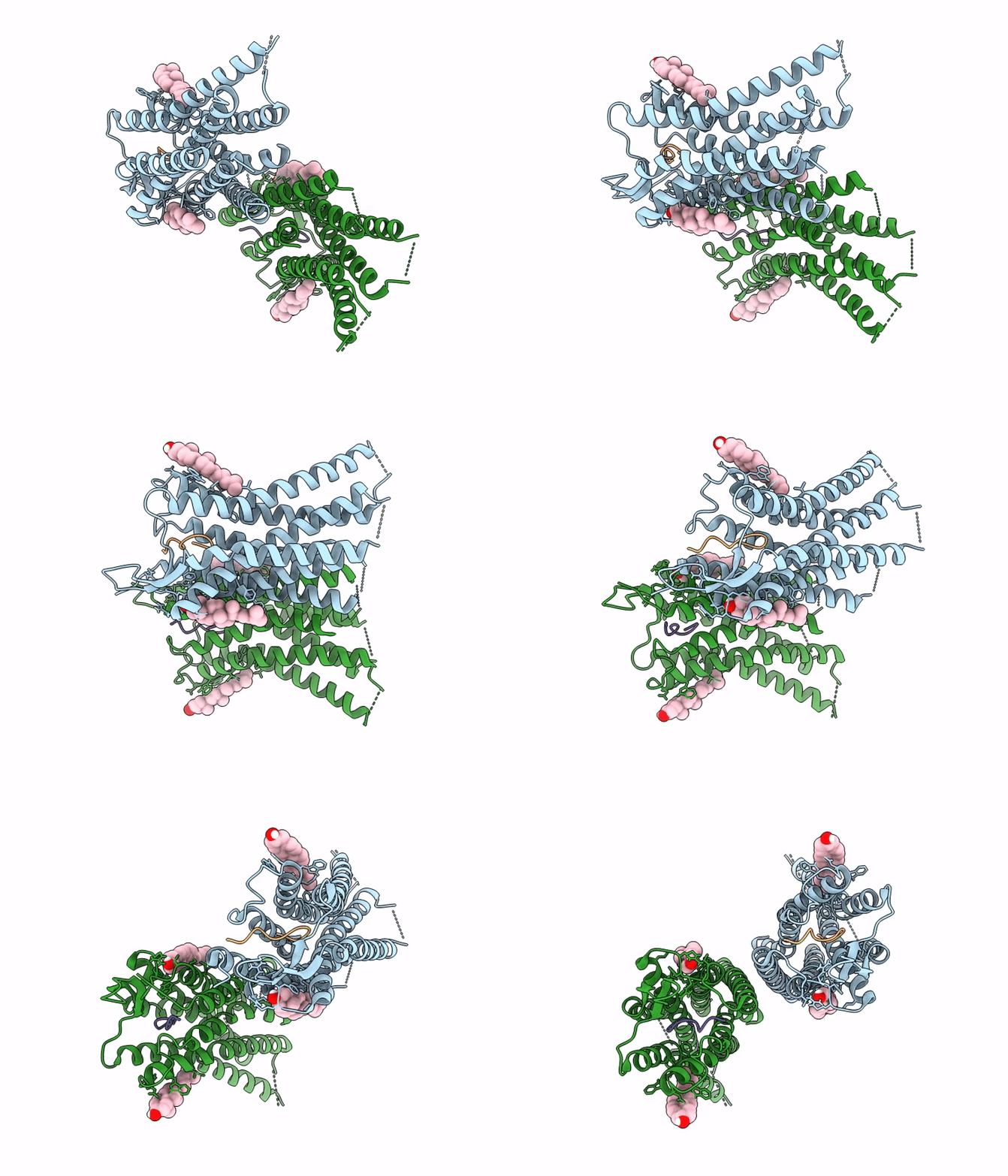
9UWI image
Deposition Date 2025-05-12
Release Date 2026-01-28
Last Version Date 2026-01-28
Entry Detail
PDB ID:
9UWI
Title:
Cryo-EM structure of human V1aR bound with atosiban at a resolution of 2.8 angstrom
Biological Source:
Source Organism(s):
Expression System(s):
Method Details:
Experimental Method:
Resolution:
2.80 Å
Aggregation State:
PARTICLE
Reconstruction Method:
SINGLE PARTICLE
Macromolecular Entities
Structures with similar UniProt ID
Protein Blast
Polymer Type:polypeptide(L)
Molecule:Vasopressin V1a receptor
Gene (Uniprot):AVPR1A
Chain IDs:A, B
Chain Length:386
Number of Molecules:2
Biological Source:Homo sapiens
Polymer Type:polypeptide(L)
Molecule:Atosiban
Chain IDs:C, D
Chain Length:10
Number of Molecules:2
Biological Source:synthetic construct
Ligand Molecules
Primary Citation
Molecular basis of antagonism of the dimeric human arginine vasopressin receptor 1A.
Nat Commun ? ? ? (2026)
PMID: 41545407 DOI: 10.1038/s41467-026-68331-5

Abstact

Arginine vasopressin (AVP) and oxytocin (OT) are peptide hormones critical for various physiological processes. Vasopressin receptor 1 A (V1aR), a primary AVP target, is promising for central nervous system (CNS) disorders therapies, yet the mechanisms of antagonism and oligomerization remain poorly understood. Here, we present structures of human V1aR in its apo state and in complexes with antagonists: atosiban, balovaptan, and SRX246. Structural analyses reveal a dimeric V1aR assembly, validated by functional assays and imaging in cells. The apo structure shows a flat extracellular loop 2 (ECL2) with unpaired cysteines, undergoing significant conformational changes upon ligand binding. Antagonist-bound structures, combined with mutagenesis and radioligand binding assays, uncover distinct binding modes and key determinants for antagonism and selectivity. These findings provide a comprehensive understanding of V1aR assembly and dynamic regulation, offering valuable insights for structure-guided development of new antagonists targeting dimeric V1aR for CNS disorders.

Legend

Protein

Chemical

Disease

Primary Citation of related structures
Feedback Form
Name
Email
Institute
Feedback