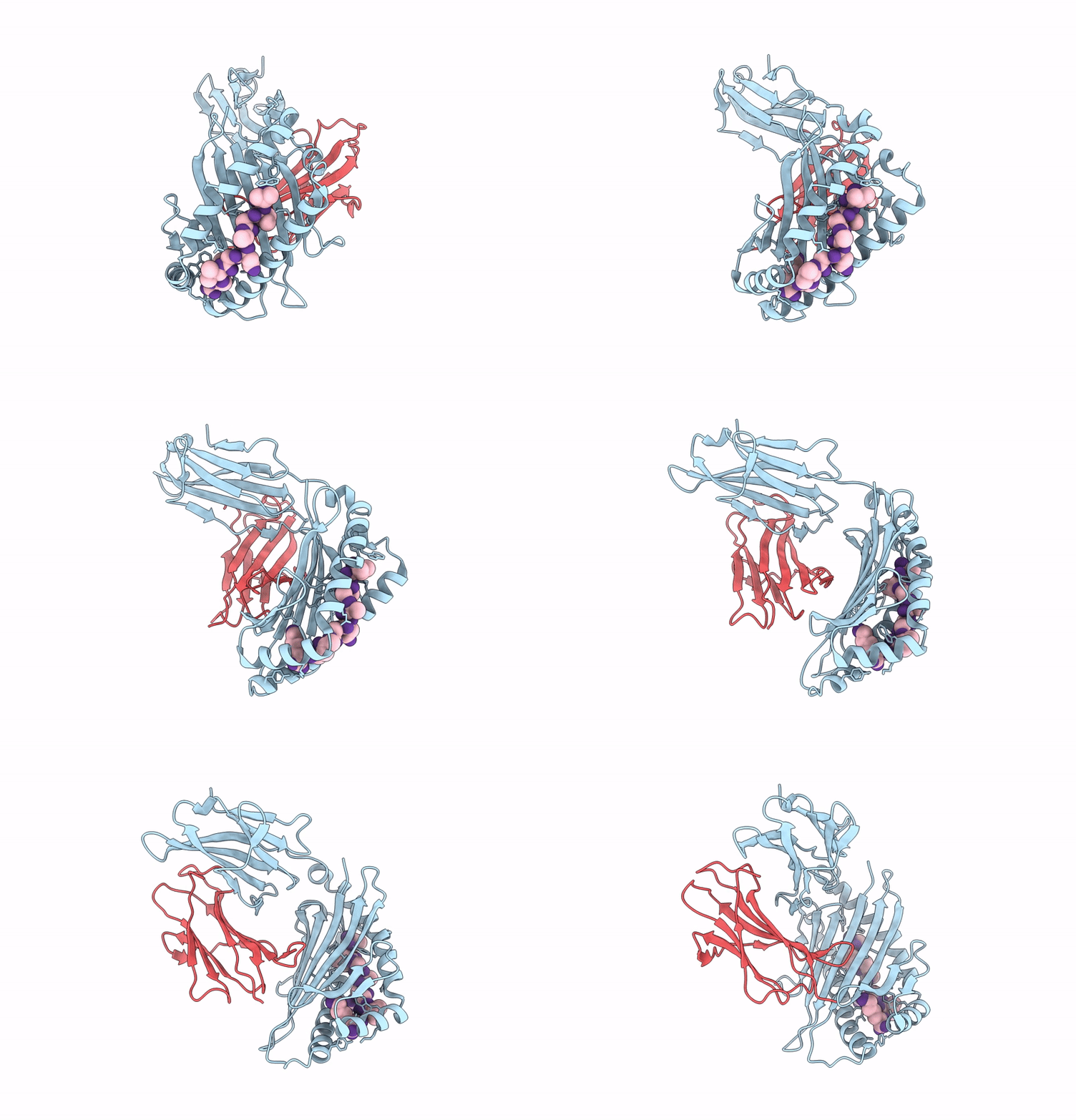
9UV8 image
Deposition Date 2025-05-09
Release Date 2025-12-24
Last Version Date 2025-12-24
Entry Detail
PDB ID:
9UV8
Keywords:
Title:
Crystal structure of HLA-A*11:01 in complex with KRAS G12D 9-mer peptide (VVGADGVGK)
Biological Source:
Source Organism:
Homo sapiens (Taxon ID: 9606)
Host Organism:
Method Details:
Experimental Method:
Resolution:
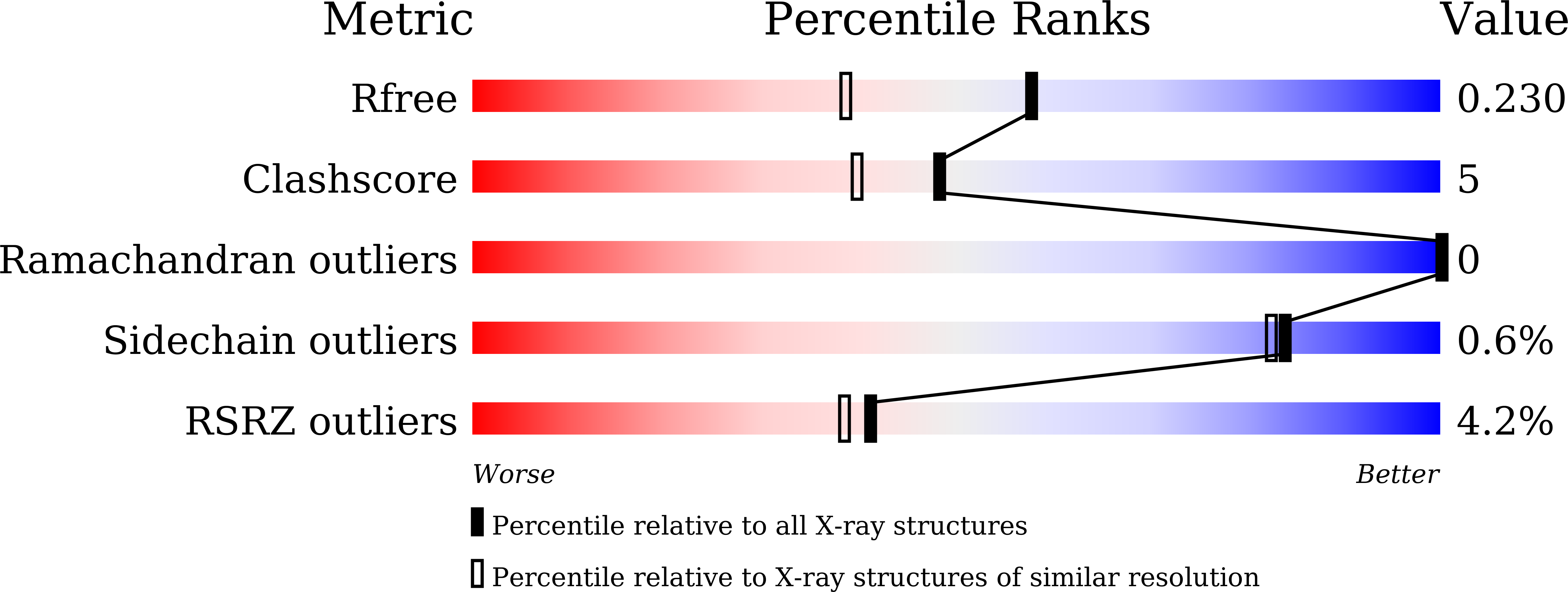
1.79 Å
R-Value Free:
0.23
R-Value Work:
0.19
R-Value Observed:
0.19
Space Group:
P 1 21 1
Macromolecular Entities
Structures with similar UniProt ID
Protein Blast
Polymer Type:polypeptide(L)
Molecule:HLA class I histocompatibility antigen, A alpha chain
Gene (Uniprot):HLA-A
Chain IDs:A
Chain Length:276
Number of Molecules:1
Biological Source:Homo sapiens
Structures with similar UniProt ID
Protein Blast
Polymer Type:polypeptide(L)
Molecule:Beta-2-microglobulin
Gene (Uniprot):B2M
Chain IDs:B
Chain Length:122
Number of Molecules:1
Biological Source:Homo sapiens
Polymer Type:polypeptide(L)
Molecule:KRAS G12D-9mer (VVGADGVGK)
Chain IDs:C
Chain Length:9
Number of Molecules:1
Biological Source:Homo sapiens
Primary Citation
Structure guided analysis of KRAS G12 mutants in HLA-A*11:01 reveals a length encoded immunogenic advantage in G12D.
Commun Biol ? ? ? (2025)
PMID: 41339521 DOI: 10.1038/s42003-025-09285-0

Abstact

KRAS G12 mutations are frequent oncogenic drivers, yet their differential immunogenicity complicates T cell-based therapies. Here, we integrate structural, biophysical, and functional analyses to examine how KRAS G12 variants remodel peptide-MHC-I (pMHC) architecture and T cell receptor (TCR) recognition. Using HLA-A*11:01, we show that single residue substitutions at position 12 induce distinct conformational changes in the MHC groove, with G12D uniquely destabilizing the complex through a buried aspartate side chain. Notably, G12D peptides adopt two registers, a 9-mer and a 10-mer, that diverge sharply in structure and immunogenicity. The 10-mer forms a compact, stable pMHC with a TCR-accessible surface, while the 9-mer adopts a bent conformation incompatible with recognition. Molecular dynamics and NMR titration confirm the superior stability and binding affinity of the 10-mer. These results highlight how peptide length and conformation critically shape immune visibility, offering mechanistic insight for optimizing TCR-T therapies against elusive neoantigens like KRAS G12D.

Legend

Protein

Chemical

Disease

Primary Citation of related structures
Feedback Form
Name
Email
Institute
Feedback