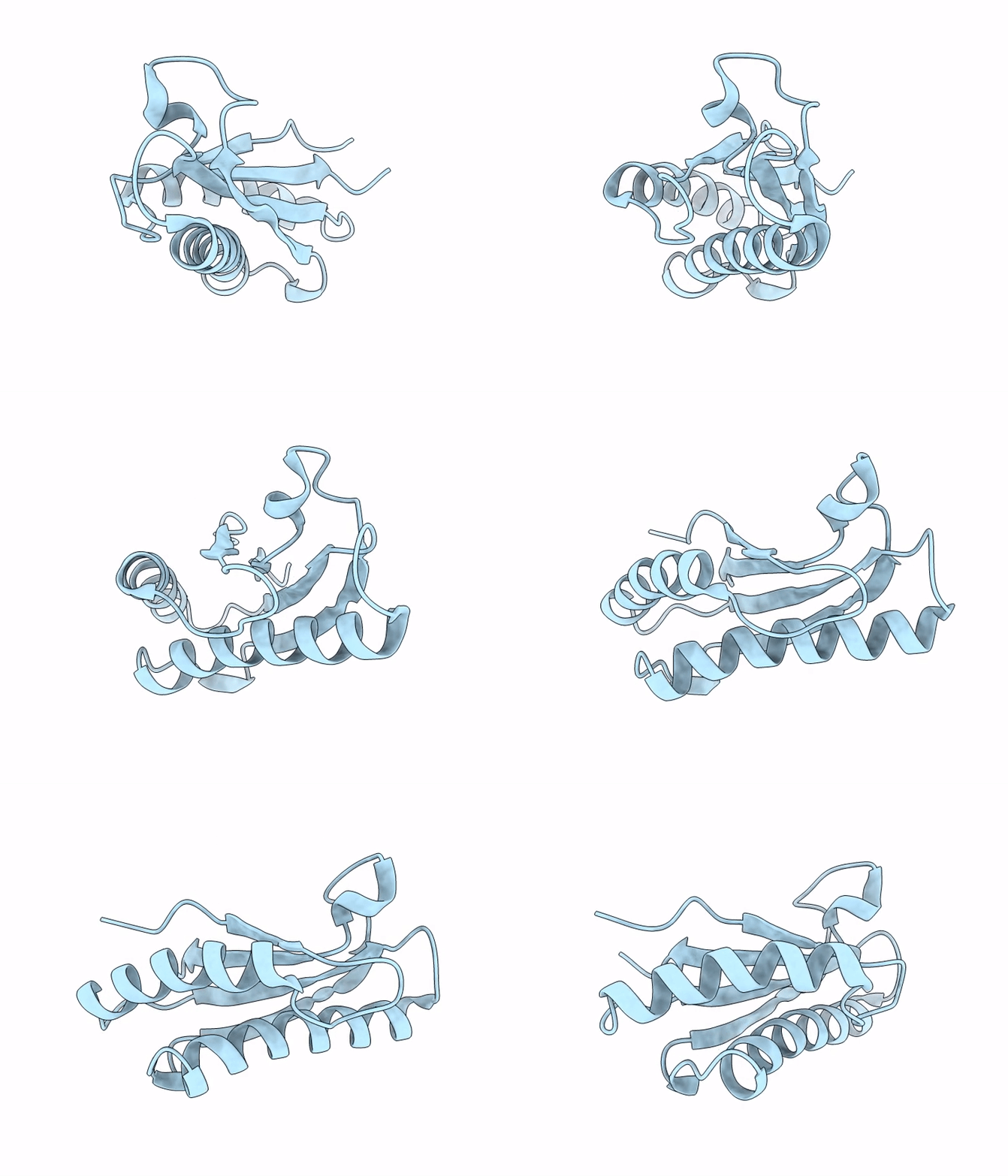
9UU2 image
Deposition Date 2025-05-05
Release Date 2025-10-01
Last Version Date 2025-10-22
Entry Detail
PDB ID:
9UU2
Title:
Outer membrane protein OmpA-c-like domain
Biological Source:
Source Organism:
Method Details:
Experimental Method:
Resolution:
1.90 Å
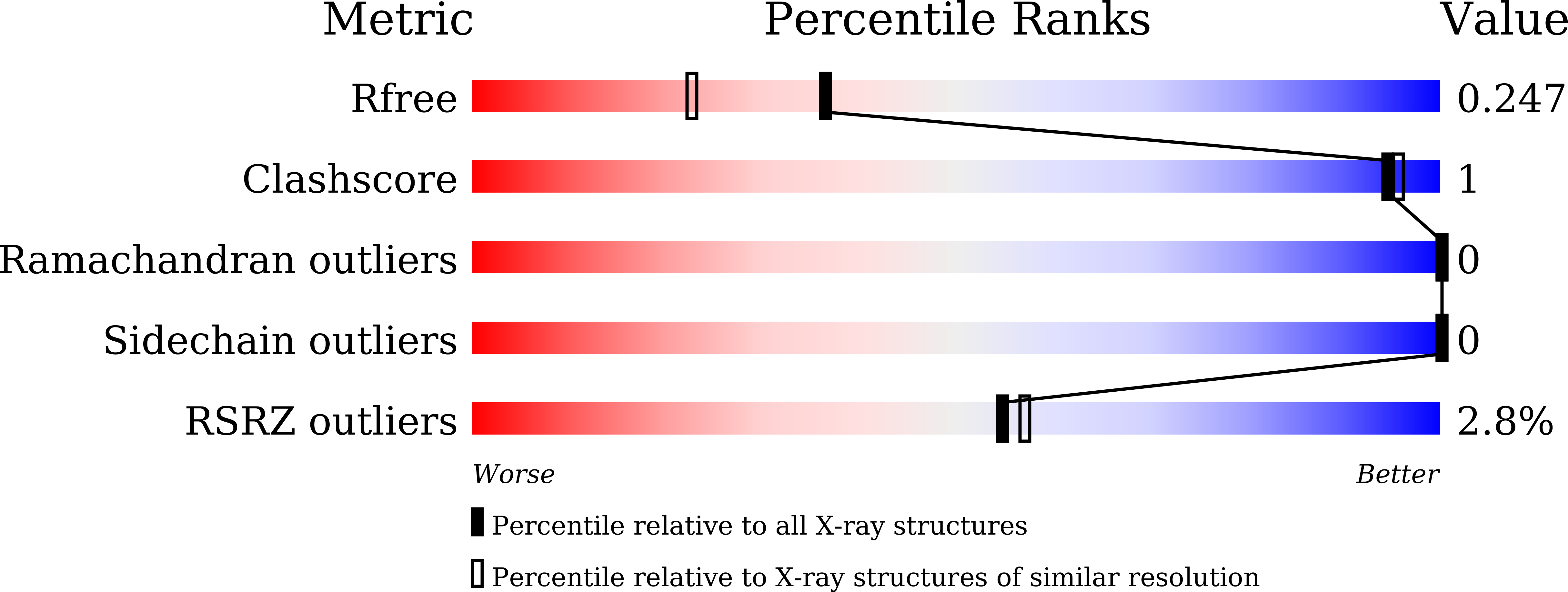
R-Value Free:
0.24
R-Value Work:
0.21
R-Value Observed:
0.21
Space Group:
P 31 2 1
Macromolecular Entities
Structures with similar UniProt ID
Protein Blast
Polymer Type:polypeptide(L)
Molecule:Major outer membrane protein
Gene (Uniprot):ompA
Chain IDs:A
Chain Length:109
Number of Molecules:1
Biological Source:Bacteroides fragilis NCTC 9343
Primary Citation
A nonenzymatic effector disrupts Bacteroides cell wall homeostasis via OmpA targeting to mediate interbacterial competition.
Proc.Natl.Acad.Sci.USA 122 ? ? (2025)
PMID: 41055976 DOI: 10.1073/pnas.2513207122

Abstact

The human gut microbiome is a dynamic ecosystem where bacteria engage in interspecies competition using molecular weapons such as the type VI secretion system (T6SS). Here, we characterize BteO-BtiO, a unique effector-immunity pair in Bacteroides fragilis that mediates antagonism via a nonenzymatic mechanism. Microscopy reveals that BteO exposure leads to cell elongation, membrane blebbing, and lysis in sensitive strains. Structural and biochemical analyses demonstrate that BteO disrupts cell wall homeostasis by binding to conserved C-terminal domains of OmpA-family proteins (OmpAs), which are critical for outer membrane integrity. The immunity protein BtiO neutralizes BteO by mimicking the OmpA-binding interface. We further show that bile salts enhance BteO-mediated killing in vitro and that BteO confers a competitive advantage in the mammalian gut. Remarkably, BteO exhibits broad-spectrum activity across Bacteroides species. These findings reveal a nonenzymatic strategy of bacterial antagonism and broaden our understanding of T6SS effector diversity within Bacteroides.

Legend

Protein

Chemical

Disease

Primary Citation of related structures
Feedback Form
Name
Email
Institute
Feedback