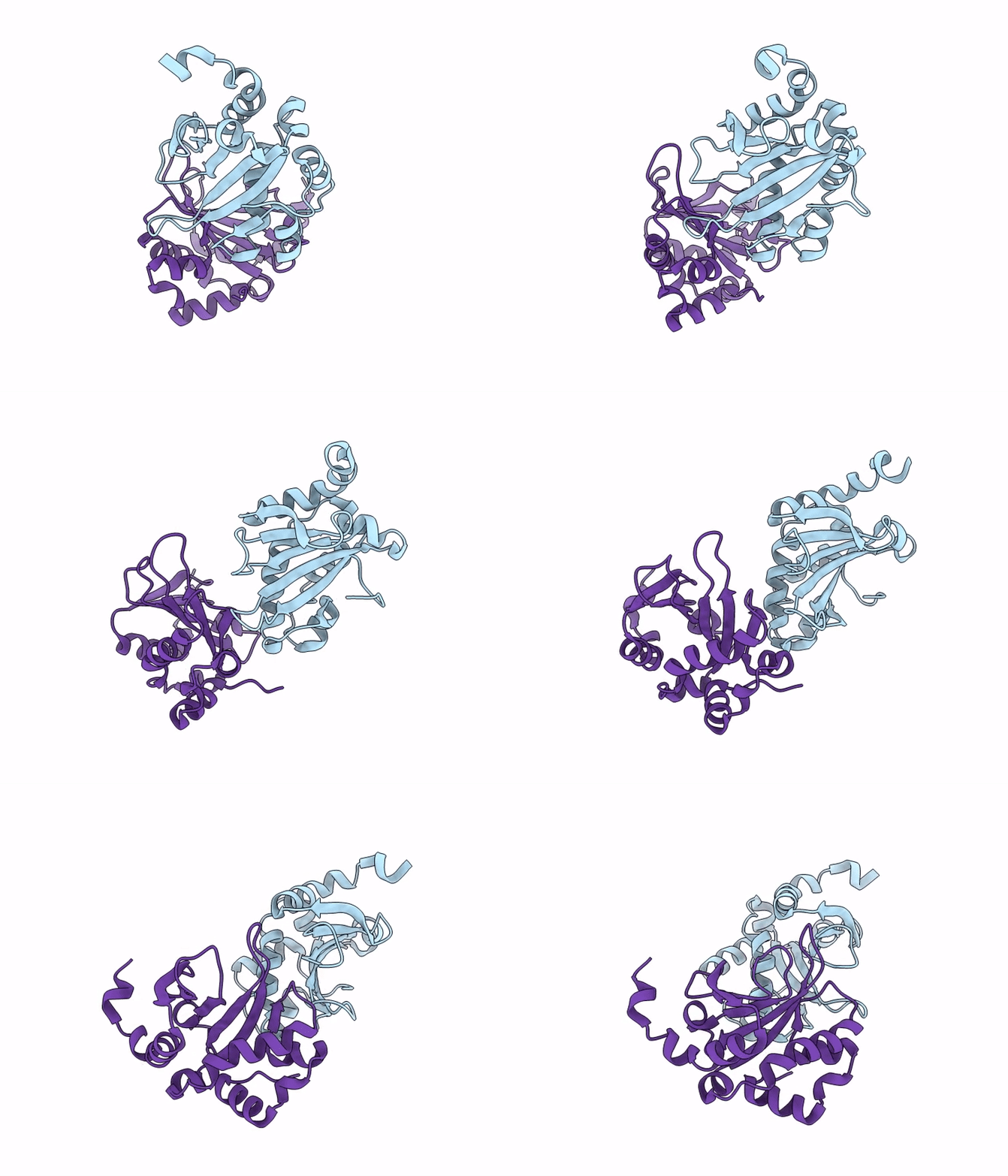
9UTM image
Deposition Date 2025-05-04
Release Date 2025-10-01
Last Version Date 2025-10-01
Entry Detail
PDB ID:
9UTM
Keywords:
Title:
Crystal structure of an anti-CRISPR protein AcrIIA11
Biological Source:
Source Organism:
Method Details:
Experimental Method:
Resolution:
3.20 Å
R-Value Free:
0.28
R-Value Work:
0.24
R-Value Observed:
0.24
Space Group:
P 62
Macromolecular Entities
Structures with similar UniProt ID
Protein Blast
Polymer Type:polypeptide(L)
Molecule:AcrIIA11
Gene (Uniprot):DXA97_05675
Chain IDs:A, B
Chain Length:187
Number of Molecules:2
Biological Source:Clostridium sp. OF09-36
Ligand Molecules
Primary Citation
Crystal structure and inhibition mechanism of AcrIIA11.
Biochem.Biophys.Res.Commun. 772 152073 152073 (2025)
PMID: 40414010 DOI: 10.1016/j.bbrc.2025.152073

Abstact

Anti-CRISPR (Acr) proteins are naturally evolved inhibitors that precisely target and suppress CRISPR-Cas systems, representing a sophisticated molecular arms race between bacteriophages and their bacterial hosts. While Class 1 systems dominate among sequenced prokaryotic genomes, Class 2 systems remain primary sources of editing tools. Here, we report the structural and mechanistic characterization of AcrIIA11, an anti-CRISPR protein that simultaneously inhibits Streptococcus pyogenes (SpyCas9) and Staphylococcus aureus Cas9 (SauCas9). The 3.2 Å crystal structure reveals a compact α/β fold with distinct electropositive clefts implicated in DNA binding. While DALI analysis identified structural homology to transcriptional regulators and the RecA inhibitor PsiB (RMSD 3.3 Å), functional studies established that AcrIIA11 forms stable ternary complexes with both Cas9 orthologs and sgRNA. Biochemical assays demonstrated stronger inhibition of SauCas9 compared to SpyCas9, with EMSA revealing a critical dichotomy: AcrIIA11 maintains SauCas9-sgRNA binding to specific target DNA while completely blocking cleavage activity. Computational docking localizes AcrIIA11 at the HNH-RuvC interface without obstructing DNA-binding channels in SauCas9, suggesting allosteric inhibition through HNH domain displacement. This work establishes AcrIIA11 as a dual-purpose Cas9 inhibitor that preserves target recognition while inactivating nuclease function-a mechanism with potential applications in precision CRISPR control.

Legend

Protein

Chemical

Disease

Primary Citation of related structures
Feedback Form
Name
Email
Institute
Feedback