9UOA image
Deposition Date 2025-04-25
Release Date 2025-05-14
Last Version Date 2025-09-17
Entry Detail
PDB ID:
9UOA
Keywords:
Title:
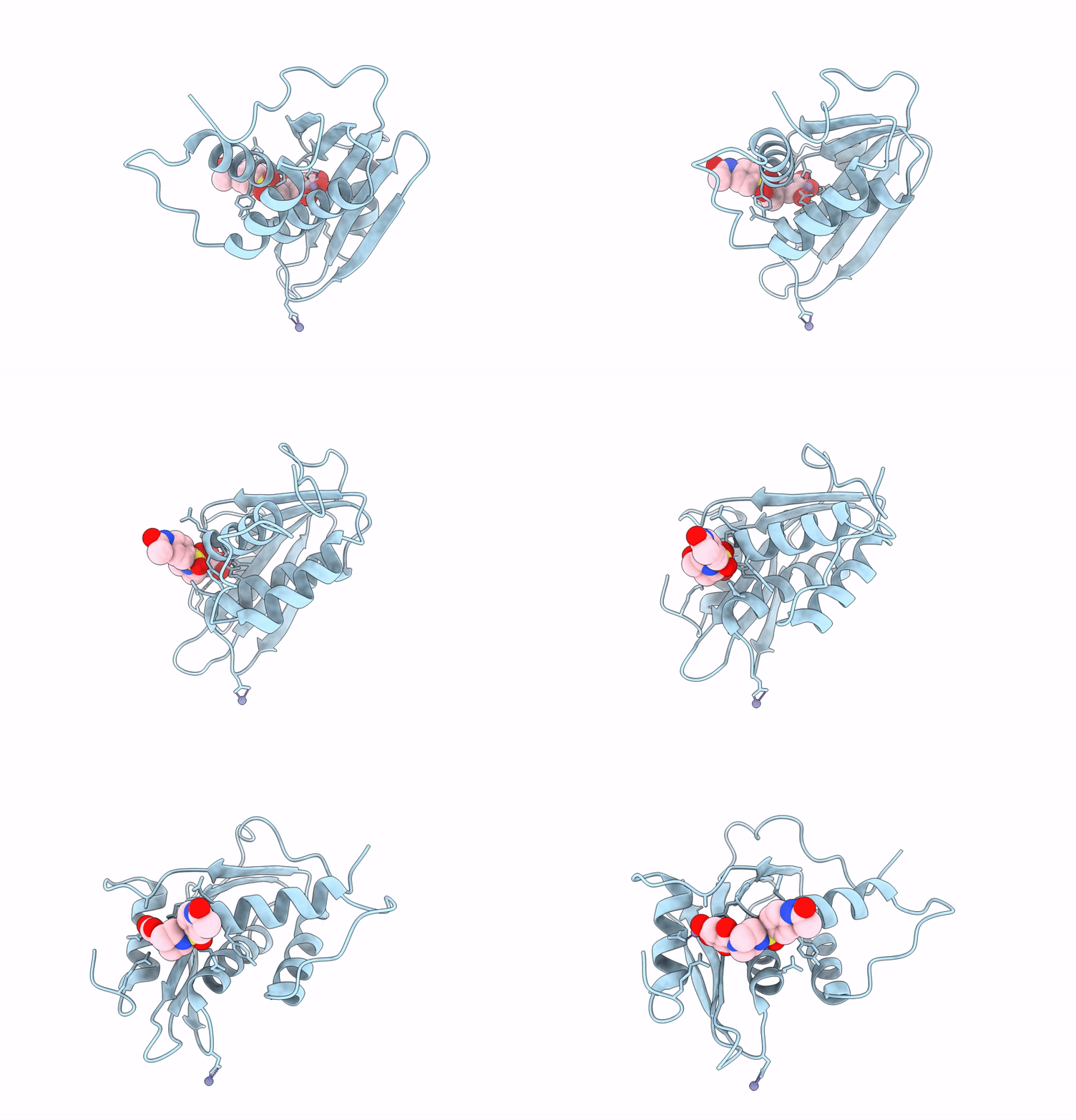
Crystal structure of HIV-1 Reverse Transcriptase RNase H domain complexed with a galloyl inhibitor
Biological Source:
Source Organism:
Host Organism:
Method Details:
Experimental Method:
Resolution:
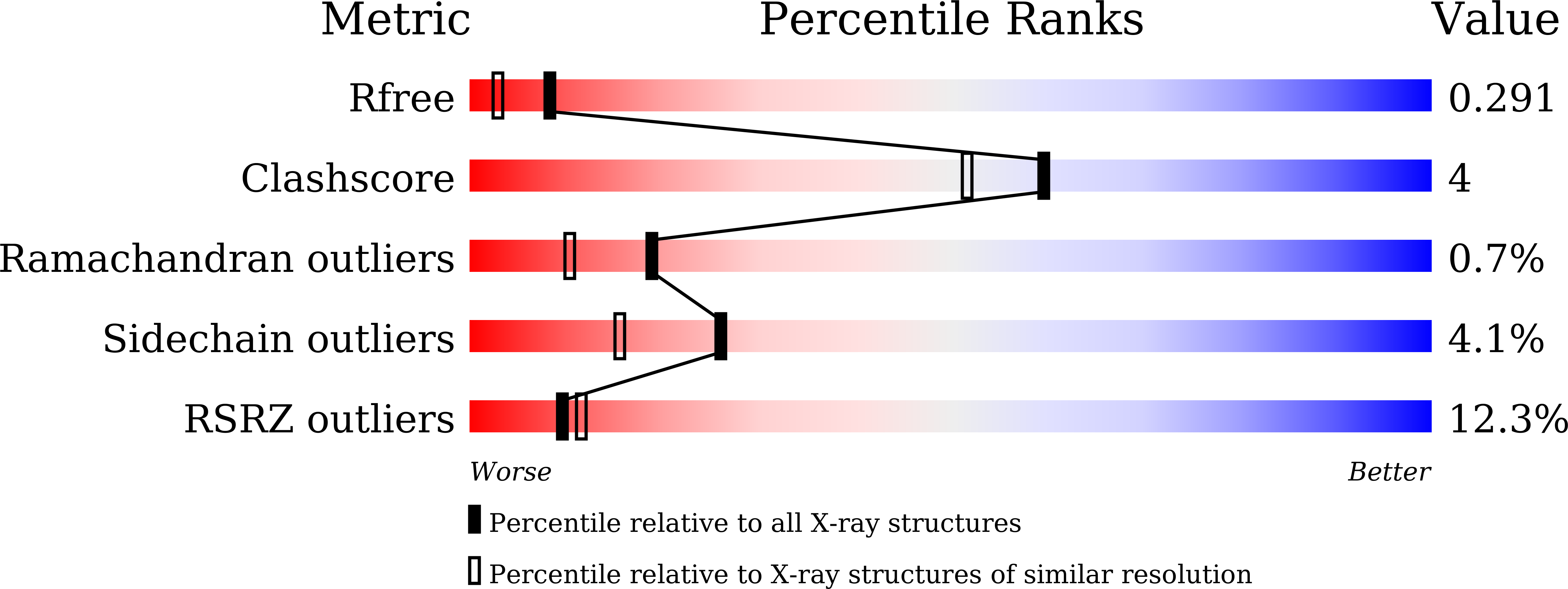
1.96 Å
R-Value Free:
0.28
R-Value Work:
0.25
R-Value Observed:
0.25
Space Group:
P 41 21 2
Macromolecular Entities
Structures with similar UniProt ID
Protein Blast
Polymer Type:polypeptide(L)
Molecule:Reverse transcriptase/RNaseH
Gene (Uniprot):pol
Chain IDs:A
Chain Length:151
Number of Molecules:1
Biological Source:Human immunodeficiency virus 1
Primary Citation
Structural Analysis of HIV-1 RNase H Bound to a Galloyl Active Site Inhibitor and Computational Compound Modification.
Biochemistry 64 3695 3705 (2025)
PMID: 40801556 DOI: 10.1021/acs.biochem.5c00266

Abstact

The emergence of drug-resistant viruses is a significant concern for the treatment of human immunodeficiency virus type-1 (HIV-1) infection, despite the availability of various drugs that block viral replication and propagation. Drugs that act upon unexploited targets of the viral replicative cycle may be able to circumvent resistance. The RNase H activity of HIV-1 reverse transcriptase is a viral enzymatic function for which no approved inhibitors are available. The active site of RNase H contains two metal cations that are required for catalysis. In this study, we describe the X-ray crystal structure of p15Ec (an HIV-1 RNase H domain recombinant protein) bound to an active-site inhibitor containing a pyrogallol moiety with chelating properties. The analysis revealed three hydroxyl oxygen atoms on the pyrogallol that firmly chelate two metal ions at the catalytic site. Molecular mechanics (MM) calculations were performed to determine the contributions of the respective compound atoms to the binding score. The analysis suggested that a piperazine moiety connected to the pyrogallol was not required to interact with the RNase H domain. A total of 6,757 derivatives were generated by replacing piperazine with other chemical groups. This was reduced to 5,567 following optimization of their binding poses by MM calculations, which indicated that the pyrogallol moiety maintained coordination with metal ions at the active site. Twelve candidate compounds with the best binding scores were selected as novel galloyl derivatives with improved RNase H inhibitory activity.

Legend

Protein

Chemical

Disease

Primary Citation of related structures
Feedback Form
Name
Email
Institute
Feedback