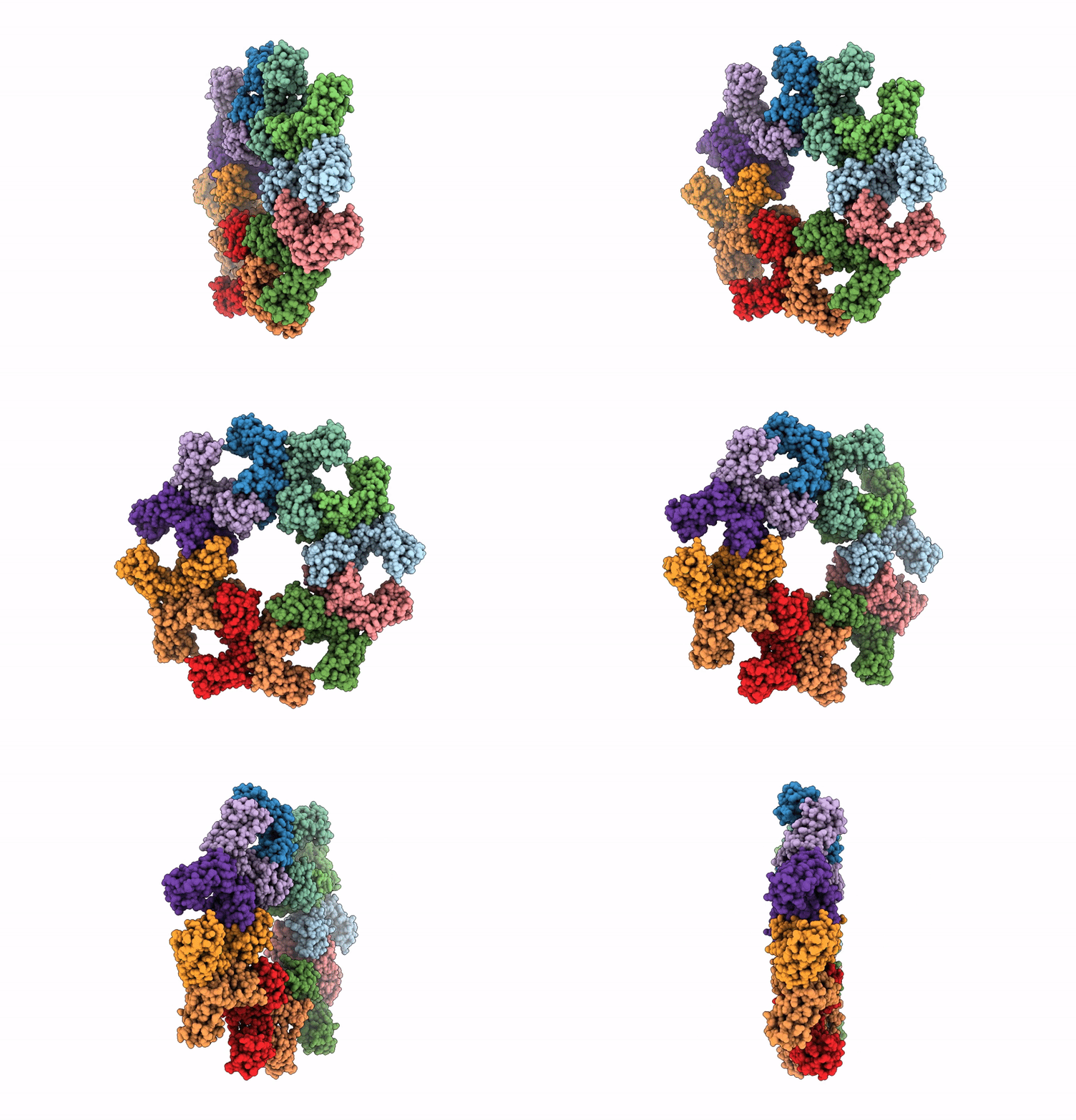
9UO6 image
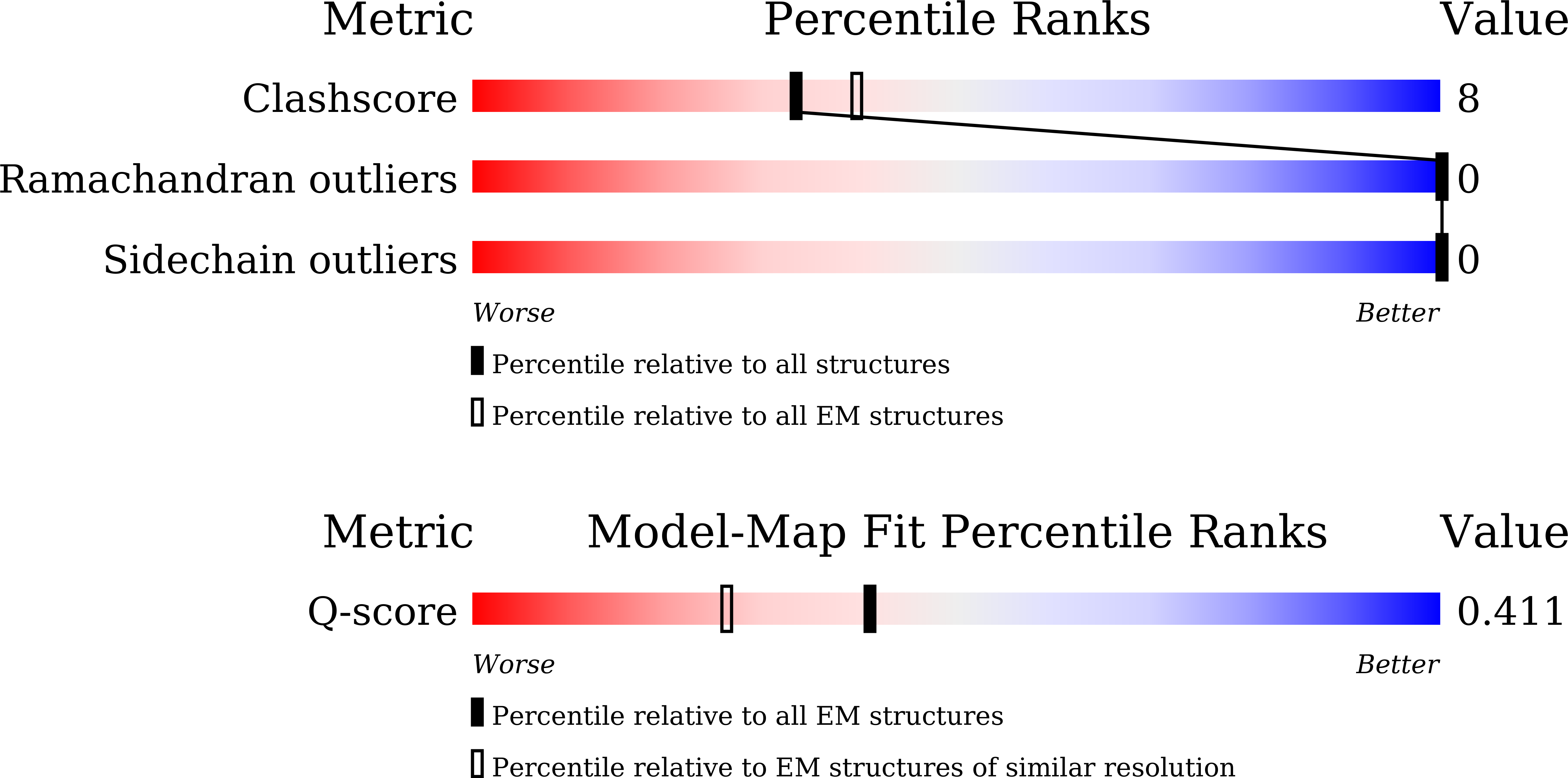
Deposition Date 2025-04-25
Release Date 2025-12-17
Last Version Date 2025-12-17
Entry Detail
PDB ID:
9UO6
Keywords:
Title:
Cryo-EM structure of the Xenopus IgX-Fc hexamer
Biological Source:
Source Organism(s):
Xenopus laevis (Taxon ID: 8355)
Expression System(s):
Method Details:
Experimental Method:
Resolution:
3.29 Å
Aggregation State:
PARTICLE
Reconstruction Method:
SINGLE PARTICLE
Macromolecular Entities
Structures with similar UniProt ID
Protein Blast
Polymer Type:polypeptide(L)
Molecule:Uncharacterized LOC101027262 precursor
Gene (Uniprot):LOC101027262
Chain IDs:A (auth: C), B, C (auth: A), D, E, F, G, H, I, J, K, L
Chain Length:213
Number of Molecules:12
Biological Source:Xenopus laevis
Ligand Molecules
Primary Citation
Xenopus IgX informs engineering strategies of IgM and IgG hexamers.
Sci Adv 11 eaea3737 eaea3737 (2025)
PMID: 41191733 DOI: 10.1126/sciadv.aea3737

Abstact

Polymeric immunoglobulins are essential components of the immune system in jawed vertebrates. While mammalian immunoglobulin M (IgM) typically forms a pentamer linked by the joining chain (J-chain), Xenopus laevis IgX can assemble into a J-chain-independent polymer. Here, we present the cryo-electron microscopy (cryo-EM) structure of IgX, revealing its hexameric configuration. By incorporating the IgX tailpiece into human IgM, we achieved efficient IgM hexamer formation. Truncating IgM's natural tailpiece to a range of 11 to 16 residues also substantially enhanced hexamerization efficiency. Furthermore, introducing a shortened IgM tailpiece to IgG resulted in effective IgG hexamer formation. We further show that the engineered IgM and IgG hexamers targeting CD20 demonstrated robust complement-dependent cytotoxicity (CDC) against several B lymphoma cells. In addition, the IgG-Fc hexamer functioned as a decoy, attenuating CDC in cell cultures. These findings deepen our understanding of polymeric immunoglobulin evolution and introduce innovative strategies for the development of IgM- and IgG-based biologics.

Legend

Protein

Chemical

Disease

Primary Citation of related structures
Feedback Form
Name
Email
Institute
Feedback