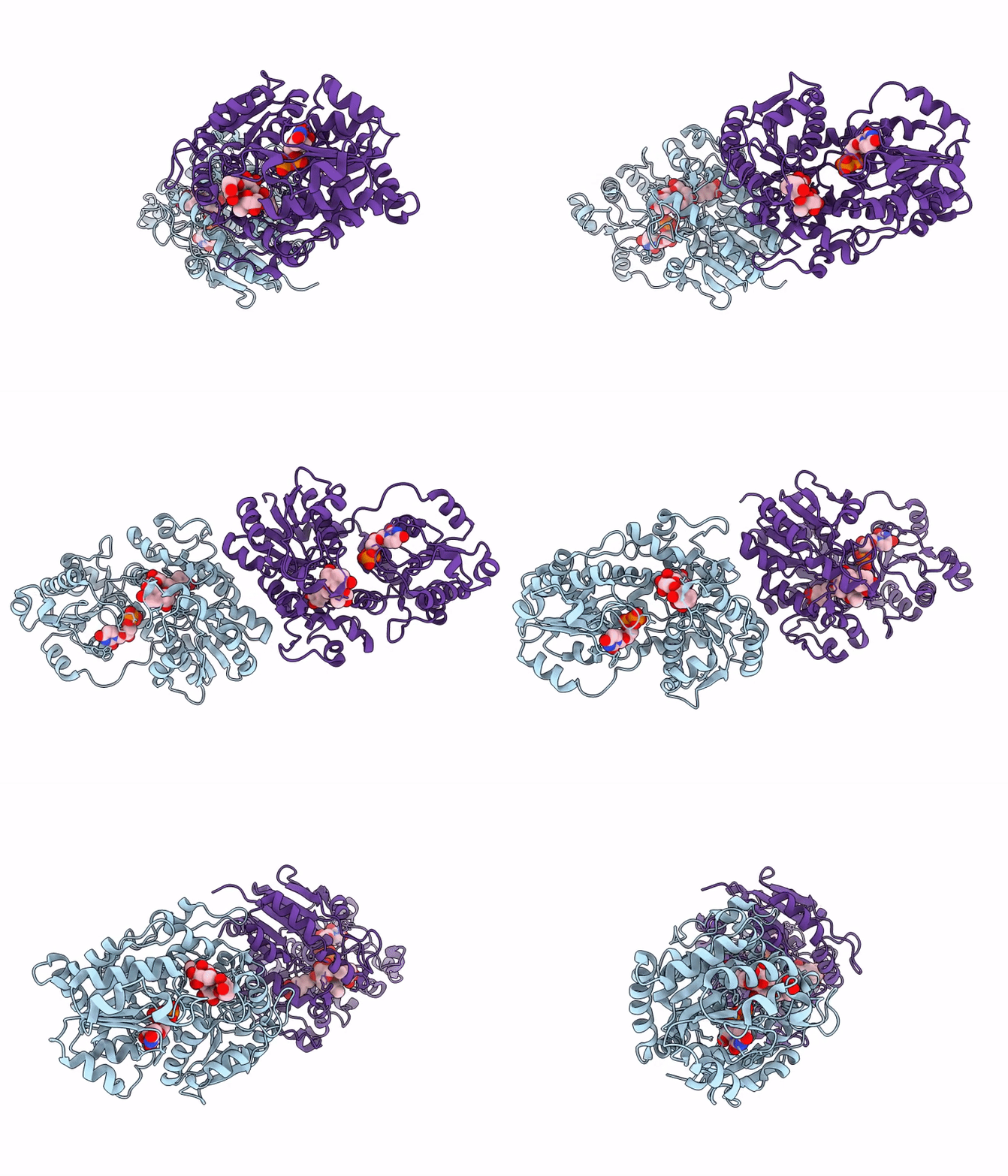
9UFI image
Deposition Date 2025-04-10
Release Date 2025-10-08
Last Version Date 2025-10-08
Entry Detail
PDB ID:
9UFI
Keywords:
Title:
Crystal structure of a PhGs rhamnosyltransferase UGT79G15 from Rehmannia glutinosa in complex with UDP and FSA
Biological Source:
Source Organism:
Method Details:
Experimental Method:
Resolution:
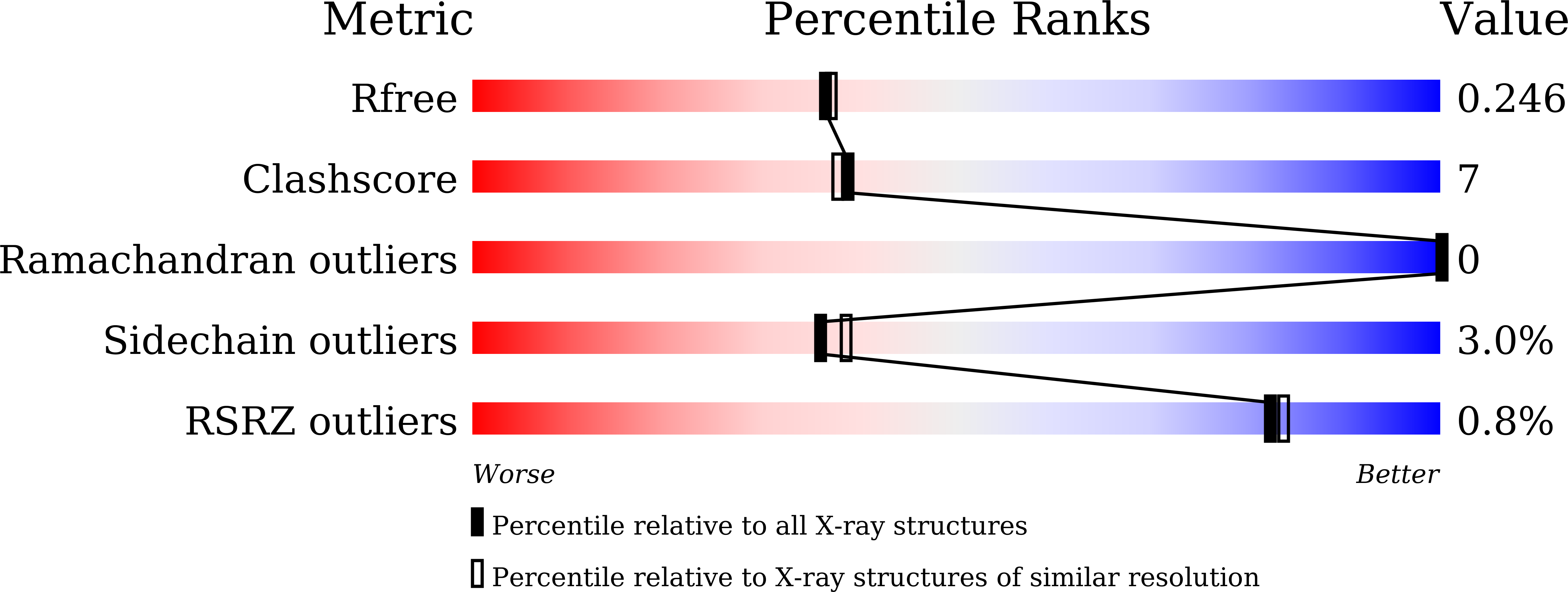
2.12 Å
R-Value Free:
0.24
R-Value Work:
0.19
R-Value Observed:
0.20
Space Group:
P 1 21 1
Macromolecular Entities
Structures with similar UniProt ID
Protein Blast
Polymer Type:polypeptide(L)
Molecule:UGT79G15
Chain IDs:A, B
Chain Length:455
Number of Molecules:2
Biological Source:Rehmannia glutinosa
Primary Citation
Structural insights into the catalytic mechanism of the phenylethanoid glycoside rhamnosyltransferase UGT79G15 from Rehmannia glutinosa.
Plant Commun. ? 101539 101539 (2025)
PMID: 41013894 DOI: 10.1016/j.xplc.2025.101539

Abstact

Phenylethanoid glycosides (PhGs) are a group of important natural products found in a wide variety of medicinal plants, and are known to possess outstanding pharmacological properties. Uridine diphosphate (UDP) glycosyltransferase 79G15 (UGT79G15) from Rehmannia glutinosa‌ catalyzes the conversion of osmanthuside A to osmanthuside B, a key intermediate in the PhG biosynthetic pathway, via the formation of a (1→3) glycosidic bond. In this study, we report the crystal structure of UGT79G15 in its apo form, UDP-bound form and, most importantly, its ternary complex form containing UDP and a mimic acceptor, forsythiaside A, in its active site. Structural and comparative analyses revealed that UGT79G15 has a unique 'funnel-shaped' acceptor-binding pocket with a small accessory cave sufficient to accommodate the 4'-hydroxycinnamoyl group of PhG, explaining the enzyme's regiospecificity for the 3'-OH of PhG. Further structural analysis and site-directed mutagenesis explored a number of variants of the enzyme and identified key residues that recognize and stabilize UDP-rhamnose and the sugar acceptor. Meanwhile, I204W, a point variant obtained in the process, was found to possess increased catalytic efficiency for osmanthuside A conversion, up to 2.2 times the efficiency of the wild type. This study provides mechanistic insights into the donor specificity and acceptor regioselectivity of PhG 1,3-rhamnosyltransferase and enriches structural information on plant UGTs.

Legend

Protein

Chemical

Disease

Primary Citation of related structures
Feedback Form
Name
Email
Institute
Feedback