9UE7 image
Deposition Date 2025-04-08
Release Date 2025-12-24
Last Version Date 2025-12-24
Entry Detail
PDB ID:
9UE7
Title:
Cryo-EM structure of SARS-CoV-2 KP.2 spike in complex with ACE2
Biological Source:
Host Organism:
Method Details:
Experimental Method:
Resolution:
2.27 Å
Aggregation State:
PARTICLE
Reconstruction Method:
SINGLE PARTICLE
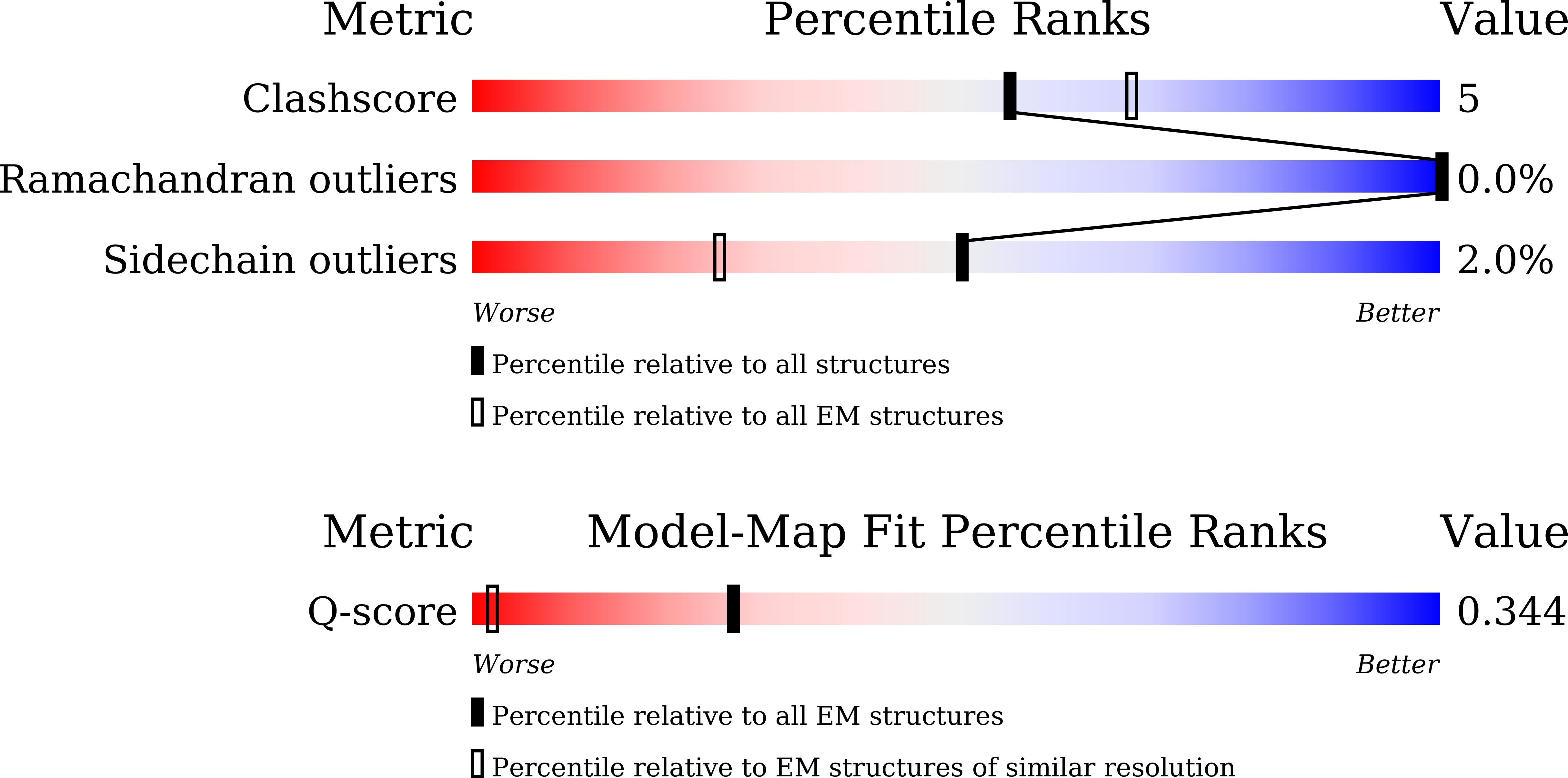
Macromolecular Entities
Polymer Type:polypeptide(L)
Molecule:Spike glycoprotein
Chain IDs:D (auth: A), E (auth: B), F (auth: C)
Chain Length:1306
Number of Molecules:3
Biological Source:Severe acute respiratory syndrome coronavirus 2
Structures with similar UniProt ID
Protein Blast
Polymer Type:polypeptide(L)
Molecule:Angiotensin-converting enzyme 2
Gene (Uniprot):ACE2
Chain IDs:A (auth: F), B (auth: D), C (auth: E)
Chain Length:631
Number of Molecules:3
Biological Source:Homo sapiens
Ligand Molecules
Primary Citation
Pathogenicity, virological features, and immune evasion of SARS-CoV-2 JN.1-derived variants including JN.1.7, KP.2, KP.3, and KP.3.1.1.
Nat Commun 16 11002 11002 (2025)
PMID: 41381428 DOI: 10.1038/s41467-025-66018-x

Abstact

KP.3.1.1 became a dominant successor to JN.1 by the second half of 2024 but the intrinsic pathogenicity and virological feature of KP.3.1.1 remain incompletely understood. Here, we comprehensively evaluated the pathogenesis and characteristics of KP.3.1.1 in comparison to JN.1 and other JN.1-derived variants including JN.1.7, KP.2, and KP.3. The unique S31del mutation on KP.3.1.1 spike confers further evasion to the clinically authorized mAb Pemivibart and reduces convalescent serum neutralization efficiency. Structural analysis indicates that S31del induces novel glycosylation sites that facilitates evasion of neutralizing antibodies. We further reveal that S31del significantly enhances pseudovirus entry efficiency in all evaluated cell types including the human primary nasal epithelial cells. Nevertheless, the intrinsic pathogenicity of KP.3.1.1 is similar to JN.1 and KP.3, and higher than that of JN.1.7 and KP.2 in a male hamster model. Interestingly, the increased virus infectivity conferred by S31del in KP.3.1.1 spike is counterbalanced by the NSP10 S33C mutation. Overall, our study indicates that a single spike mutation can confer both enhanced immune escape and increased viral infectivity. The opposing effects of spike and non-spike mutations highlight the complex interplay of viral genomic elements in shaping their overall fitness, and reveal the high plasticity of coronavirus evolution.

Legend

Protein

Chemical

Disease

Primary Citation of related structures
Feedback Form
Name
Email
Institute
Feedback