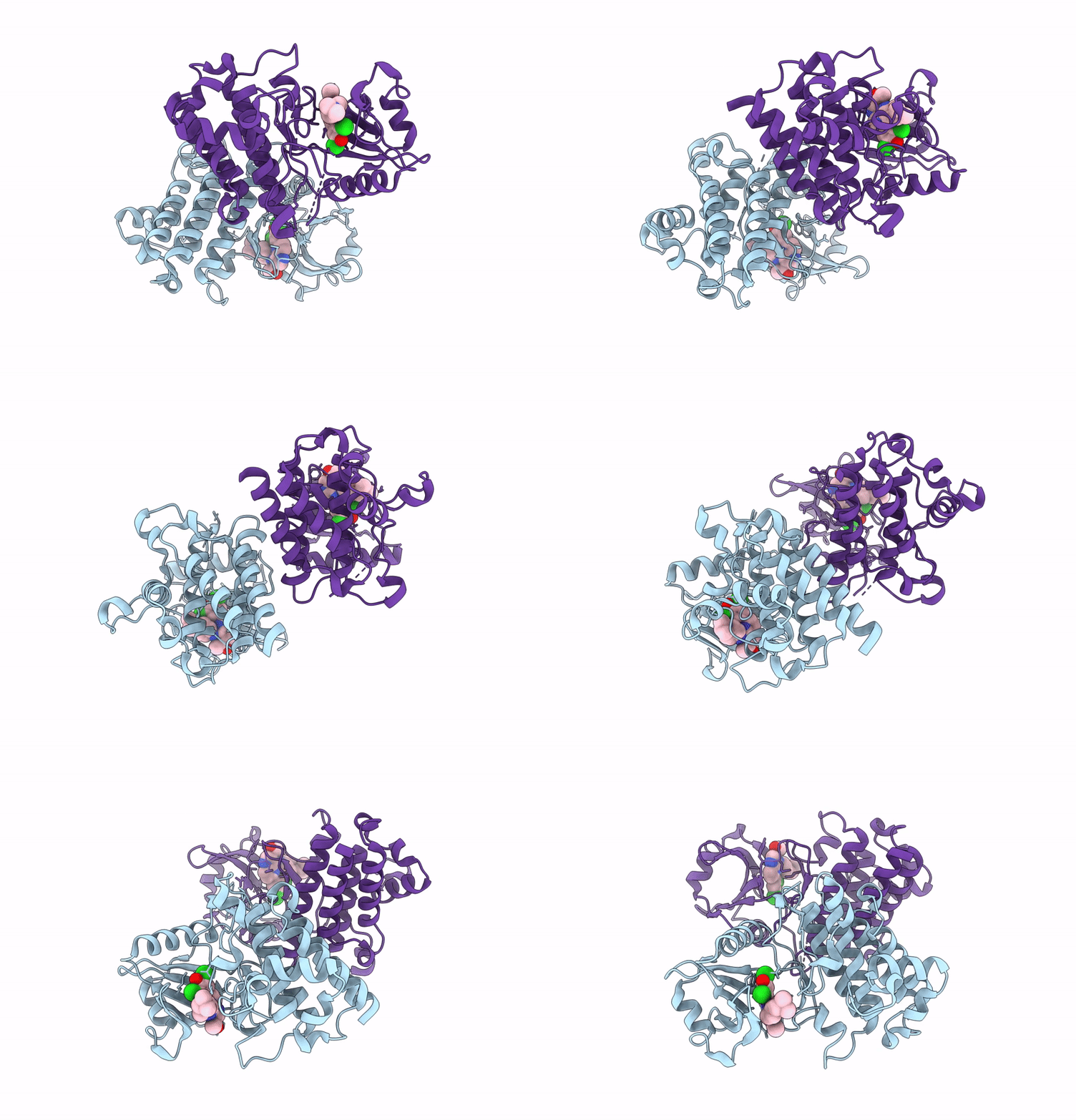
9UBI image
Deposition Date 2025-04-03
Release Date 2025-10-29
Last Version Date 2025-11-19
Entry Detail
PDB ID:
9UBI
Keywords:
Title:
Crystal structure of FERONIA kinase and Ferovicin inhibitor
Biological Source:
Source Organism:
Host Organism:
Method Details:
Experimental Method:
Resolution:
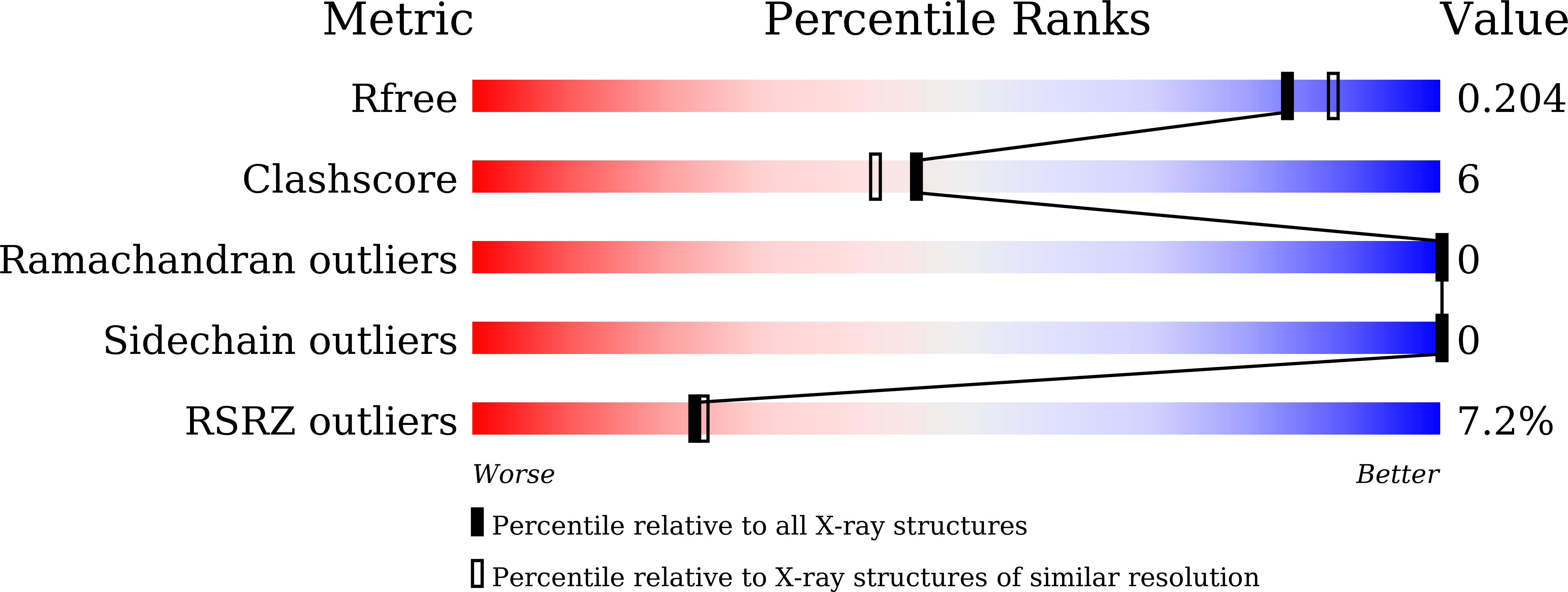
1.90 Å
R-Value Free:
0.20
R-Value Work:
0.17
R-Value Observed:
0.17
Space Group:
P 1 21 1
Macromolecular Entities
Structures with similar UniProt ID
Protein Blast
Polymer Type:polypeptide(L)
Molecule:Receptor-like protein kinase FERONIA
Gene (Uniprot):FER
Chain IDs:A (auth: B), B (auth: A)
Chain Length:327
Number of Molecules:2
Biological Source:Arabidopsis thaliana
Ligand Molecules
Primary Citation
Unveiling FERONIA receptor kinase-mediated cellular mechanisms with a small-molecule inhibitor.
Proc.Natl.Acad.Sci.USA 122 e2515322122 e2515322122 (2025)
PMID: 41196348 DOI: 10.1073/pnas.2515322122

Abstact

Since its initial identification as the receptor for Rapid Alkalinization Factor 1 (RALF1), FERONIA (FER) receptor kinase has emerged as a central signaling hub coordinating plant development, stress adaptation, and immune responses. Nevertheless, fundamental questions persist regarding the precise mechanisms of FER-mediated signal transduction and its context-dependent functional specialization in multicellular processes. Here, we develop Ferovicin (FRV), a small-molecule inhibitor that specifically disrupts FER kinase activity, thereby enabling mechanistic dissection of FER. Cocrystallization and mutational analysis show that FRV selectively binds to the ATP-binding pocket of the kinase domain of FER and inhibits its kinase activity. Assisted by the FRV tool and quantitative phosphoproteomics, we characterized a series of signaling pathways and networks regulated by RALF1 and FER. Notably, our analysis reveals that RALF1 activates FER through phosphorylation at Ser695, which subsequently inhibits H+-ATPase1/2 via phosphorylation at Ser899. This mechanism leads to apoplastic alkalinization and regulates cell expansion in the root meristem. Given the conservation of FRV binding sites in FER proteins across land plant species, FRV will serve as a valuable tool for dissecting FER signaling mechanisms as well as facilitating agricultural applications.

Legend

Protein

Chemical

Disease

Primary Citation of related structures
Feedback Form
Name
Email
Institute
Feedback