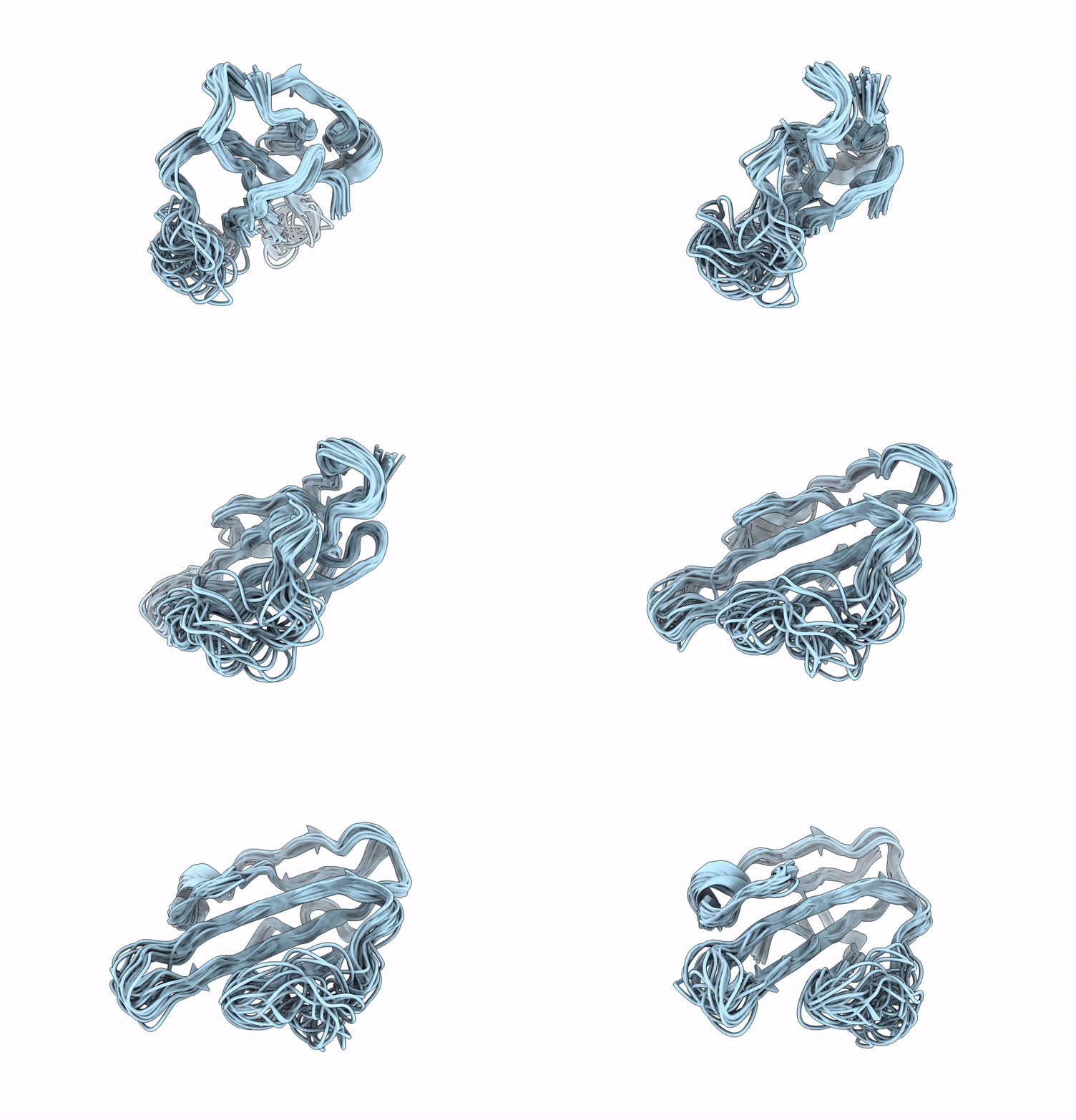
9U9N image
Deposition Date 2025-03-28
Release Date 2025-12-17
Last Version Date 2025-12-17
Entry Detail
PDB ID:
9U9N
Keywords:
Title:
Solution structure of the Human Prostate stem cell antigen (PSCA), water-soluble domain
Biological Source:
Source Organism(s):
Homo sapiens (Taxon ID: 9606)
Expression System(s):
Method Details:
Experimental Method:
Conformers Calculated:
400
Conformers Submitted:
20
Selection Criteria:
target function
Macromolecular Entities
Structures with similar UniProt ID
Protein Blast
Polymer Type:polypeptide(L)
Molecule:Prostate stem cell antigen
Gene (Uniprot):PSCA
Chain IDs:A
Chain Length:76
Number of Molecules:1
Biological Source:Homo sapiens
Ligand Molecules
Primary Citation
Pro-Inflammatory Protein PSCA Is Upregulated in Neurological Diseases and Targets beta 2-Subunit-Containing nAChRs.
Biomolecules 15 ? ? (2025)
PMID: 41154610 DOI: 10.3390/biom15101381

Abstact

Prostate stem cell antigen (PSCA) is a Ly6/uPAR protein that targets neuronal nicotinic acetylcholine receptors (nAChRs). It exists in membrane-tethered and soluble forms, with the latter upregulated in Alzheimer's disease. We hypothesize that PSCA may be linked to a wider spectrum of neurological diseases and could induce neuroinflammation. Indeed, PSCA expression is significantly upregulated in the brain of patients with multiple sclerosis, Huntington's disease, Down syndrome, bipolar disorder, and HIV-associated dementia. To investigate PSCA's structure, pharmacology, and inflammatory function, we produced a correctly folded water-soluble recombinant analog (ws-PSCA). In primary hippocampal neurons and astrocytes, ws-PSCA differently regulates secretion of inflammatory factors and adhesion molecules and induces pro-inflammatory responses by increasing TNFβ secretion. Heteronuclear NMR and 15N relaxation measurements reveal a classical β-structural three-finger fold with conformationally disordered loops II and III. Positive charge clustering on the molecular surface suggests the functional importance of ionic interactions by these loops. Electrophysiological studies in Xenopus oocytes point on ws-PSCA inhibition of α3β2-, high-, and low-sensitive variants of α4β2- (IC50 ~50, 27, and 15 μM, respectively) but not α4β4-nAChRs, suggesting targeting of the β2 subunit. Ensemble docking and molecular dynamics simulations predict PSCA binding to high-sensitive α4β2-nAChR at α4/β2 and β2/β2 interfaces. Complexes are stabilized by ionic and hydrogen bonds between PSCA's loops II and III and the primary and complementary receptor subunits, including glycosyl groups. This study gives new structural and functional insights into PSCA's interaction with molecular targets and provides clues to understand its role in the brain function and mental disorders.

Legend

Protein

Chemical

Disease

Primary Citation of related structures
Feedback Form
Name
Email
Institute
Feedback