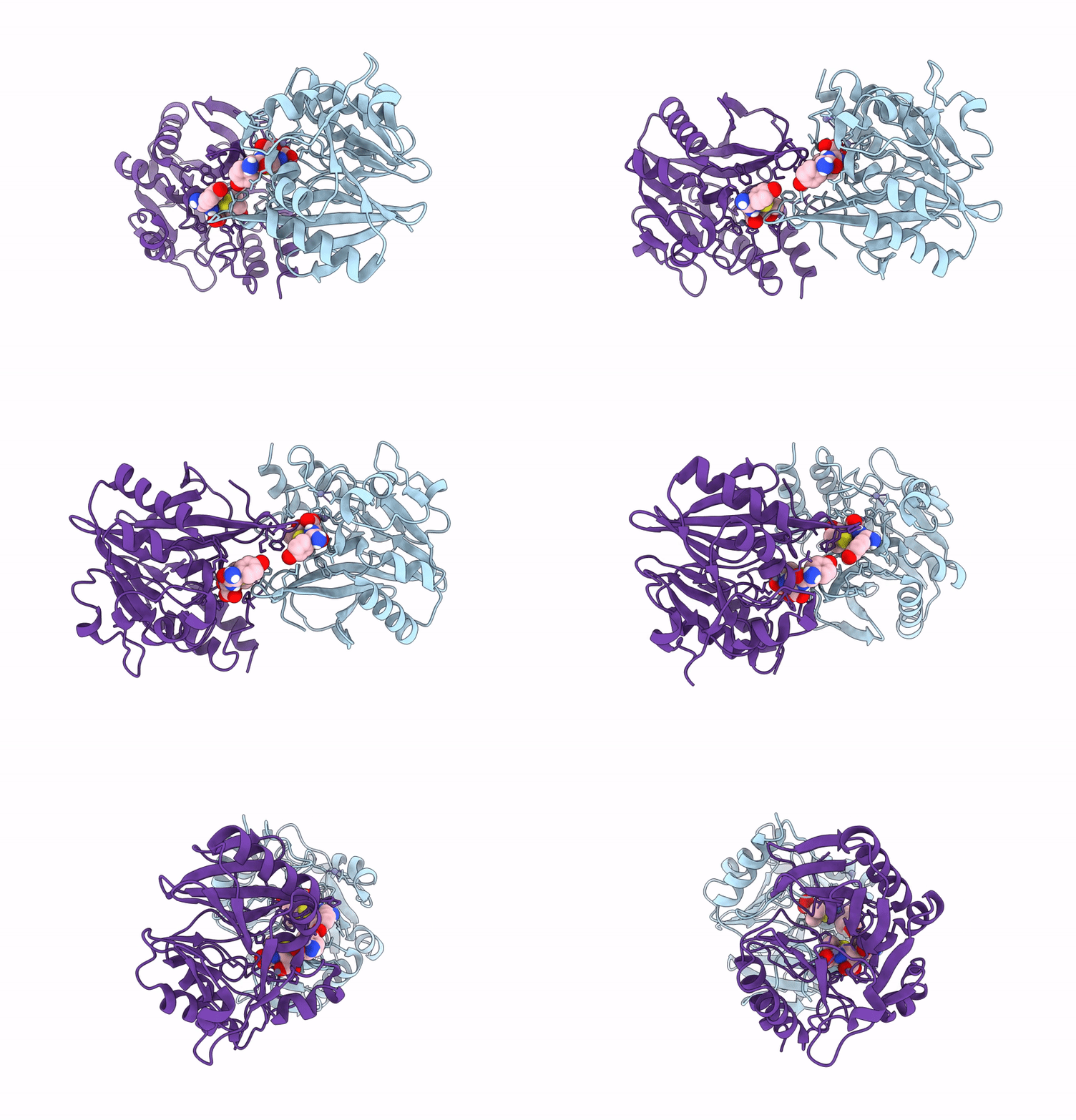
9U9C image
Deposition Date 2025-03-27
Release Date 2025-07-09
Last Version Date 2025-08-06
Entry Detail
PDB ID:
9U9C
Keywords:
Title:
Crystal structure of NDM-1 in complex with hydrolyzed amoxicillin
Biological Source:
Source Organism:
Host Organism:
Method Details:
Experimental Method:
Resolution:
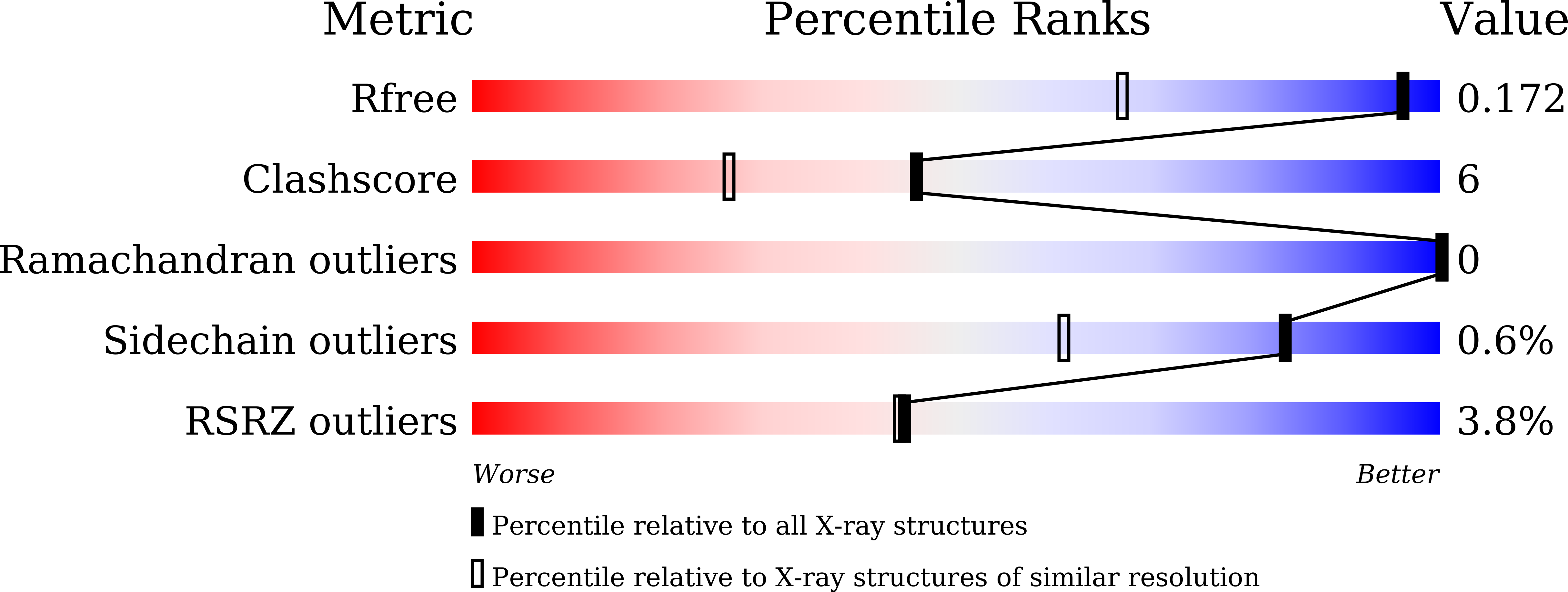
1.25 Å
R-Value Free:
0.16
R-Value Work:
0.15
R-Value Observed:
0.15
Space Group:
P 21 21 21
Macromolecular Entities
Structures with similar UniProt ID
Protein Blast
Polymer Type:polypeptide(L)
Molecule:Metallo-beta-lactamase type 2
Gene (Uniprot):blaNDM-1
Chain IDs:A, B
Chain Length:242
Number of Molecules:2
Biological Source:Klebsiella pneumoniae
Primary Citation
Crystal structure reveals the hydrophilic R1 group impairs NDM-1-ligand binding via water penetration at L3.
J Struct Biol X 12 100133 100133 (2025)
PMID: 40687621 DOI: 10.1016/j.yjsbx.2025.100133

Abstact

The global spread of New Delhi metallo-β-lactamases (NDMs) has exacerbated the antimicrobial resistance crisis. This study resolved the crystal structure of NDM-1 hydrolyzing amoxicillin for the first time, revealed that the hydroxyl group in the R1 moiety of amoxicillin anchors a key water molecule (Wat1) via hydrogen bond, inducing a conformational shift in Met67 (average displacement of 3.8 Å compared to its position in complexes with ampicillin, penicillin G, and penicillin V) and impairing the hydrophobic interaction between the loop 3 and the substrate. Molecular dynamics simulations confirmed that the π-π stacking contact time between amoxicillin and the L3 critical residue Phe70 decreased to 4.3 % (ampicillin: 12.3 %), with a binding energy reduction of 10.5 kcal/mol. Steady-state kinetics showed that amoxicillin exhibited a 2.2-fold higher K m and a 5.2-fold higher k cat compared to ampicillin, demonstrating that hydrophilic R1 groups impair enzyme-substrate binding. This work demonstrates the essential role of hydrophobic interactions in L3-mediated substrate binding and provides a novel strategy for designing L3-targeted NDM-1 inhibitors: maximize hydrophobicity and minimize polar surface area in the L3 contact region to block water penetration, thereby stabilizing the inhibitor-L3 interaction.

Legend

Protein

Chemical

Disease

Primary Citation of related structures
Feedback Form
Name
Email
Institute
Feedback