9TU0 image
Deposition Date 2026-01-08
Release Date 2026-02-25
Last Version Date 2026-02-25
Entry Detail
PDB ID:
9TU0
Keywords:
Title:
Crystal structure of human ERK1 in complex with the KIM1 motif of the T. gondii protein GRA24
Biological Source:
Source Organism(s):
Homo sapiens (Taxon ID: 9606)
Toxoplasma gondii (Taxon ID: 5811)
Method Details:
Experimental Method:
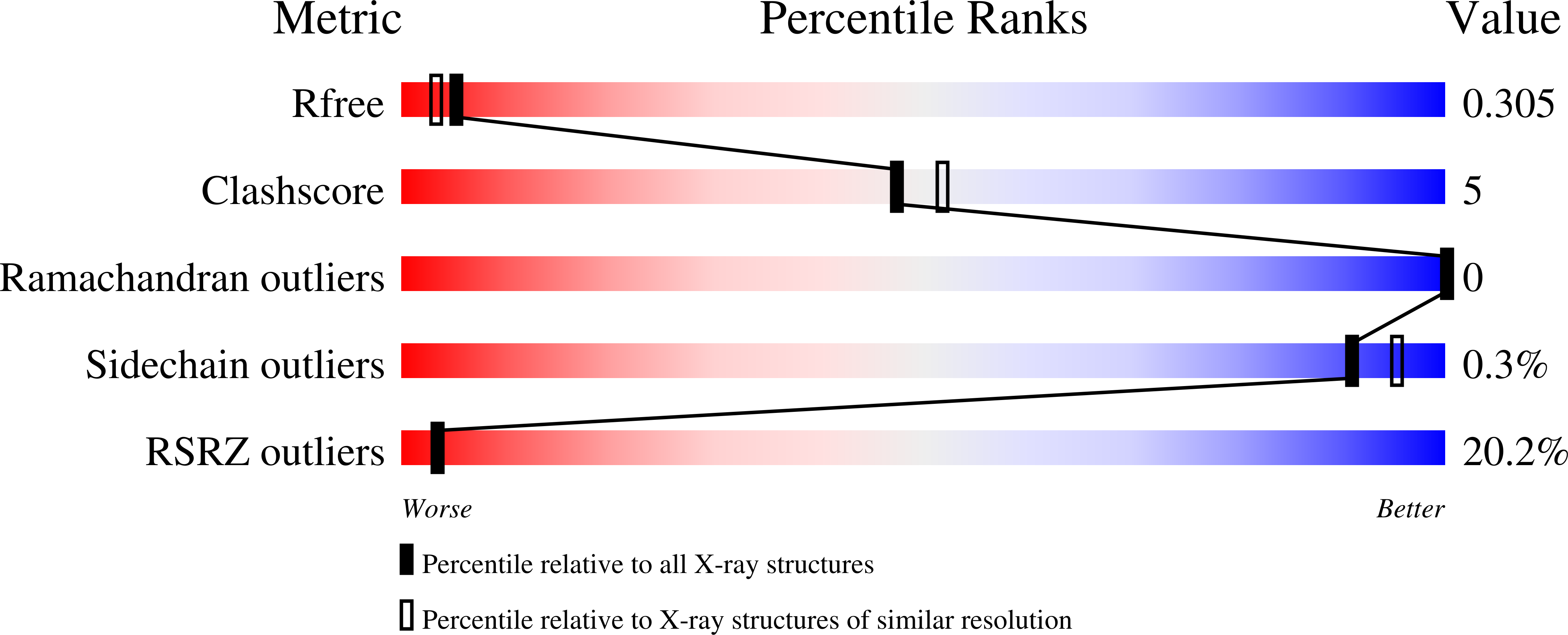
Resolution:
2.17 Å
R-Value Free:
0.29
R-Value Work:
0.23
R-Value Observed:
0.23
Space Group:
P 65 2 2
Macromolecular Entities
Structures with similar UniProt ID
Protein Blast
Polymer Type:polypeptide(L)
Molecule:Mitogen-activated protein kinase 3
Gene (Uniprot):MAPK3
Chain IDs:A
Chain Length:379
Number of Molecules:1
Biological Source:Homo sapiens
Structures with similar UniProt ID
Protein Blast
Polymer Type:polypeptide(L)
Molecule:Putative transmembrane protein
Gene (Uniprot):BN1205_025320, TGVEG_230180
Chain IDs:B (auth: D)
Chain Length:542
Number of Molecules:1
Biological Source:Toxoplasma gondii
Modified Residue
Compound ID Chain ID Parent Comp ID Details 2D Image
SEP A SER modified residue
Ligand Molecules
Primary Citation
Molecular basis of mitogen-activated protein kinase ERK2 activation by its upstream kinase MEK1.
Biorxiv ? ? ? (2026)
PMID: 41648251 DOI: 10.64898/2026.01.19.700303

Abstact

The RAS-RAF-MEK-ERK mitogen-activated protein kinase (MAPK) pathway relays extracellular signals into a cellular response and its dysregulation leads to many pathologies, particularly cancer. Here, we determined cryo-EM structures of the MAP2K MEK1 activating its substrate MAPK ERK2, the final event in the cascade. We define the molecular details of specificity and phosphoryl transfer to the tyrosine of the ERK2 activation loop and examine the mechanism of substrate recognition using solution techniques and molecular dynamics. Binding of the substrate MAPK leads to release of the MAP2K catalytic machinery, explaining the mechanism of many disease-causing mutations, and ERK2 release is not required for nucleotide exchange, suggesting a processive mechanism. Our data advance the understanding of MAPK signalling and provide a starting point for drug development.

Legend

Protein

Chemical

Disease

Primary Citation of related structures
Feedback Form
Name
Email
Institute
Feedback