9SRJ image
Deposition Date 2025-09-24
Release Date 2025-12-17
Last Version Date 2025-12-17
Entry Detail
PDB ID:
9SRJ
Keywords:
Title:
Prenylated FMN oxidative maturase PhdC, PEG-bound
Biological Source:
Source Organism(s):
Expression System(s):
Method Details:
Experimental Method:
Resolution:
1.42 Å
R-Value Free:
0.20
R-Value Work:
0.18
R-Value Observed:
0.18
Space Group:
I 2 3
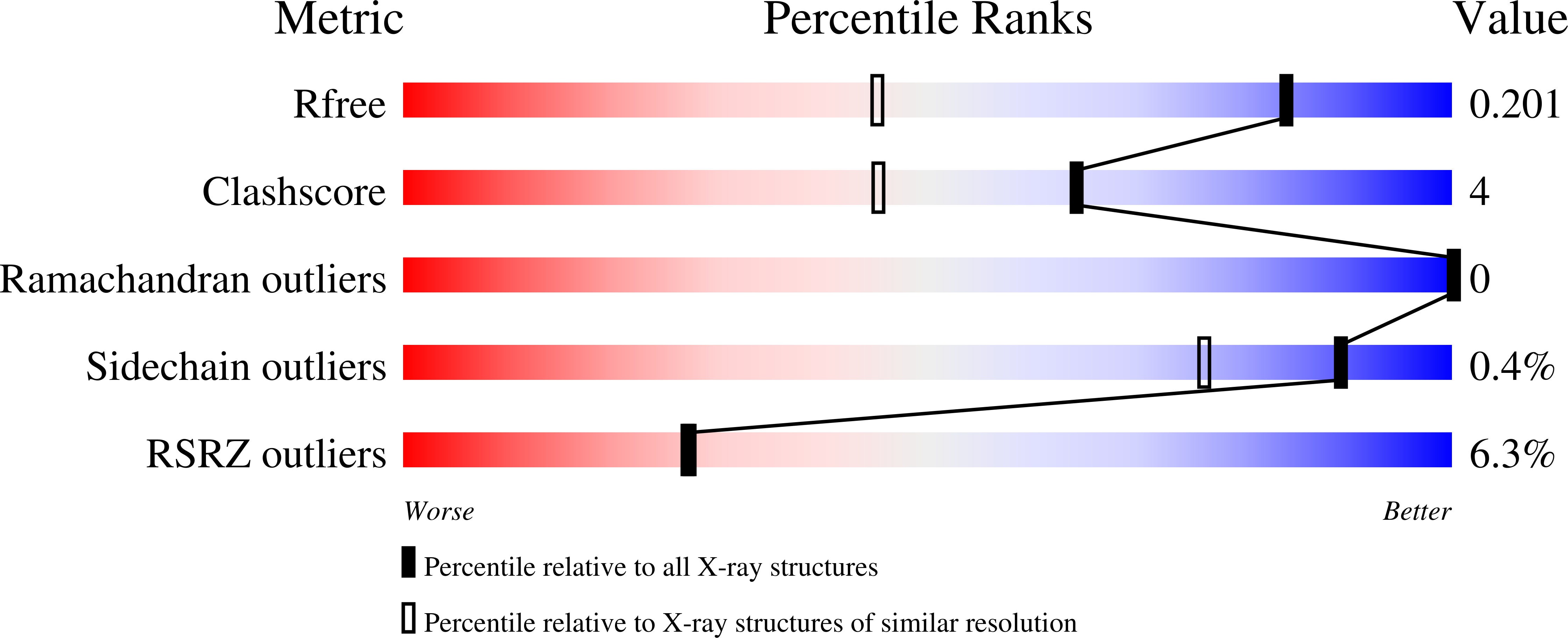
Macromolecular Entities
Structures with similar UniProt ID
Protein Blast
Polymer Type:polypeptide(L)
Molecule:Pyridoxamine 5'-phosphate oxidase putative domain-containing protein
Gene (Uniprot):XA26_16660
Chain IDs:A, B
Chain Length:163
Number of Molecules:2
Biological Source:Mycolicibacterium fortuitum
Primary Citation
Structure and Mechanism of PhdC, a Prenylated-Flavin Maturase.
Proteins ? ? ? (2025)
PMID: 41363046 DOI: 10.1002/prot.70096

Abstact

Prenylated flavin mononucleotide (prFMN) is a modified flavin cofactor required by the UbiD family of (de)carboxylase enzymes. While the reduced prFMNH2 form is produced by the flavin prenyltransferase UbiX, the corresponding two-electron oxidized prFMNiminium form is required to support UbiD catalysis. Thus, oxidative maturation of prFMNH2 is required, which can be catalyzed by UbiD. However, heterologous (over)expression of UbiDs frequently leads to the accumulation of the stable but non-active one-electron oxidized purple prFMNradical species. A dedicated prFMN maturase enzyme (PhdC) from Mycolicibacterium fortuitum was recently identified as capable of catalyzing the oxidative maturation of prFMNradical to prFMNiminium, thereby enabling an effective supply of active cofactor to the associated phenazine-1-carboxylate (de)carboxylase PhdA. We report the crystal structure of PhdC in complex with flavin, revealing it is a distant member of the class I HpaC-like family of short-chain dimeric flavin reductases and demonstrate catalytic conversion of the prFMNradical species to prFMNiminium in the presence of oxygen or ferricyanide. Co-expression of PhdC or a distant homologue from Priestia megaterium (YclD) with the canonical UbiD from Escherichia coli leads to activation of the latter, similar in effect to co-expression with the prFMNH2-binding chaperone LpdD. Conserved Glu residues in the PhdC active site suggest catalysis occurs through C1' proton-abstraction coupled oxidation. This study thus provides both structural and mechanistic insight into the function of PhdC, adding to the expanding repertoire of prFMN-binding proteins associated with the widespread UbiDX system.

Legend

Protein

Chemical

Disease

Primary Citation of related structures
Feedback Form
Name
Email
Institute
Feedback