9SN1 image
Deposition Date 2025-09-09
Release Date 2026-02-18
Last Version Date 2026-02-25
Entry Detail
PDB ID:
9SN1
Keywords:
Title:
Lip3 DL-peptidase in the apo-state
Biological Source:
Source Organism(s):
Paenibacillus (Taxon ID: 44249)
Expression System(s):
Method Details:
Experimental Method:
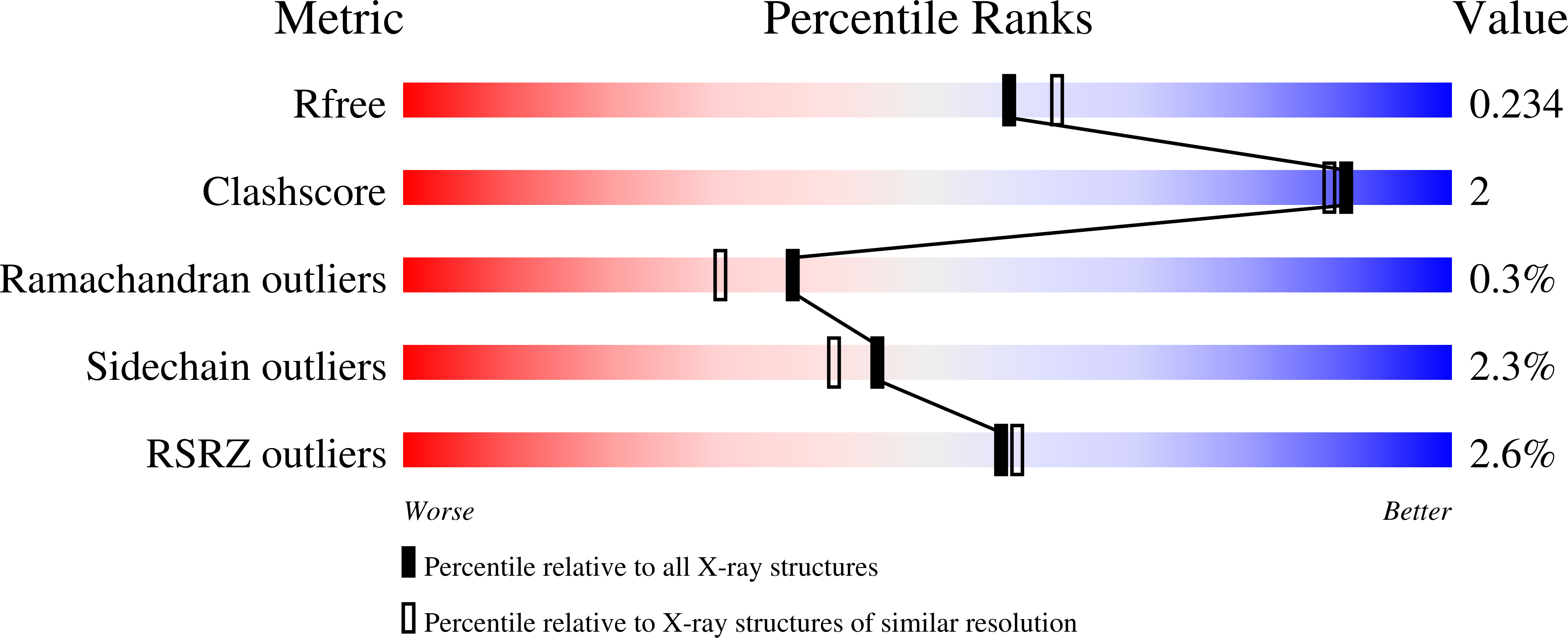
Resolution:
2.04 Å
R-Value Free:
0.22
R-Value Work:
0.19
R-Value Observed:
0.19
Space Group:
I 2 2 2
Macromolecular Entities
Polymer Type:polypeptide(L)
Molecule:Beta-lactamase family protein
Chain IDs:A
Chain Length:663
Number of Molecules:1
Biological Source:Paenibacillus
Primary Citation
Microbial dl-Peptidases Enable Predator Defense and Facilitate Structure Elucidation of Complex Natural Products.
J.Am.Chem.Soc. 148 5264 5274 (2026)
PMID: 41615899 DOI: 10.1021/jacs.5c17955

Abstact

Peptidases are indispensable tools in biotechnology and chemical biology. However, the enzyme repertoire for the selective hydrolysis of dl-amide bonds in peptides is small. Here, we describe novel dl-peptidases that mediate complex microbial interactions. These enzymes, Lip3 and Lip7, convert lipopeptides into potent amoebicidal agents via selective dl-peptide bond cleavage. Using structural analyses and mutagenesis, we identified an unusual Ser-Lys-Lys-Tyr catalytic tetrad required for dl-specificity. Despite their high structural similarity, both enzymes show distinct substrate preferences: Lip3 acts primarily as a carboxypeptidase, removing a single C-terminal residue, while Lip7 excises a tripeptide. Although their substrate scopes are broad, they are highly specific with regard to their respective cutting sites. These features make these dl-peptidases powerful tools for elucidating the structure of complex peptide-based natural products, including tensin and WLIP. Overall, this work elucidates the molecular mechanisms of cooperative microbial defense and provides a new enzymatic toolbox for biocatalysis and natural product discovery.

Legend

Protein

Chemical

Disease

Primary Citation of related structures
Feedback Form
Name
Email
Institute
Feedback