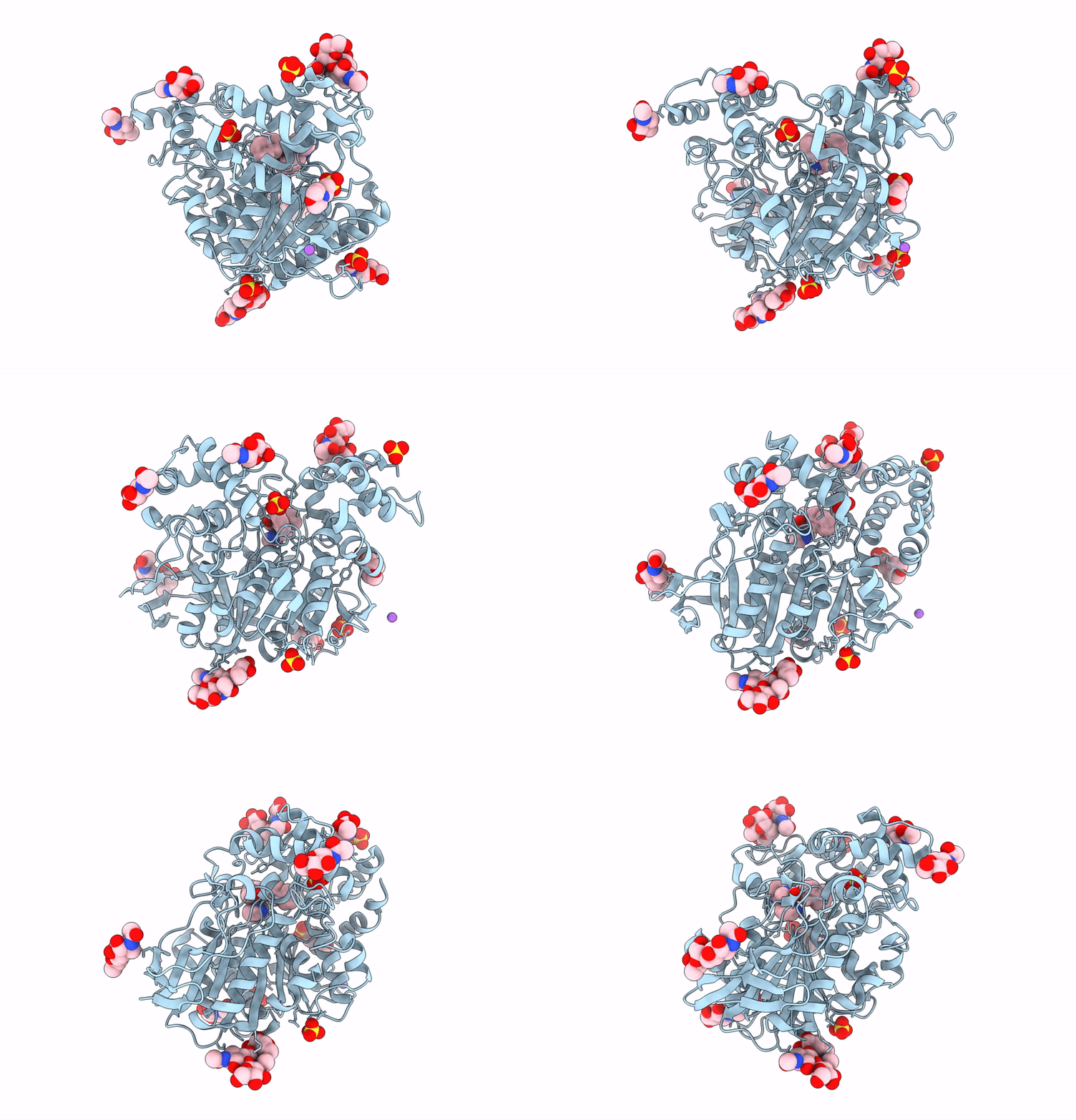
9SL8 image
Deposition Date 2025-09-03
Release Date 2025-11-26
Last Version Date 2025-11-26
Entry Detail
PDB ID:
9SL8
Keywords:
Title:
Structure of recombinant human butyrylcholinesterase in complex with naphthalen-2-yl methyl((2S,3R)-2-(pyridin-3-ylmethyl)quinuclidin-3-yl)carbamate
Biological Source:
Source Organism:
Homo sapiens (Taxon ID: 9606)
Host Organism:
Method Details:
Experimental Method:
Resolution:
2.52 Å
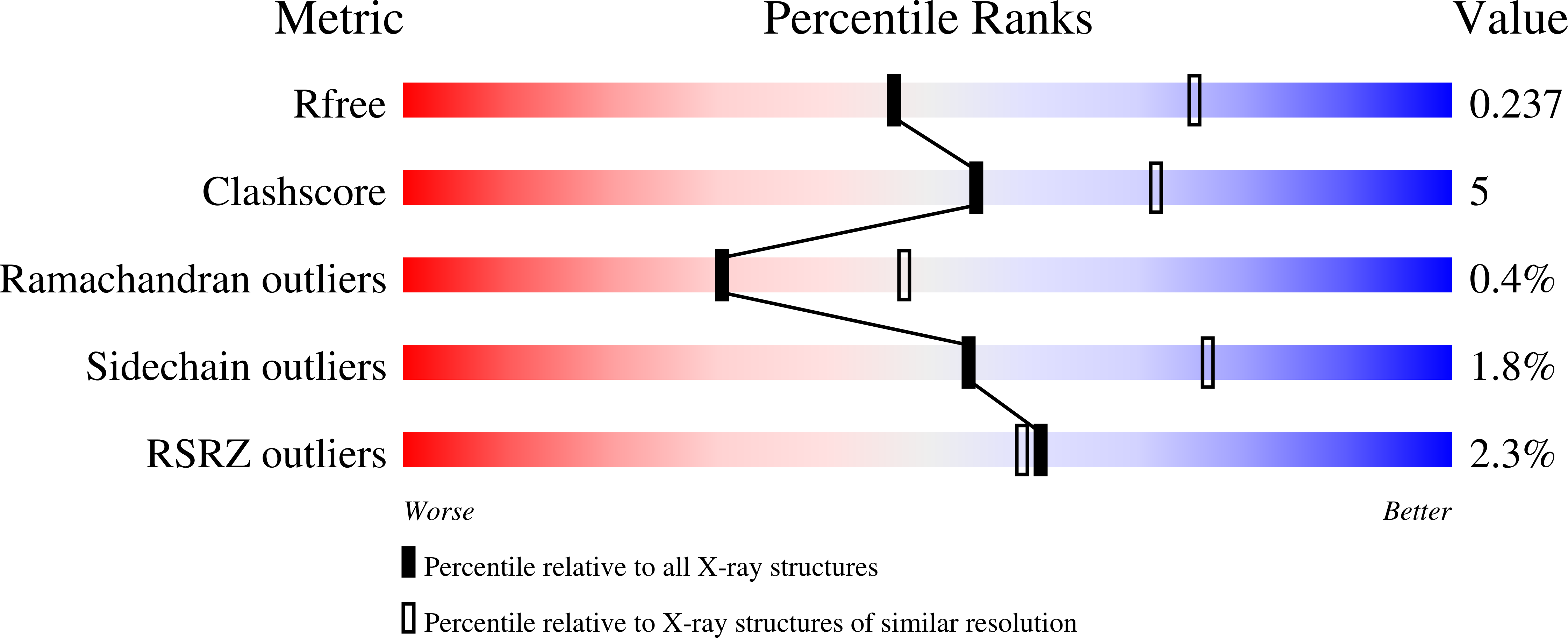
R-Value Free:
0.23
R-Value Work:
0.18
R-Value Observed:
0.18
Space Group:
I 4 2 2
Macromolecular Entities
Structures with similar UniProt ID
Protein Blast
Polymer Type:polypeptide(L)
Molecule:Cholinesterase
Gene (Uniprot):BCHE
Mutagens:N17Q, N455Q, N481Q, N486Q mutations compared to mature wild type sequence to avoid too much N-glycozylation. Numeration on the maturated enzyme (devoid of the signal peptide)
Chain IDs:A
Chain Length:529
Number of Molecules:1
Biological Source:Homo sapiens
Primary Citation
Dual cholinergic modulation in dementia: Quinuclidine carbamates targeting butyrylcholinesterase and alpha 7 nicotinic receptor.
Chem.Biol.Interact. 423 111830 111830 (2025)
PMID: 41242410 DOI: 10.1016/j.cbi.2025.111830

Abstact

Alzheimer's disease (AD) is the leading cause of dementia worldwide, but current therapies provide only symptomatic relief. Multi-target directed ligands (MTDLs) represent a promising approach to address AD pathology by modulating multiple targets with a single molecule. Here we describe quinuclidine carbamates that act simultaneously on butyrylcholinesterase (BChE) and the cholinergic α7 nicotinic receptor (α7 nAChR), thereby approaching cholinergic dysfunction at two levels: by modulating acetylcholine degradation and by direct agonism at this receptor. Starting with the α7 nAChR agonist bradanicline, its amide group was replaced by a carbamate moiety to enhance BChE inhibition while retaining receptor agonism. These quinuclidine carbamates inhibited BChE in the submicromolar range with the desired selectivity over acetylcholinesterase (AChE). In a calcium-flux assay on recombinant HEK293T cells expressing the α7 nAChR, all compounds were agonists of the α7 nAChR in the nanomolar range. Importantly, compound 6b displayed balanced, submicromolar activity against both targets. The crystal structures confirmed non-covalent binding to the active site of human BChE, and the 6b-hBChE complex also revealed an unprecedented flip of Tyr440, representing the first described example of backdoor opening for hBChE. Taken together, these results demonstrate that quinuclidine carbamates are promising dual modulators of hBChE and α7 nAChR, supporting their potential as MTDLs for AD therapy and highlighting this underexplored dual-target strategy as a promising approach in cholinergic drug discovery.

Legend

Protein

Chemical

Disease

Primary Citation of related structures
Feedback Form
Name
Email
Institute
Feedback