9SKH image
Deposition Date 2025-09-02
Release Date 2026-02-18
Last Version Date 2026-02-18
Entry Detail
PDB ID:
9SKH
Keywords:
Title:
Biocatalytic Regioselective C-Formylation of Resorcinol Derivatives
Biological Source:
Source Organism(s):
Expression System(s):
Method Details:
Experimental Method:
Resolution:
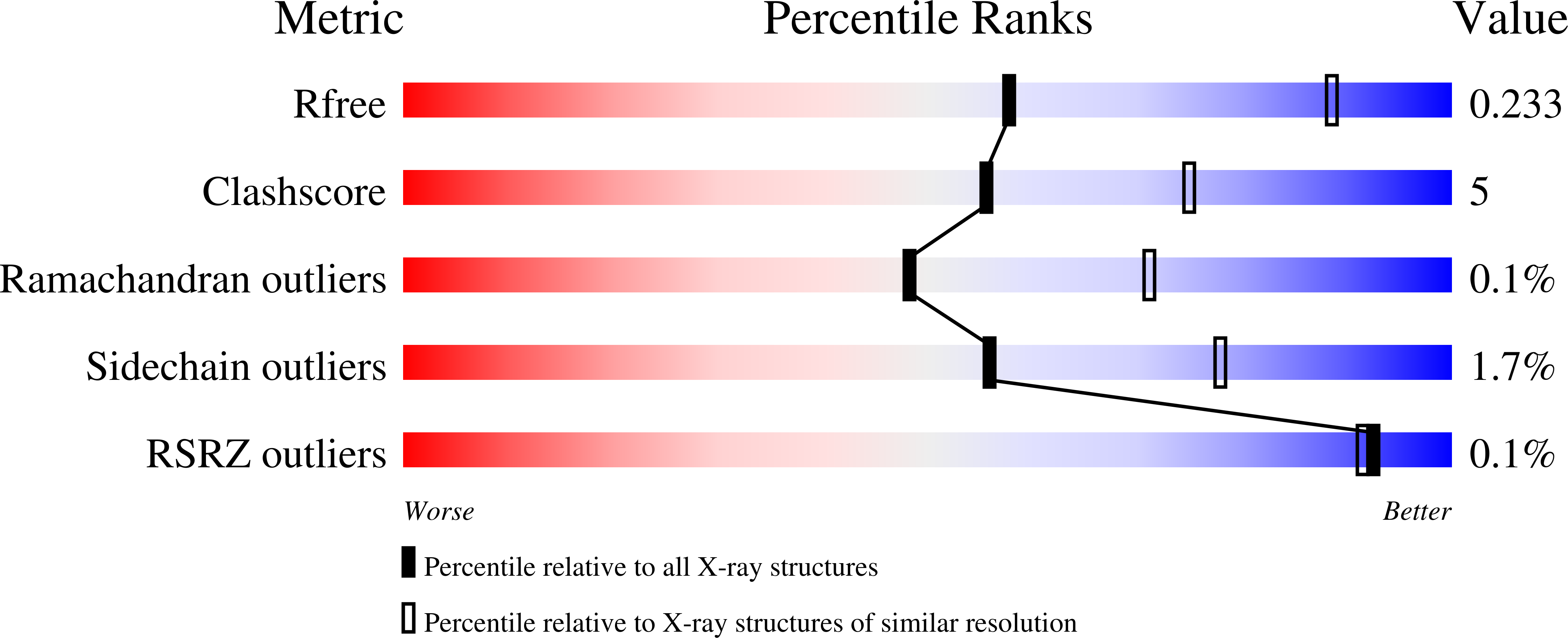
2.60 Å
R-Value Free:
0.24
R-Value Work:
0.19
R-Value Observed:
0.19
Space Group:
P 1 21 1
Macromolecular Entities
Polymer Type:polypeptide(L)
Molecule:2,4-diacetylphloroglucinol biosynthesis protein
Chain IDs:A, B, C, D
Chain Length:360
Number of Molecules:4
Biological Source:Chromobacterium sphagni
Polymer Type:polypeptide(L)
Molecule:2,4-diacetylphloroglucinol biosynthesis protein
Chain IDs:E, F, G, H
Chain Length:145
Number of Molecules:4
Biological Source:Chromobacterium sphagni
Polymer Type:polypeptide(L)
Molecule:2,4-diacetylphloroglucinol biosynthesis protein
Chain IDs:I, J, K, L
Chain Length:398
Number of Molecules:4
Biological Source:Chromobacterium sphagni
Ligand Molecules
Primary Citation
Biocatalytic Regioselective C-Formylation of Resorcinol Derivatives.
Angew.Chem.Int.Ed.Engl. ? e19387 e19387 (2026)
PMID: 41612625 DOI: 10.1002/anie.202519387

Abstact

Although aromatic formylation reactions are highly valuable from a synthetic perspective, a biocatalytic version has not yet been reported. Here, the cofactor-independent multimeric three-component acyltransferase from Chromobacterium sphagni (CsATase) was identified to enable the nonnatural promiscuous regioselective C-formylation of polyphenolic substrates, especially resorcinol derivatives, and thus extending the reaction scope of acyltransferases. Formylation of 4- and 5-substituted resorcinol derivatives gave access to regioselectively mono-formylated products with up to 99% conversion and up to 74% isolated yield. Formylation of phloroglucinol led to the di-formylated product with 99% conversion, outperforming chemical methods. Structural analysis of CsATase by X-ray crystallography provided insights into its active site.

Legend

Protein

Chemical

Disease

Primary Citation of related structures
Feedback Form
Name
Email
Institute
Feedback