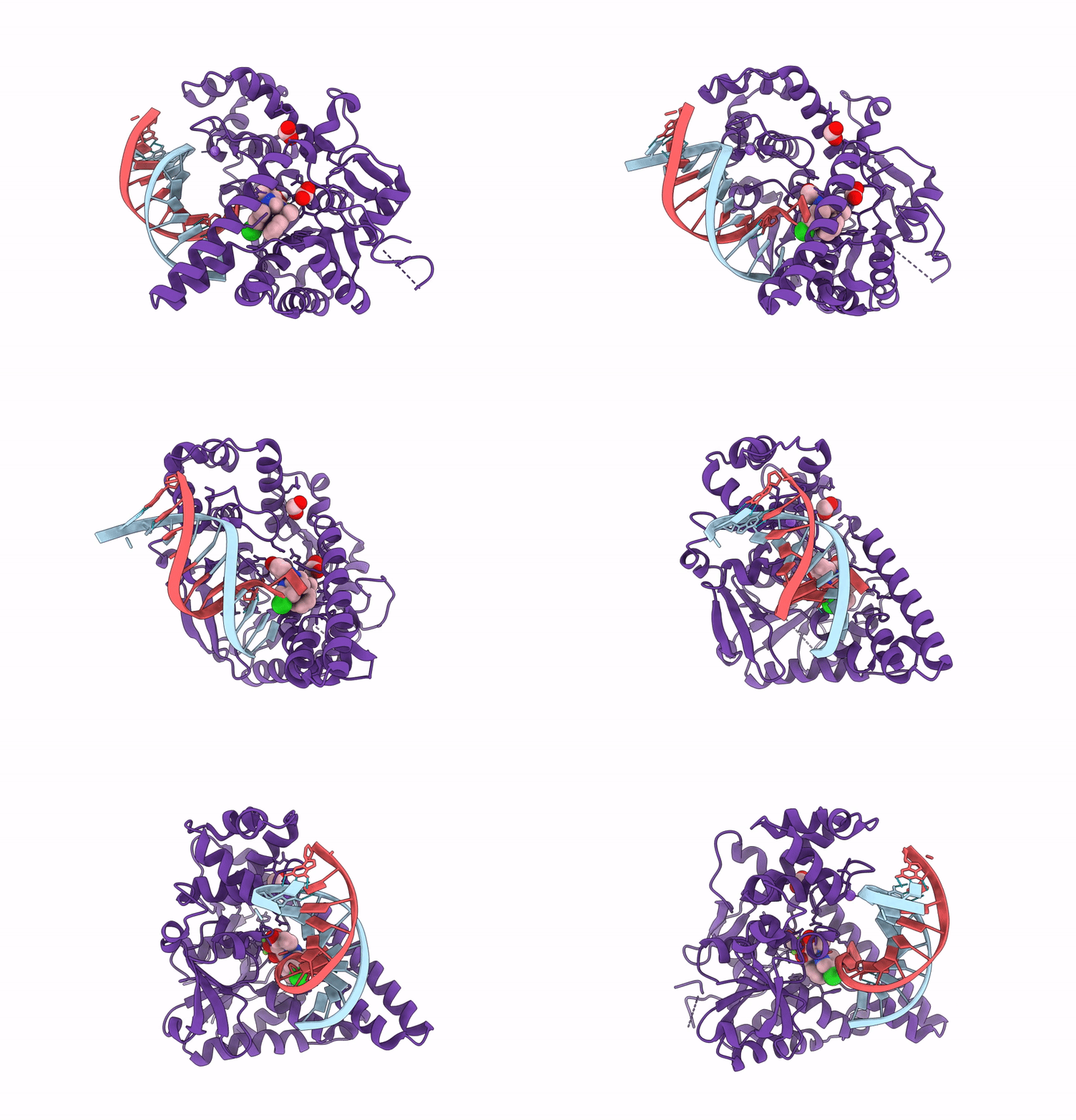
9SEB image
Deposition Date 2025-08-15
Release Date 2025-12-17
Last Version Date 2026-01-07
Entry Detail
PDB ID:
9SEB
Keywords:
Title:
Crystal Structure of human exonuclease 1 (Exo1) with DNA and compound 20
Biological Source:
Source Organism(s):
Expression System(s):
Method Details:
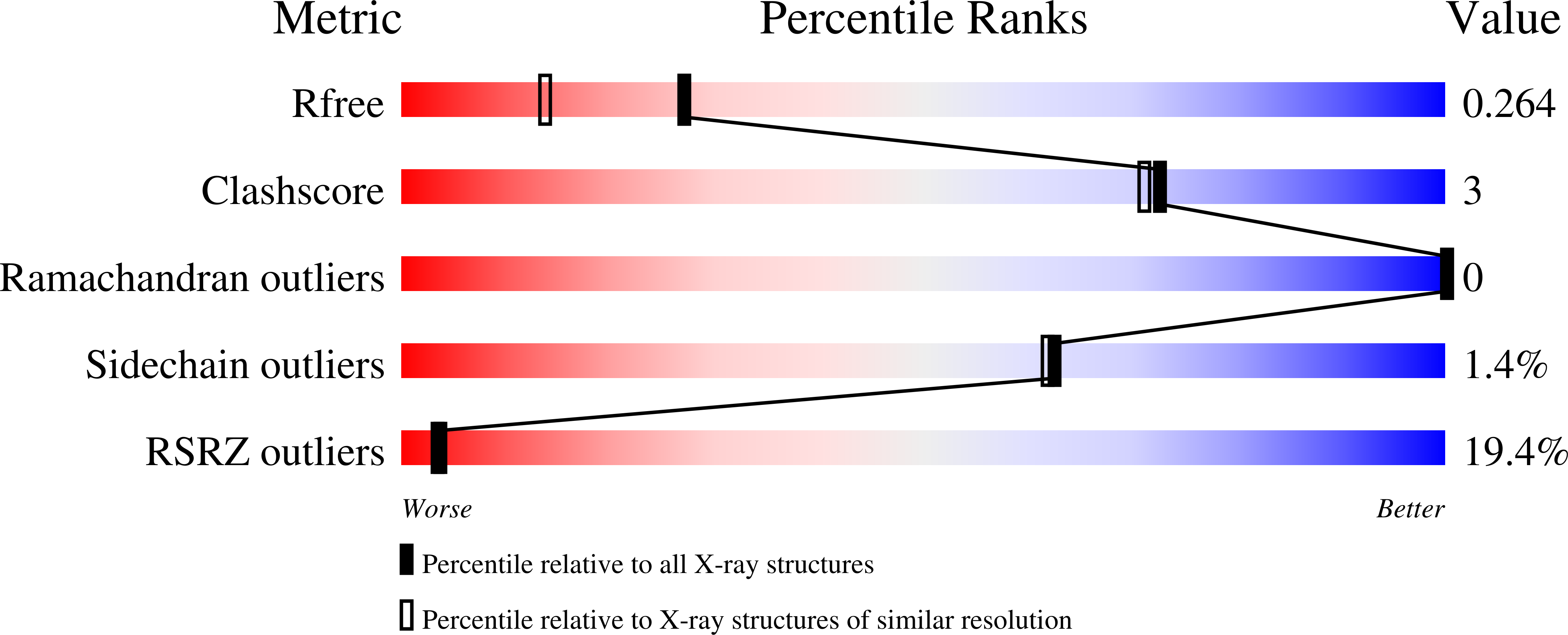
Experimental Method:
Resolution:
1.90 Å
R-Value Free:
0.27
R-Value Work:
0.23
R-Value Observed:
0.23
Space Group:
P 43 21 2
Macromolecular Entities
Polymer Type:polydeoxyribonucleotide
Molecule:DNA (5'-D(*CP*(GS)P*CP*TP*AP*GP*TP*CP*GP*TP*CP*AP*(PST))-3')
Chain IDs:A
Chain Length:13
Number of Molecules:1
Biological Source:synthetic construct
Polymer Type:polydeoxyribonucleotide
Molecule:DNA (5'-D(P*AP*(SC)P*GP*AP*CP*TP*AP*GP*CP*(GS))-3')
Chain IDs:B
Chain Length:10
Number of Molecules:1
Biological Source:synthetic construct
Structures with similar UniProt ID
Protein Blast
Polymer Type:polypeptide(L)
Molecule:Exonuclease 1
Gene (Uniprot):EXO1
Chain IDs:C (auth: Z)
Chain Length:358
Number of Molecules:1
Biological Source:Homo sapiens
Primary Citation

Abstact

Exonuclease 1 (EXO1) is emerging as a target of interest in oncology due to its involvement in multifaceted DNA metabolic processes, particularly in homologous recombination (HR). Evidence is building that BRCA1-deficient cancers are sensitive to loss of EXO1, suggesting therapeutic potential for treating certain subsets of patients. However, EXO1 remains under-explored, with very few reported inhibitors, and there is a paucity of good quality, potent, and selective pharmacological tools to explore its biology. Here, we describe a metal-chelating fragment screen, which resulted in highly selective, submicromolar EXO1 hits. Our subsequent structure-based design and optimization led to the discovery of ART5537, the first highly potent and selective EXO1 inhibitor. We demonstrate that inhibition of EXO1 leads to potent suppression of HR in cells and that the HR inhibition of ART5537 is driven exclusively by EXO1. Furthermore, we show that ART5537 sensitizes cancer cells to ionizing radiation (IR) and synergizes with PARP inhibitors (PARPi).

Legend

Protein

Chemical

Disease

Primary Citation of related structures
Feedback Form
Name
Email
Institute
Feedback