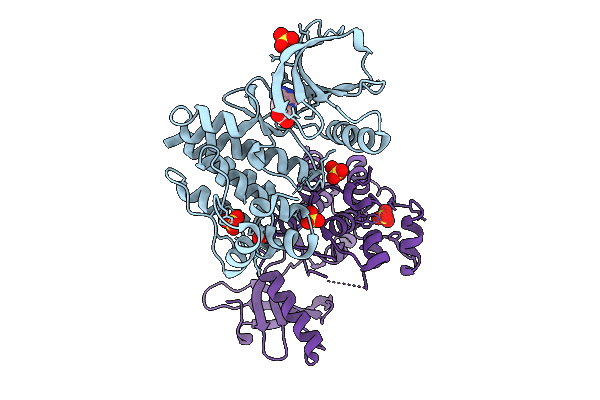
9SDI image
Deposition Date 2025-08-14
Release Date 2025-12-31
Last Version Date 2026-01-14
Entry Detail
PDB ID:
9SDI
Keywords:
Title:
FOCAL ADHESION KINASE CATALYTIC DOMAIN IN COMPLEX WITH 6-(1H-Pyrazol-4-yl)-nicotinic acid
Biological Source:
Source Organism(s):
Homo sapiens (Taxon ID: 9606)
Expression System(s):
Method Details:
Experimental Method:
Resolution:
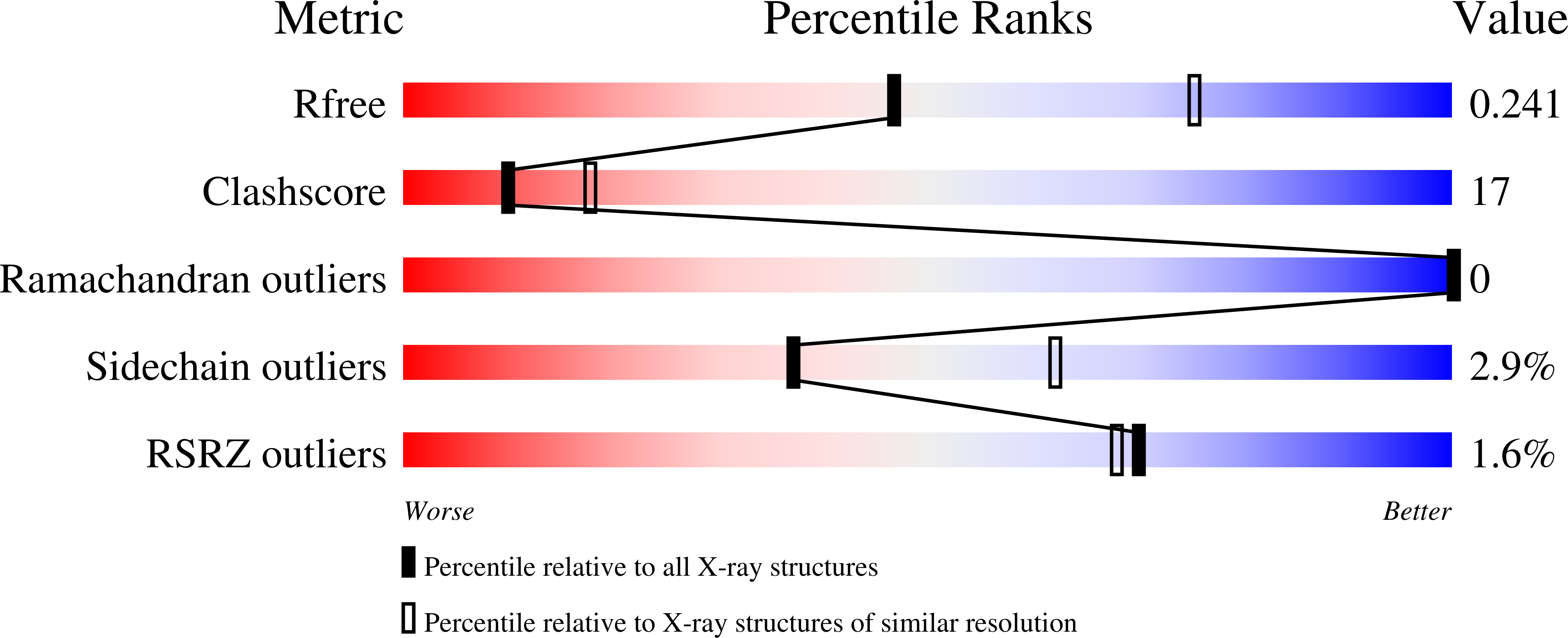
2.53 Å
R-Value Free:
0.24
R-Value Work:
0.18
R-Value Observed:
0.18
Space Group:
P 1
Macromolecular Entities
Structures with similar UniProt ID
Protein Blast
Polymer Type:polypeptide(L)
Molecule:Focal adhesion kinase 1
Gene (Uniprot):PTK2
Chain IDs:A, B
Chain Length:277
Number of Molecules:2
Biological Source:Homo sapiens
Primary Citation
Pushing the limits of hydrogen/deuterium exchange mass spectrometry to study protein:fragment low affinity interactions.
Commun Chem 8 405 405 (2025)
PMID: 41429916 DOI: 10.1038/s42004-025-01787-6

Abstact

Characterization of protein-ligand interactions is essential for the pre-clinical development of drug candidates and Hydrogen/Deuterium Exchange Mass Spectrometry (HDX-MS) has emerged as a valuable tool in this process. HDX-MS has predominantly been employed with high affinity compounds with only a few examples of its application for weaker binders such as fragments. Nevertheless, HDX-MS usage could be instrumental in Fragment-Based Drug Discovery (FBDD) programs. In this work, the drug-target protein Cyclophilin D (CypD) was used as a model to explore the boundaries of fragments binding characterization by HDX-MS (fHDX-MS). We performed a systematic study on the optimal conditions for fHDX-MS execution and found that fragments with binding affinities in the double-digit mM range are still amenable to fHDX-MS. We observed that, despite the intrinsic low resolution of HDX-MS, fragments binding sites that partially overlap can still be distinguished. Overall, this study shows that fHDX-MS can be a useful method for FBDD.

Legend

Protein

Chemical

Disease

Primary Citation of related structures
Feedback Form
Name
Email
Institute
Feedback