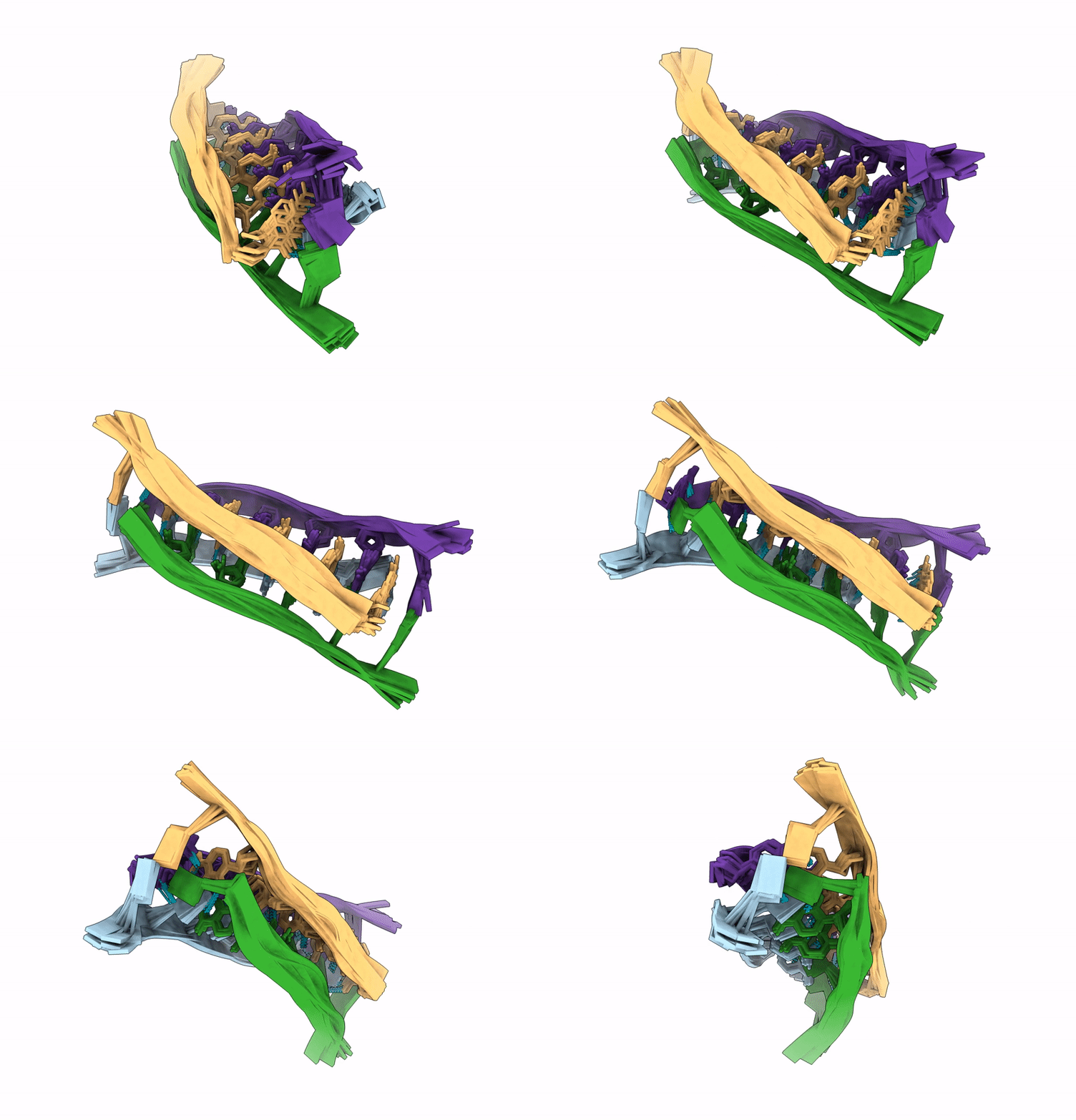
9S6I image
Deposition Date 2025-08-01
Release Date 2025-10-15
Last Version Date 2025-10-15
Entry Detail
PDB ID:
9S6I
Keywords:
Title:
A tetrameric i-motif structure formed by dTdCdCfrCfrCdC
Biological Source:
Source Organism:
Method Details:
Experimental Method:
Conformers Calculated:
10
Conformers Submitted:
10
Selection Criteria:
all calculated structures submitted

Macromolecular Entities
Polymer Type:polydeoxyribonucleotide
Molecule:DNA (5'-D(*TP*CP*CP*(CFZ)P*(CFZ)P*C)-3')
Chain IDs:A, B
Chain Length:6
Number of Molecules:2
Biological Source:synthetic construct
Polymer Type:polydeoxyribonucleotide
Molecule:DNA (5'-D(*TP*(DNR)P*(DNR)P*(CFZ)P*(CFZ)P*(DNR))-3')
Chain IDs:C, D
Chain Length:6
Number of Molecules:2
Biological Source:synthetic construct
Ligand Molecules
Primary Citation
The Effect of 2'F-RNA on I-Motif Structure and Stability.
Molecules 30 ? ? (2025)
PMID: 40942089 DOI: 10.3390/molecules30173561

Abstact

I-motifs are non-canonical, cytosine-rich DNA structures stabilized by hemiprotonated C•C+ base pairs, whose formation is highly pH-dependent. While certain chemical modifications can enhance i-motif stability, modifications at the sugar moiety often disrupt essential inter-strand contacts. In this study, we examine the structural and thermodynamic impact of incorporating 2'-fluoro-ribocytidine (2'F-riboC) into i-motif-forming sequences derived from d(TCCCCC). Using a combination of UV, 1H NMR, and 19F NMR spectroscopy, we demonstrate that full substitution with 2'F-riboC strongly destabilizes i-motif, whereas partial substitutions (one or two substitutions per strand) support well-folded structures at acidic pH (pH 5). High-resolution NMR structures reveal well-defined i-motif architectures with conserved C•C+ pairing and characteristic interstrand NOEs. Sugar conformational analysis reveals a predominant North pucker for cytosines, which directs the fluorine substituent toward the minor groove of the i-motif. 19F NMR further confirms slow exchange between folded and unfolded species, enabling the simultaneous detection of both under identical experimental conditions and, consequently, highlighting the utility of fluorine at the 2' sugar position as a spectroscopic probe. These findings provide insights into fluorine-mediated modulation of i-motif stability and further extend the utility of 19F NMR in nucleic acid research.

Legend

Protein

Chemical

Disease

Primary Citation of related structures
Feedback Form
Name
Email
Institute
Feedback