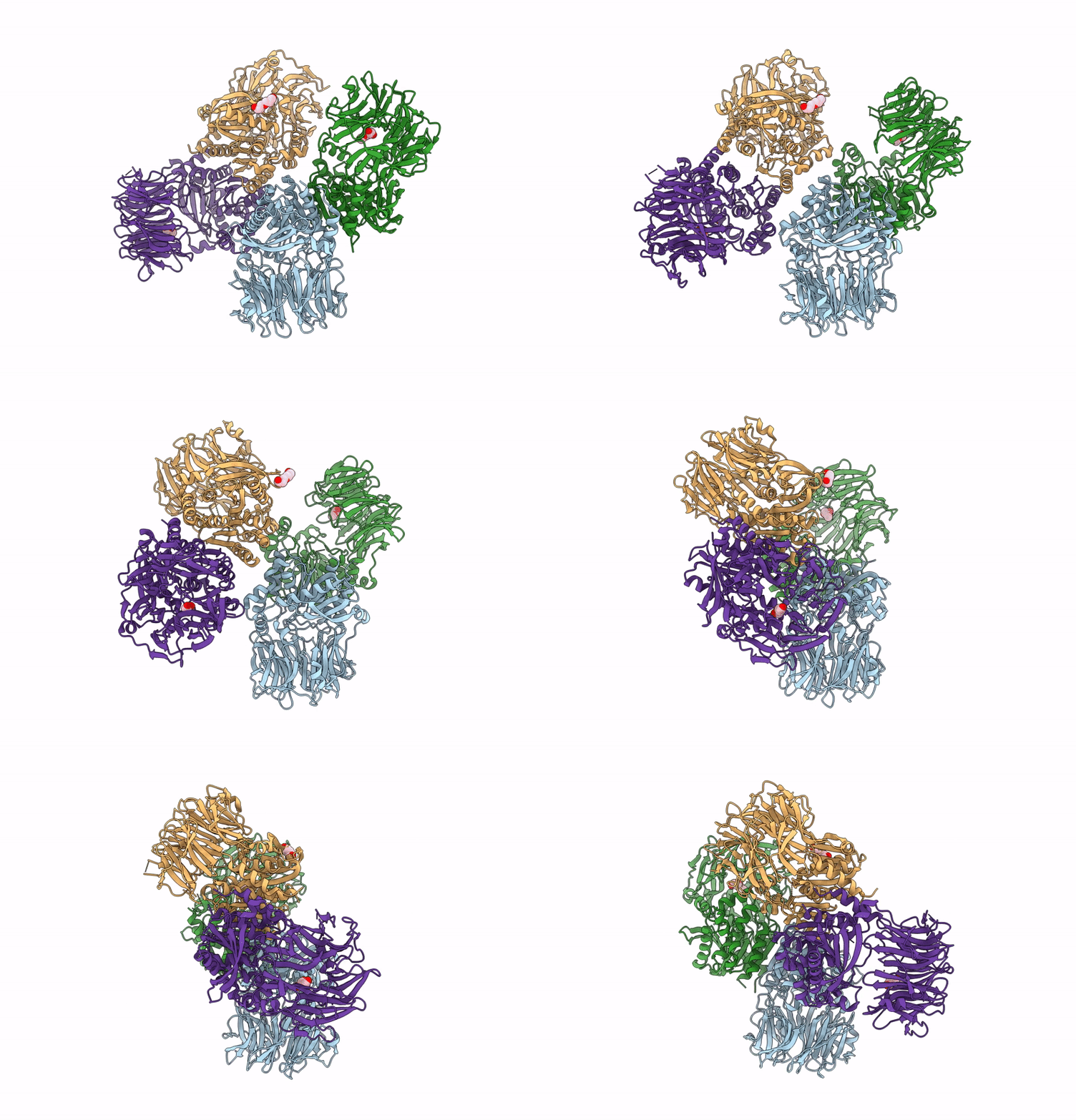
9S6B image
Deposition Date 2025-07-31
Release Date 2025-10-22
Last Version Date 2025-10-22
Entry Detail
PDB ID:
9S6B
Keywords:
Title:
Aeropyrum pernix acylaminoacyl peptidase co-crystallized with meropenem.
Biological Source:
Source Organism:
Host Organism:
Method Details:
Experimental Method:
Resolution:
2.30 Å
R-Value Free:
0.22
R-Value Work:
0.19
R-Value Observed:
0.19
Space Group:
P 1

Macromolecular Entities
Structures with similar UniProt ID
Protein Blast
Polymer Type:polypeptide(L)
Molecule:Acylamino-acid-releasing enzyme
Gene (Uniprot):APE_1547.1
Mutagens:D524A
Chain IDs:A, B, C, D
Chain Length:582
Number of Molecules:4
Biological Source:Aeropyrum pernix K1
Ligand Molecules
Primary Citation
Ligand binding Pro-miscuity of acylpeptide hydrolase, structural analysis of a detoxifying serine hydrolase.
Protein Sci. 34 e70320 e70320 (2025)
PMID: 41074793 DOI: 10.1002/pro.70320

Abstact

Acylpeptide hydrolase (APEH) or acylaminoacyl-peptidase (AAP) is a serine hydrolase that regulates protein metabolism. It can also bind to and process unusual substrates, acting as a detoxifier. To better understand its promiscuous specificity, we determined the cryo-EM structures of mammalian APEH complexed with classical serine protease partners: a chloromethyl-ketone (CMK) inhibitor, an organophosphate (OP) pesticide (dichlorvos), and benzenesulfonyl-fluoride. Since CMK derivatives of N-acetylated peptides were suggested to induce apoptosis by inhibiting APEH, while OP complexes may serve as biomarkers of OP exposure and are linked to cognitive enhancement, these complexes carry physiological significance. We identified a unique strand-breaker Pro residue in the hydrolase domain, which relaxes the active site into a partially inactivated but more spacious conformation, transforming the classical serine protease apparatus into a versatile yet potent hydrolysis center with broad specificity, distinguishing the mammalian enzyme not only from other APEHs but also from serine α/β hydrolases sharing essentially the same fold.

Legend

Protein

Chemical

Disease

Primary Citation of related structures
Feedback Form
Name
Email
Institute
Feedback