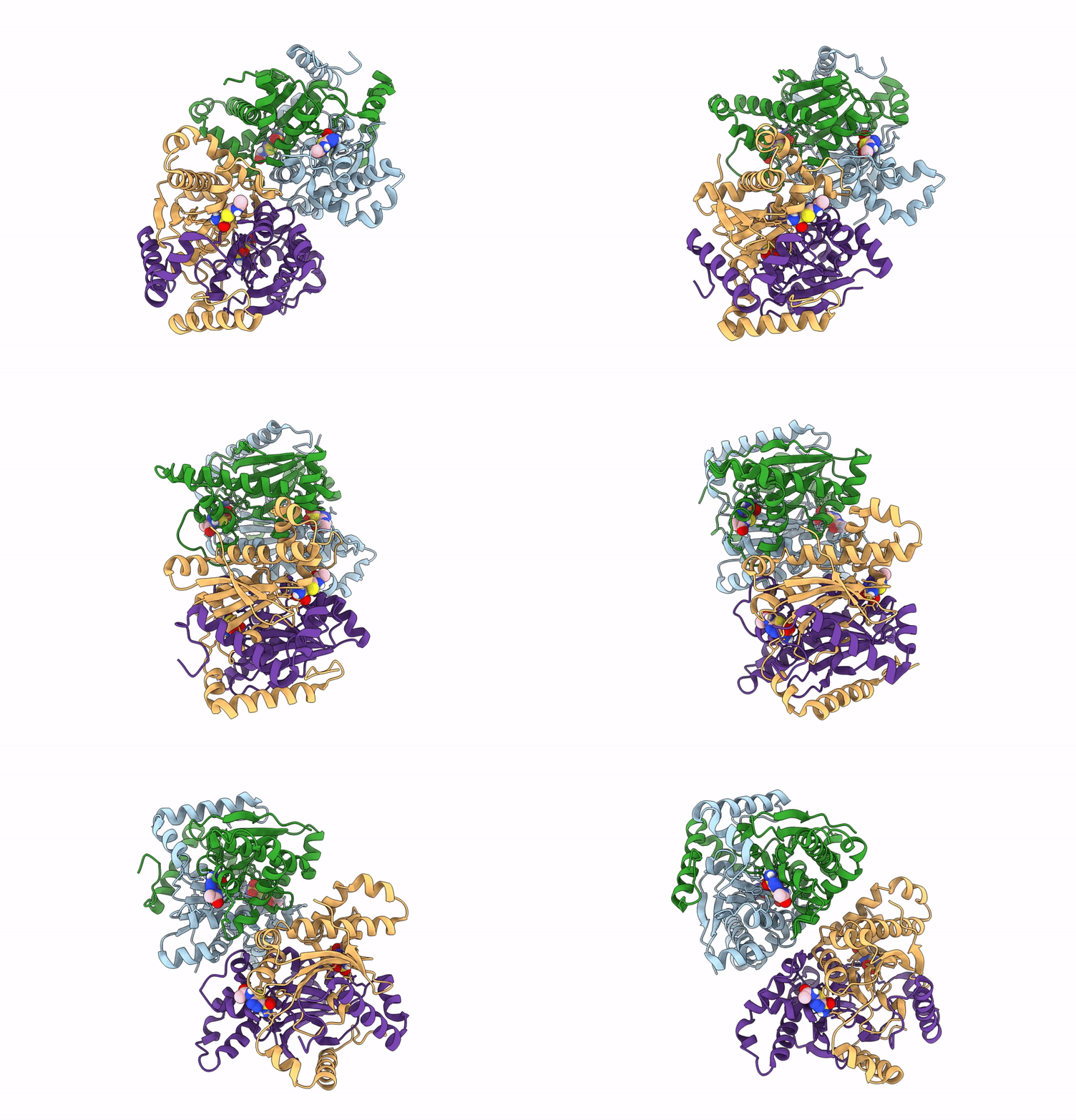
9S4G image
Deposition Date 2025-07-28
Release Date 2025-11-26
Last Version Date 2025-12-17
Entry Detail
PDB ID:
9S4G
Keywords:
Title:
Carbonic anhydrases from Candida parapsilosis
Biological Source:
Source Organism:
Host Organism:
Method Details:
Experimental Method:
Resolution:
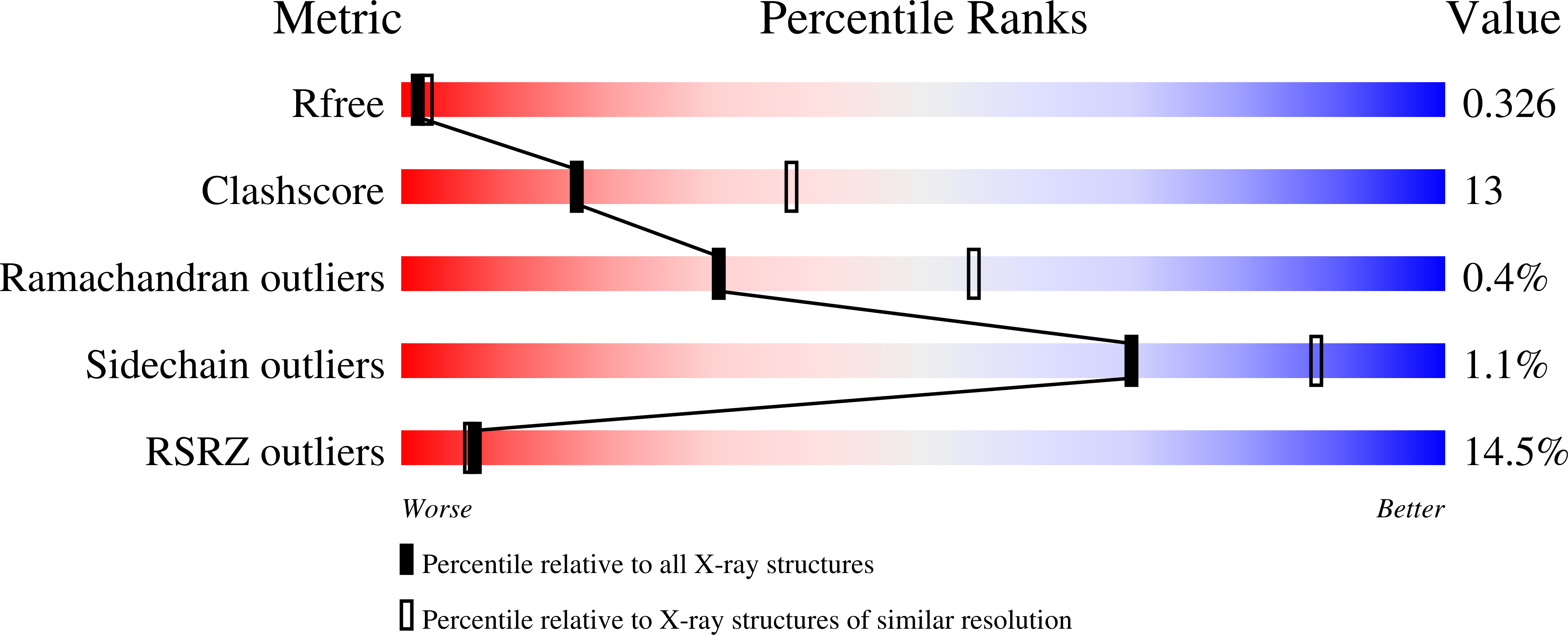
2.70 Å
R-Value Free:
0.32
R-Value Work:
0.27
R-Value Observed:
0.27
Space Group:
P 41 21 2
Macromolecular Entities
Structures with similar UniProt ID
Protein Blast
Polymer Type:polypeptide(L)
Molecule:Carbonic anhydrase
Gene (Uniprot):NCE103
Chain IDs:A, B, C, D
Chain Length:231
Number of Molecules:4
Biological Source:Candida parapsilosis
Primary Citation
Structural characterization and inhibition of carbonic anhydrase from Candida parapsilosis.
J Struct Biol X 12 100140 100140 (2025)
PMID: 41321686 DOI: 10.1016/j.yjsbx.2025.100140

Abstact

Fungal carbonic anhydrases (CAs) are metalloenzymes that catalyze the reversible hydration of carbon dioxide and play an essential role in fungal adaptation to environments with fluctuating CO2 concentrations. The opportunistic pathogen Candida parapsilosis expresses a single β-class CA, CpNce103p, which is structurally distinct from human α-class CAs and therefore may represent a promising antifungal target. Here, we report the biochemical and structural characterization of CpNce103p, including its crystal structure in complex with the classical CA inhibitor acetazolamide. Mass photometry and X-ray crystallography revealed that CpNce103p forms a stable homotetramer, similar to its homolog CaNce103p from C. albicans. Inhibition constants (Ki) were measured for a panel of 16 sulfonamide derivatives. One compound attained single-digit micromolar inhibition of CpNce103p, similar to the Ki of acetazolamide. Docking suggested the compound's binding mode, featuring zinc coordination and accommodation within the tight cavity. Our findings provide a structural basis for rational inhibitor design targeting fungal β-CAs and support CpNce103p as a viable target for the development of antifungal agents with selective activity.

Legend

Protein

Chemical

Disease

Primary Citation of related structures
Feedback Form
Name
Email
Institute
Feedback