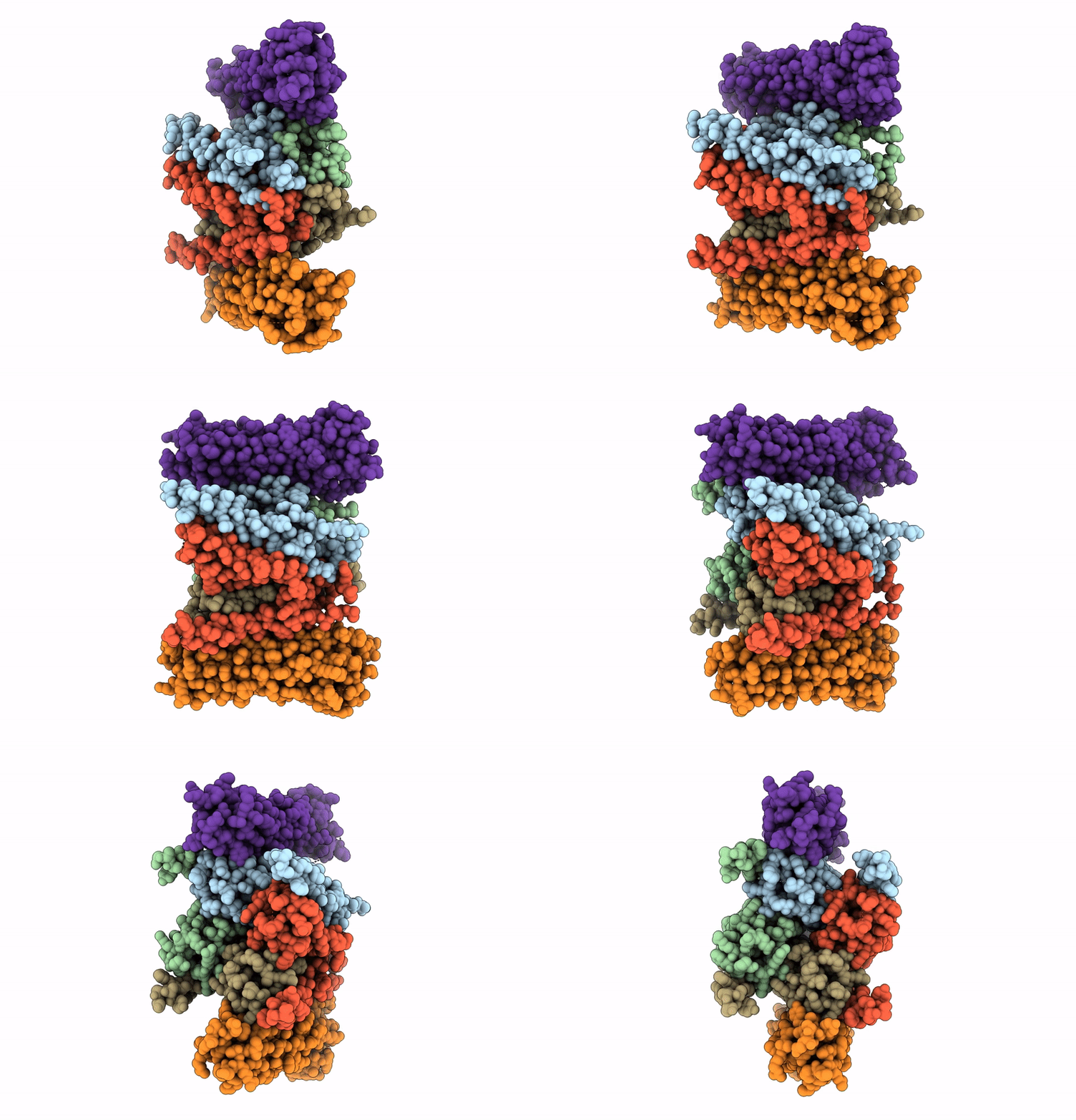
9S41 image
Deposition Date 2025-07-25
Release Date 2025-12-24
Last Version Date 2025-12-24
Entry Detail
PDB ID:
9S41
Title:
Cerebellar GluA1/4 TMD with TARP gamma 7 (focused refinement)
Biological Source:
Source Organism:
Sus scrofa (Taxon ID: 9823)
Method Details:
Experimental Method:
Resolution:
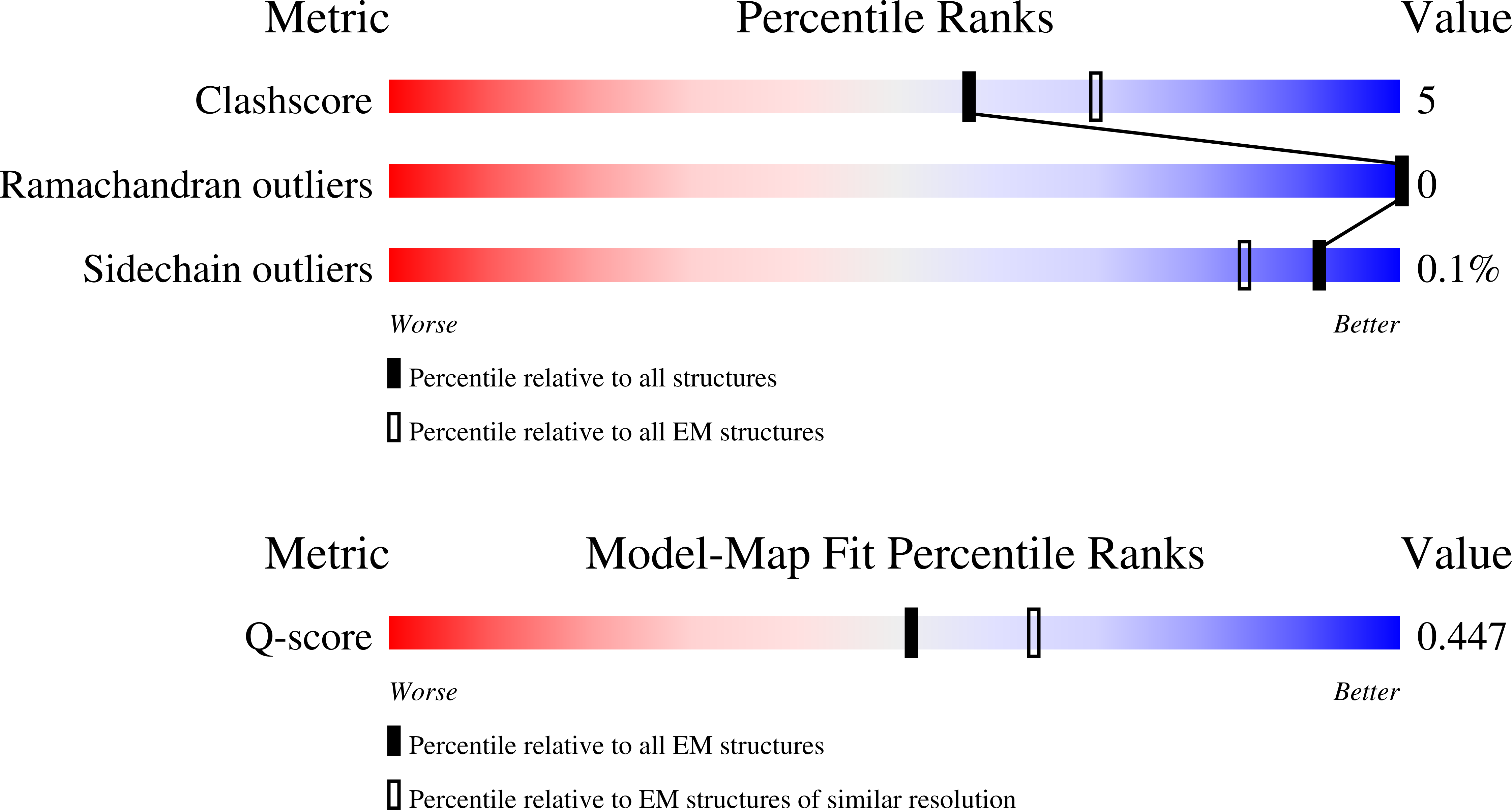
3.66 Å
Aggregation State:
PARTICLE
Reconstruction Method:
SINGLE PARTICLE
Macromolecular Entities
Structures with similar UniProt ID
Protein Blast
Polymer Type:polypeptide(L)
Molecule:Glutamate receptor 1
Gene (Uniprot):GRIA1
Chain IDs:A, C
Chain Length:888
Number of Molecules:2
Biological Source:Sus scrofa
Structures with similar UniProt ID
Protein Blast
Polymer Type:polypeptide(L)
Molecule:Glutamate receptor 4
Gene (Uniprot):GRIA4
Chain IDs:B, D
Chain Length:863
Number of Molecules:2
Biological Source:Sus scrofa
Structures with similar UniProt ID
Protein Blast
Polymer Type:polypeptide(L)
Molecule:Voltage-dependent calcium channel gamma-7 subunit
Gene (Uniprot):CACNG7
Chain IDs:E (auth: I), F (auth: J)
Chain Length:275
Number of Molecules:2
Biological Source:Sus scrofa
Ligand Molecules
Primary Citation
Structure and organization of AMPA receptor-TARP complexes in the mammalian cerebellum.
Science ? eaeb3577 eaeb3577 (2025)
PMID: 41379938 DOI: 10.1126/science.aeb3577

Abstact

AMPA receptors (AMPARs) are multimodal transducers of glutamatergic signals throughout the brain. Their diversity is exemplified in the cerebellum; at afferent synapses, AMPARs mediate high-frequency excitation, whereas in Bergmann glia (BG) they support calcium transients that modulate synaptic transmission. This spectrum arises from different combinations of core subunits (GluA1-4), auxiliary proteins, and post-transcriptional modifications. Here, using mass-spectrometry, cryo-EM, and electrophysiology, we characterize major cerebellar AMPARs in pig: calcium-impermeable GluA2/A4 heteromers with four TARP subunits, mainly neuronal in origin, and BG-specific calcium-permeable GluA1/A4 heteromers containing two Type-2 TARPs. We also showed that GluA4 receptors consistently exhibit compact N-terminal domains that promote their synaptic delivery. Our study defines the organizational principles of mammalian cerebellar AMPAR complexes and reveals how different receptor subtypes support cell-type specific functions.

Legend

Protein

Chemical

Disease

Primary Citation of related structures
Feedback Form
Name
Email
Institute
Feedback