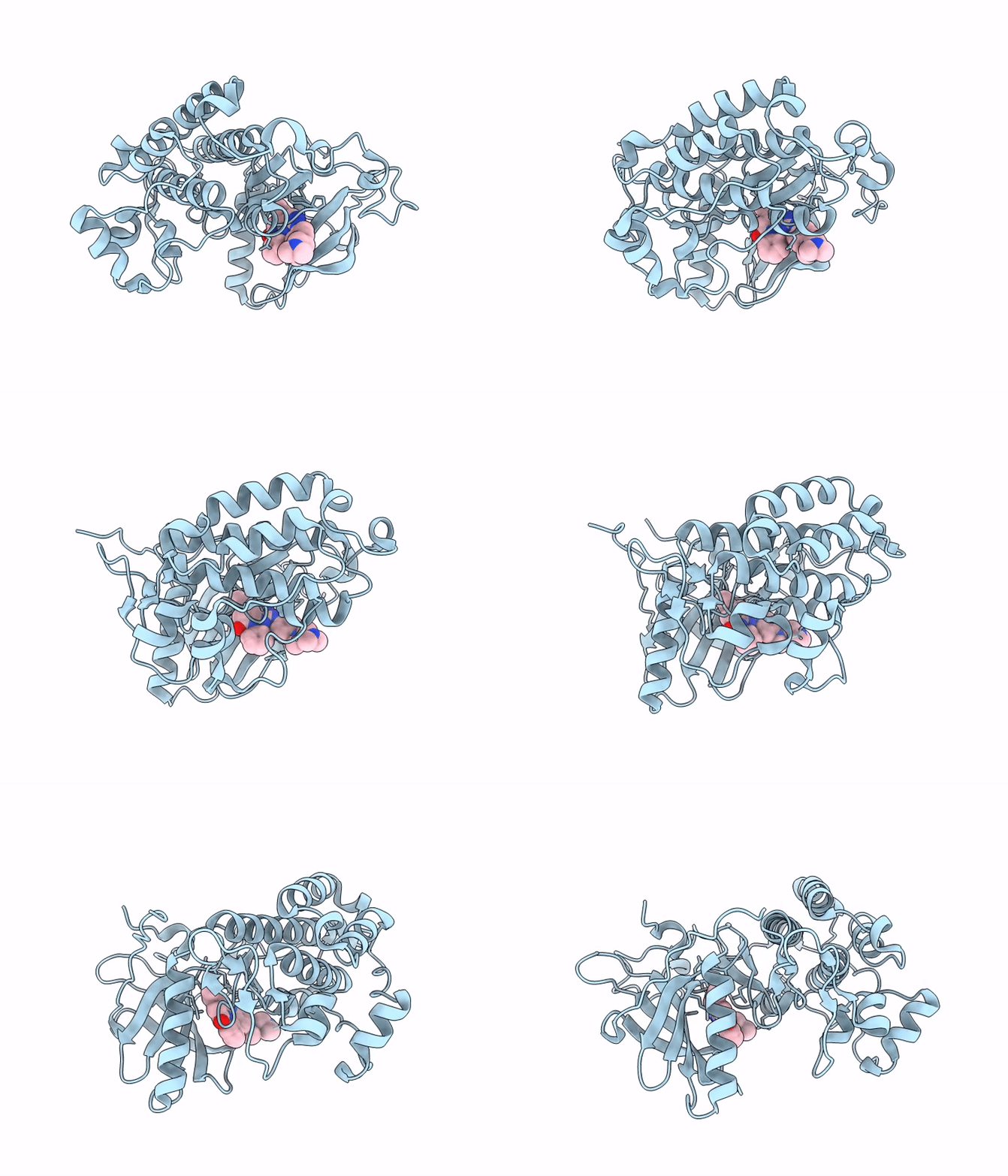
9S3X image
Deposition Date 2025-07-25
Release Date 2026-01-14
Last Version Date 2026-01-21
Entry Detail
PDB ID:
9S3X
Keywords:
Title:
EGFR (T790M,L858R) in complex with NCL-26007
Biological Source:
Source Organism(s):
Homo sapiens (Taxon ID: 9606)
Expression System(s):
Method Details:
Experimental Method:
Resolution:
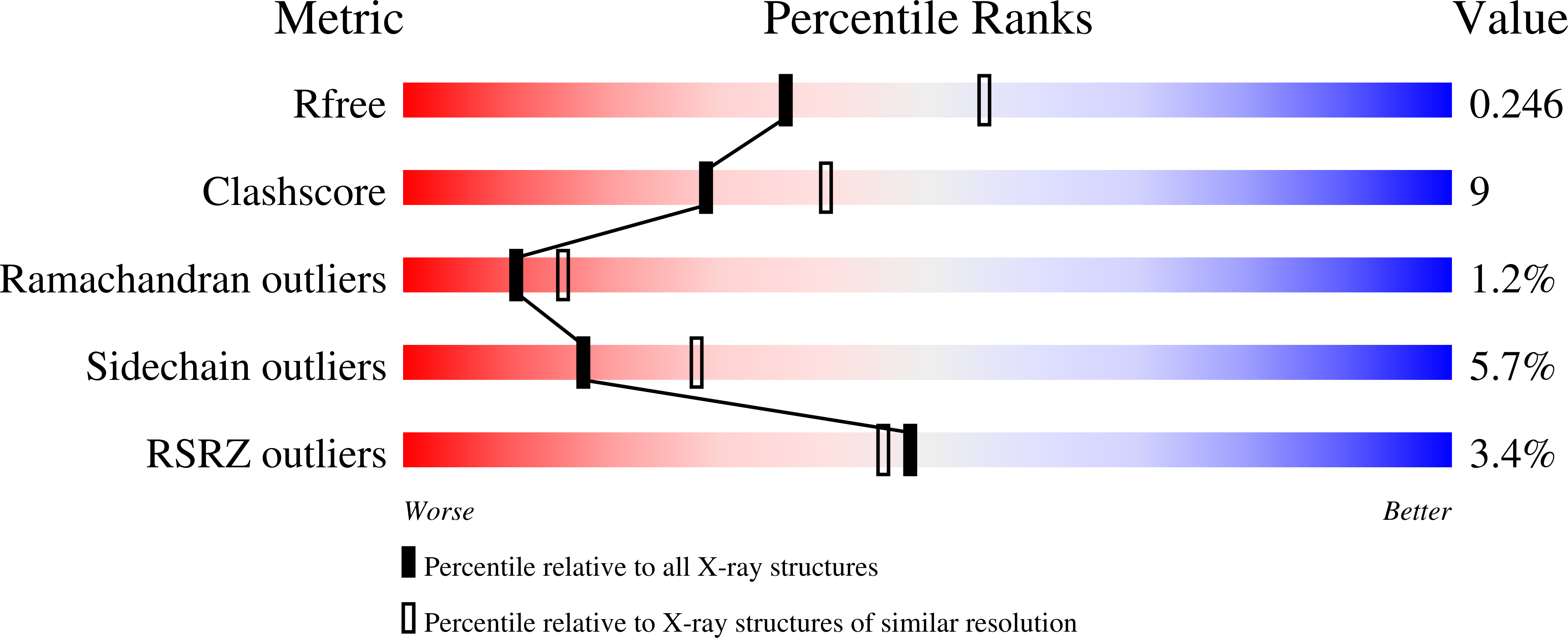
2.42 Å
R-Value Free:
0.24
R-Value Work:
0.18
Space Group:
I 2 3
Macromolecular Entities
Structures with similar UniProt ID
Protein Blast
Polymer Type:polypeptide(L)
Molecule:Epidermal growth factor receptor
Gene (Uniprot):EGFR
Chain IDs:A
Chain Length:324
Number of Molecules:1
Biological Source:Homo sapiens
Ligand Molecules
Primary Citation
Covalent Alkynylpyridopyrimidinones Targeting Cysteine 775 of the Epidermal Growth Factor Receptor Overcome Resistance to Current Therapies.
J.Med.Chem. 69 533 552 (2026)
PMID: 41432179 DOI: 10.1021/acs.jmedchem.5c02924

Abstact

Inhibitors of epidermal growth factor receptor (EGFR) kinase activity are clinically effective treatments for lung cancers driven by activating mutations in EGFR. Resistance to inhibitors develops over time, frequently through further mutations in the kinase domain. On-target resistance to third-generation inhibitor osimertinib, commonly develops through C797S mutation that prevents covalent binding. There is an urgent need for new treatments for osimertinib-resistant EGFR mutants that retain the advantages of the covalent mechanism. Compounds were designed and synthesized to covalently inhibit EGFR through C775, a further cysteine residue we identified in the orthosteric site. Optimisation of the alkynylpyridopyrimidinone scaffold we discovered led to potent compounds that demonstrate inhibition of EGFR phosphorylation and tumor growth in all EGFR mutant cell lines. The covalent C775 mode-of-action was comprehensively established. This work demonstrates that covalent targeting of C775 is a viable mechanism for the treatment of pan-EGFR mutated cancers, particularly those resistant to current therapies.

Legend

Protein

Chemical

Disease

Primary Citation of related structures
Feedback Form
Name
Email
Institute
Feedback