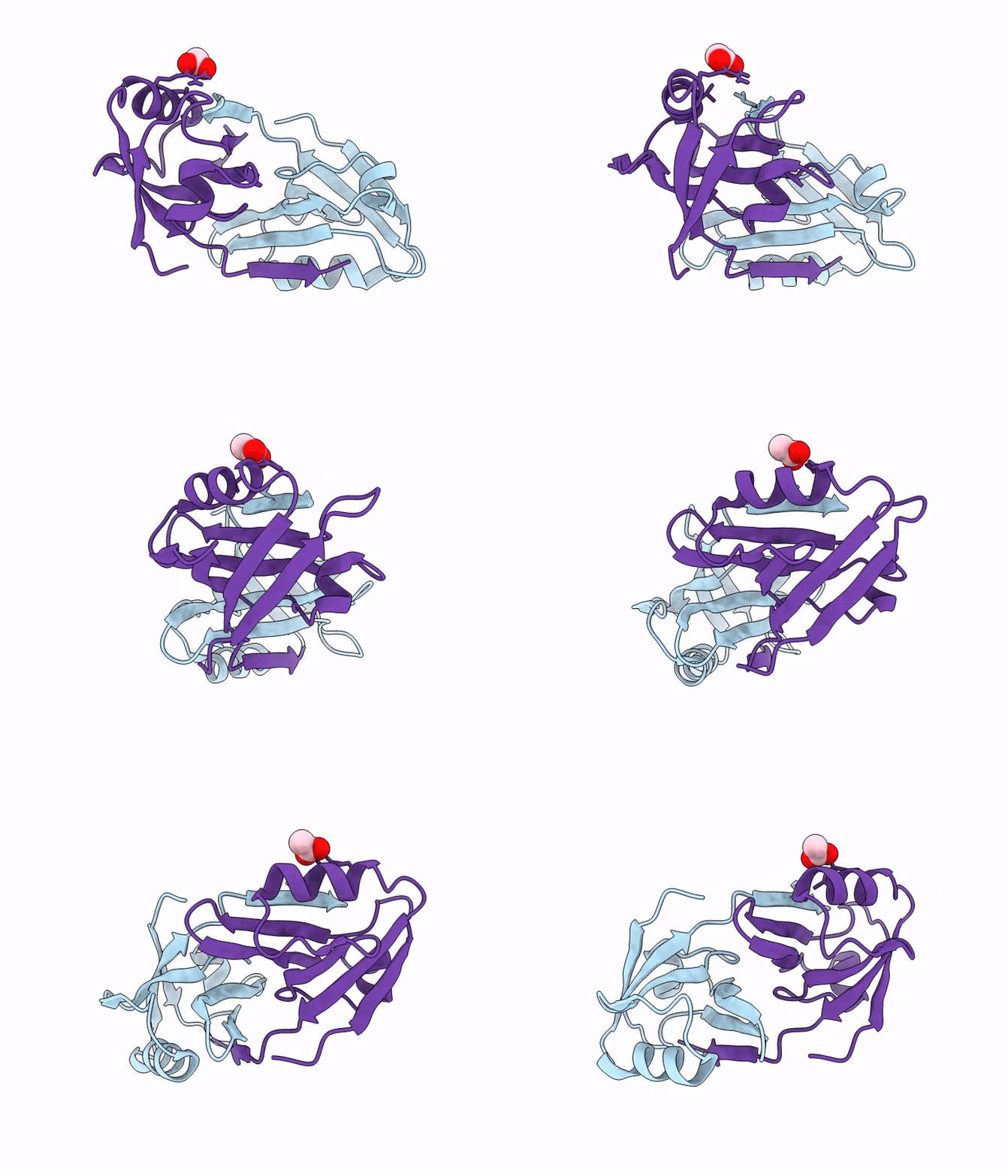
9RXQ image
Deposition Date 2025-07-11
Release Date 2026-01-14
Last Version Date 2026-01-14
Entry Detail
PDB ID:
9RXQ
Keywords:
Title:
Structure of the PDZ1 domain from human NHERF1 with the C-terminal residues (KSTQF) of human URAT1 transporter (SLC22A12)
Biological Source:
Source Organism(s):
Homo sapiens (Taxon ID: 9606)
Expression System(s):
Method Details:
Experimental Method:
Resolution:
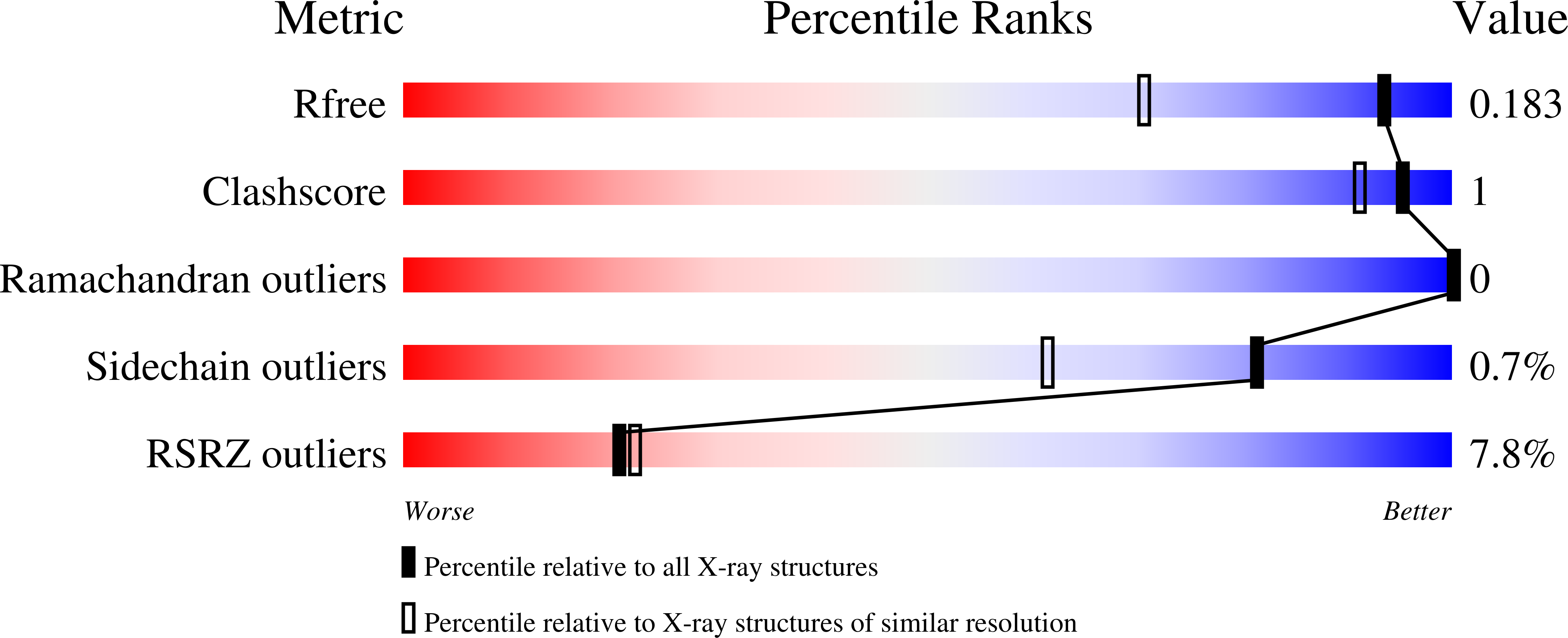
1.38 Å
R-Value Free:
0.18
R-Value Work:
0.16
R-Value Observed:
0.16
Space Group:
P 21 21 21
Macromolecular Entities
Structures with similar UniProt ID
Protein Blast
Polymer Type:polypeptide(L)
Molecule:Na(+)/H(+) exchange regulatory cofactor NHE-RF1,Solute carrier family 22 member 12
Gene (Uniprot):NHERF1
Chain IDs:A, B
Chain Length:90
Number of Molecules:2
Biological Source:Homo sapiens
Ligand Molecules
Primary Citation

Abstact

The renal solute carrier URAT1 (SLC22A12) is essential for urate homeostasis, with loss-of-function linked to renal hypouricemia, nephrolithiasis and lower gout risk. URAT1 function depends on binding the multi-PDZ domain scaffold protein PDZK1 (NHERF3), with a similar role suggested for the related NHERF1. The molecular basis of these interactions remains poorly understood. Using fluorescence anisotropy, we show that full-length human PDZK1 binds the C-terminal peptide of URAT1 with high affinity (KD 170 nM), unlike NHERF1 (KD >70 µM). The PDZ1 domain of PDZK1 alone is sufficient for high-affinity binding (KD 160 nM), while PDZ4 provides a secondary site (KD 1.35 µM), with both interactions characterized by rapid kinetics. Gel filtration shows that PDZK1 can bind two URAT1 peptides. X-ray structures of individual PDZ domains from PDZK1 and NHERF1 complexed with the URAT1 peptide reveal the underlying molecular basis for selectivity and broad affinity range. Murine Pdzk1 and Nherf1 bind Urat1 with high affinity indicating species-specific interactions. These data provide insights into URAT1 regulation by PDZ scaffold proteins with relevance for understanding urate homeostasis regulation and related disorders.

Legend

Protein

Chemical

Disease

Primary Citation of related structures
Feedback Form
Name
Email
Institute
Feedback