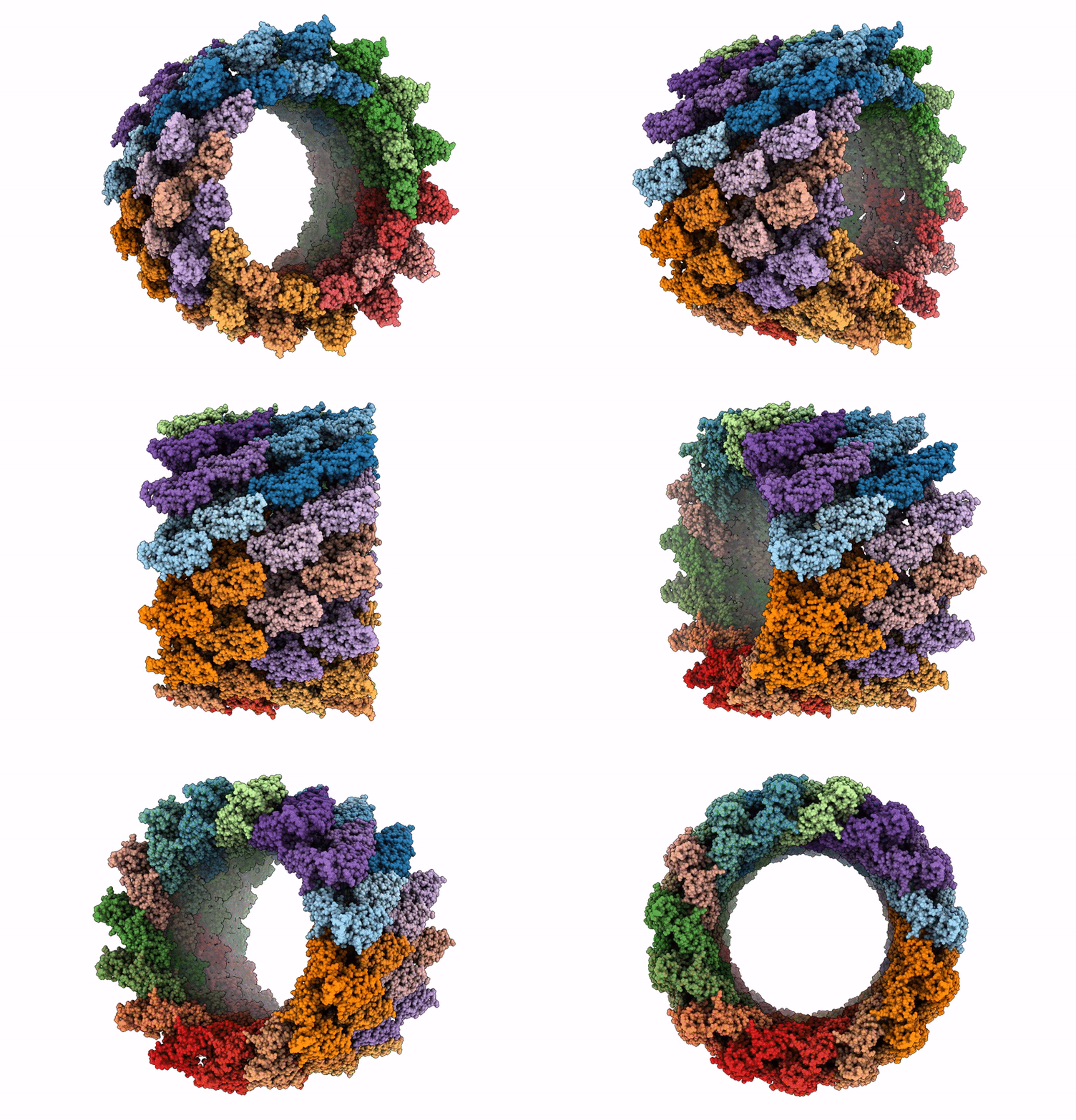
9RKT image
Deposition Date 2025-06-14
Release Date 2025-12-10
Last Version Date 2026-01-21
Entry Detail
PDB ID:
9RKT
Keywords:
Title:
Agrobacterium phage 7-7-1 collar
Biological Source:
Source Organism(s):
Method Details:
Experimental Method:
Resolution:
3.31 Å
Aggregation State:
PARTICLE
Reconstruction Method:
SINGLE PARTICLE
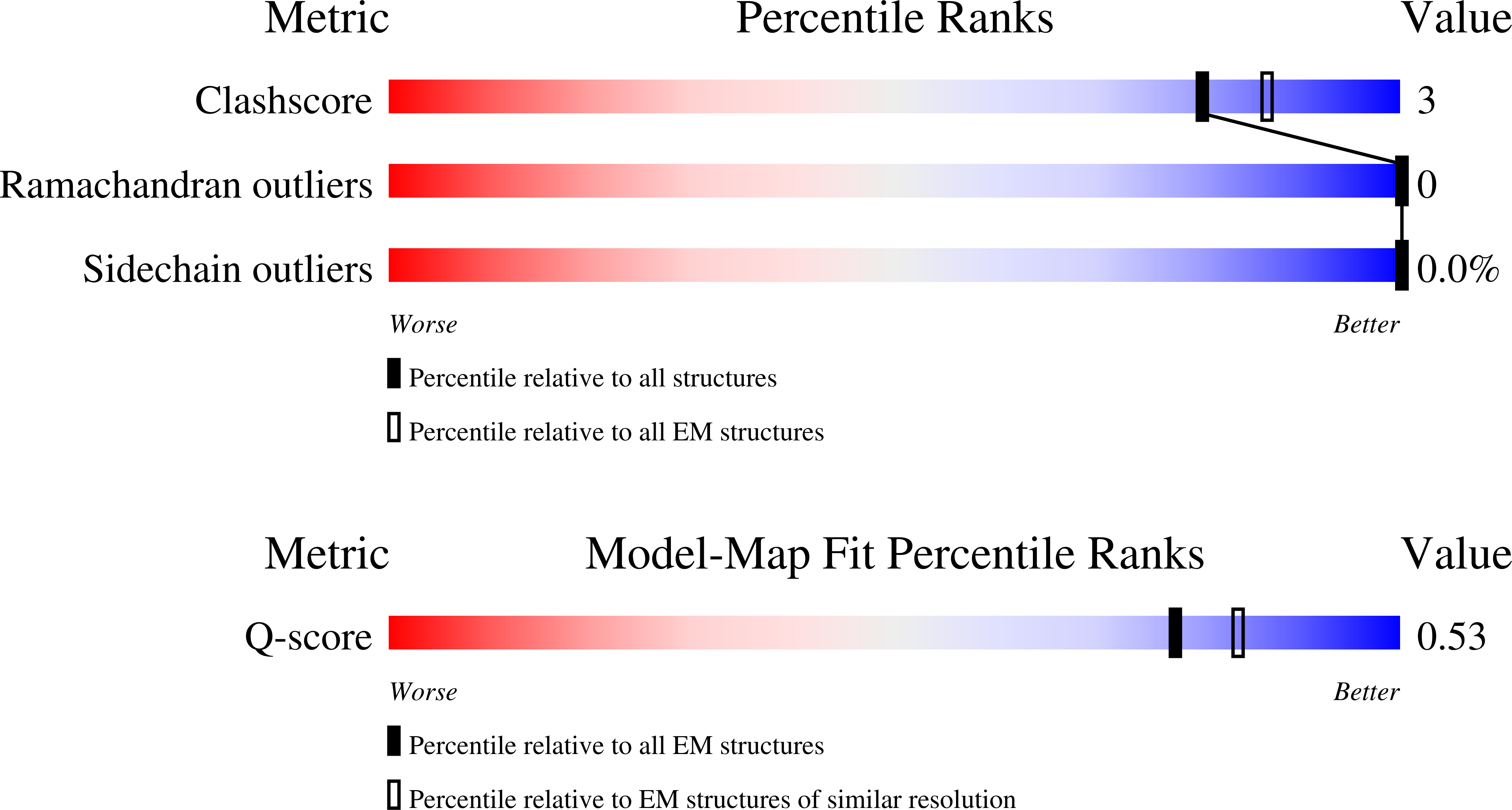
Macromolecular Entities
Structures with similar UniProt ID
Protein Blast
Polymer Type:polypeptide(L)
Molecule:Structural protein
Gene (Uniprot):7-7-1_000118
Chain IDs:A, B, C, D, E, F, G, H, I, J, K, L, M, N, O, P, Q, R, S, T, U, V, W, X, Y, Z, AA (auth: a), BA (auth: b), CA (auth: c), DA (auth: d), EA (auth: e), FA (auth: f), GA (auth: g), HA (auth: h), IA (auth: i), JA (auth: j), KA (auth: k), LA (auth: l), MA (auth: m), NA (auth: n), OA (auth: o), PA (auth: p), QA (auth: q), RA (auth: r), SA (auth: s), TA (auth: t), UA (auth: u), VA (auth: v), WA (auth: w), XA (auth: x), YA (auth: y), ZA (auth: z), AB (auth: 1), BB (auth: 2), CB (auth: 3), DB (auth: 4), EB (auth: 5), FB (auth: 6), GB (auth: 7), HB (auth: 8)
Chain Length:230
Number of Molecules:60
Biological Source:Agrobacterium phage 7-7-1
Ligand Molecules
Primary Citation
Insights into the structure and initial host attachment of the flagellotropic bacteriophage 7-7-1.
Commun Biol 9 55 55 (2025)
PMID: 41353512 DOI: 10.1038/s42003-025-09319-7

Abstact

Understanding the structural and functional mechanisms of bacteriophage 7-7-1, the flagellotropic phage infecting Agrobacterium sp. H13-3, offers promising insights into phage-host interactions. Using single particle analysis (SPA) cryo-electron microscopy (cryo-EM), we determined the capsid, neck region, tail, and baseplate complex structures. Combined with cryo-electron tomography (cryo-ET) and machine learning methodologies, our findings indicate that phage 7-7-1 uses capsid fibers to establish initial contact with the host flagellum, followed by subsequent attachment to cell surface receptors. The study also demonstrated that capsid fibers are flexible and can interact with other phages and host flagella, suggesting a cooperative infection strategy. These results provide crucial structural insights and may open avenues for developing phage-based therapeutics against resistant bacterial pathogens.

Legend

Protein

Chemical

Disease

Primary Citation of related structures
Feedback Form
Name
Email
Institute
Feedback