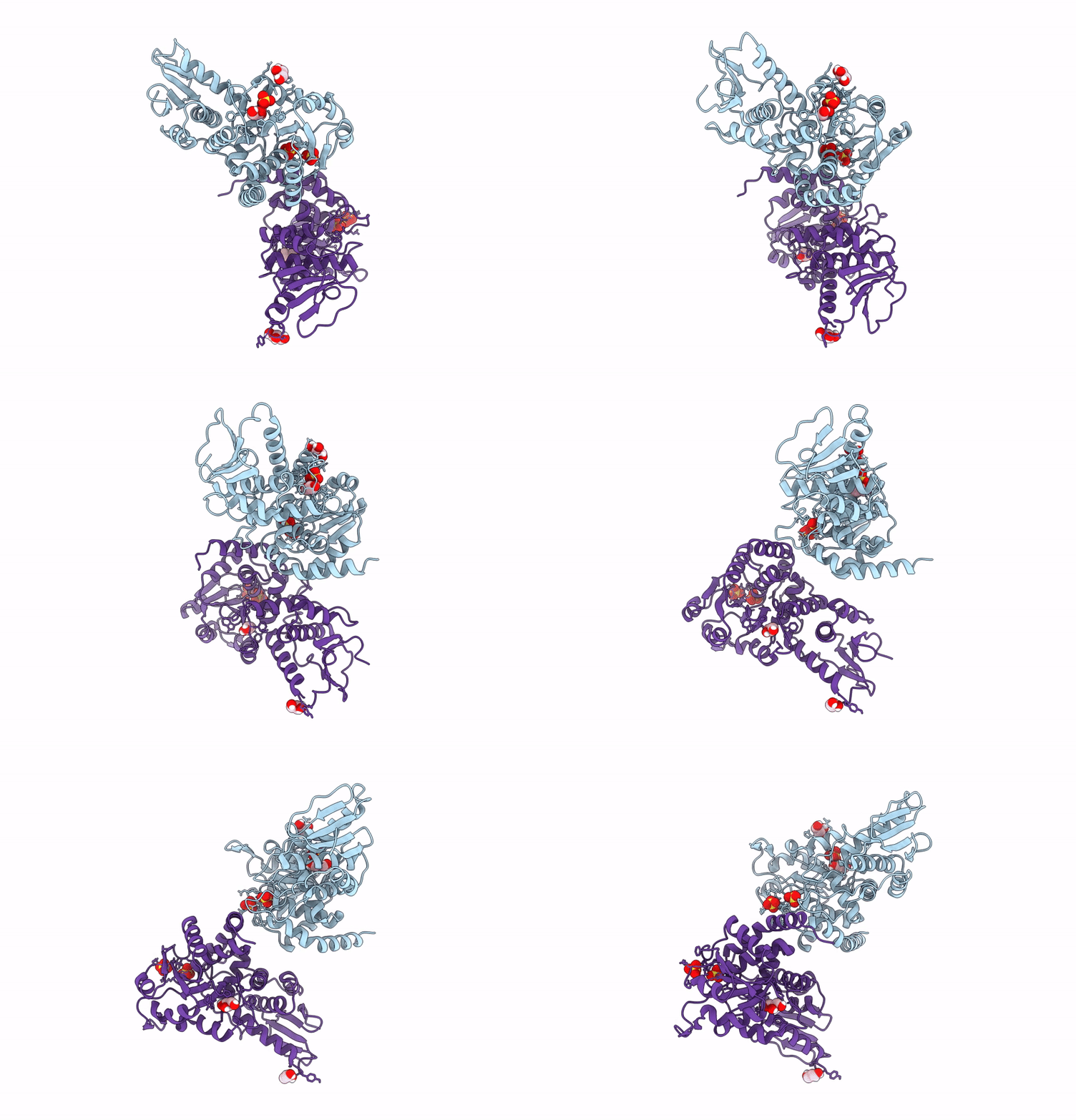
9RIB image
Deposition Date 2025-06-11
Release Date 2025-12-10
Last Version Date 2026-01-07
Entry Detail
PDB ID:
9RIB
Keywords:
Title:
Crystal structure of C278S mutant of mouse CDC14A
Biological Source:
Source Organism(s):
Mus musculus (Taxon ID: 10090)
Method Details:
Experimental Method:
Resolution:
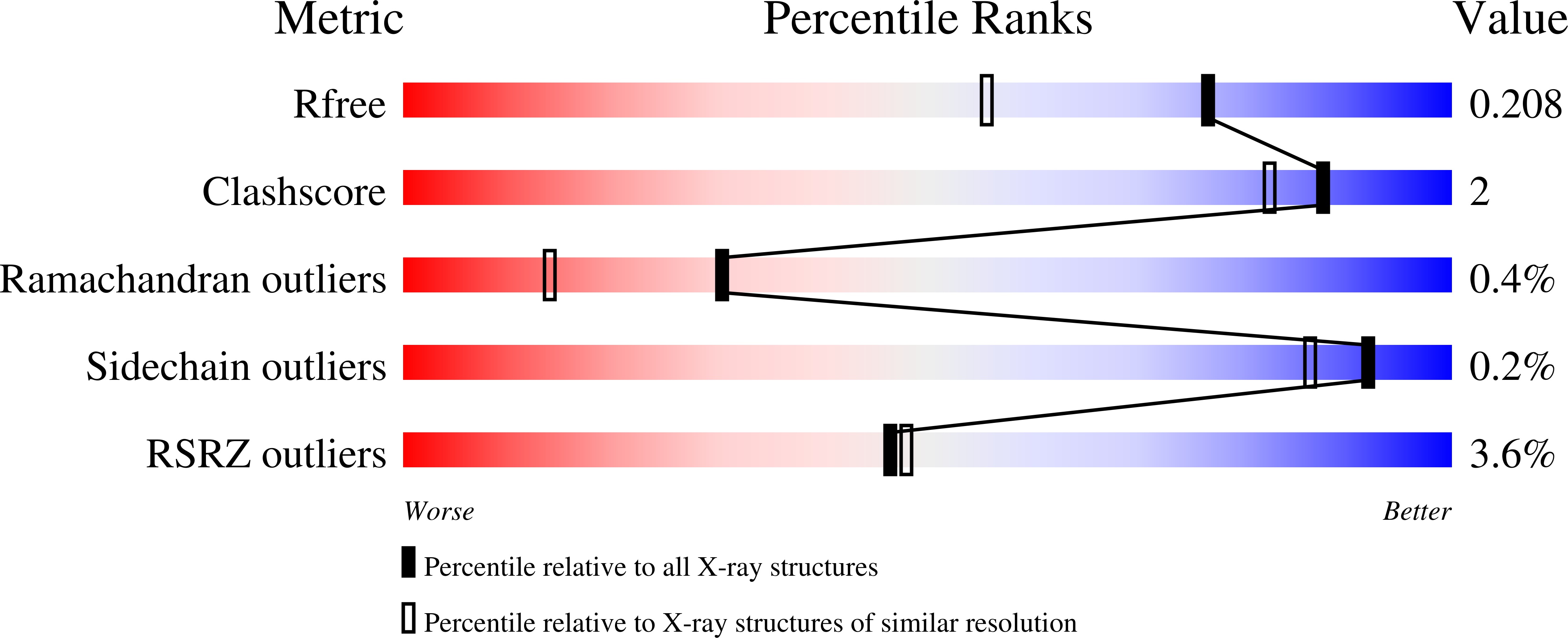
1.62 Å
R-Value Free:
0.20
R-Value Work:
0.16
R-Value Observed:
0.16
Space Group:
C 1 2 1
Macromolecular Entities
Structures with similar UniProt ID
Protein Blast
Polymer Type:polypeptide(L)
Molecule:Dual specificity protein phosphatase CDC14A
Gene (Uniprot):Cdc14a
Chain IDs:A, B
Chain Length:344
Number of Molecules:2
Biological Source:Mus musculus
Primary Citation
A truncated CDC14A retains catalytic structure and phosphatase activity preserving male fertility but causes nonsyndromic deafness.
J.Biol.Chem. 302 110982 110982 (2025)
PMID: 41308992 DOI: 10.1016/j.jbc.2025.110982

Abstact

Pathogenic variants of human CDC14A (cell division cycle 14A) are associated either with nonsyndromic deafness DFNB32 or HIIMS, hearing impairment infertile male syndrome. The 623-residue CDC14A protein has two globular domains (residues 17-152 and 217-325) and a 278-residue C-terminal intrinsically disordered region (IDR). To date, 16 recessive variants of human CDC14A are associated with hearing loss. Variants affecting the globular N-terminal domains of human CDC14A are associated with HIIMS while mutations in the IDR cause nonsyndromic deafness DFNB32. Here, we tested the hypothesis that human CDC14A c.1033C>T variant, segregating with nonsyndromic deafness in family PKSN10, introduces a premature translation stop codon (p.R345X) yet the mRNA escapes nonsense-mediated decay (NMD) and produces sufficient active phosphatase to allow for male fertility. Quantitative analyses of CDC14A mRNA in blood leukocytes from PKSN10 family showed CDC14A transcripts are stable including homozygous (p.R345X) transcripts which evade NMD. To further test this hypothesis, we performed biochemical and structural characterizations of truncated CDC14A (ΔC-CDC14A) protein retaining only residues 1 to 345. Kinetic functional studies and X-ray crystallographic findings of purified ΔC-CDC14A protein indicate that it retains structural integrity and phosphatase activity. Molecular genetic reports of DFNB32 and HIIMS, taken together with structural and functional data in this study, indicate that phosphatase activity of ΔC-CDC14A containing the two globular domains is sufficient for male fertility but insufficient for normal hearing. In addition, we show that the C-terminal IDR of CDC14A is required for normal hearing, likely because it is necessary for normal localization of CDC14A in hair cells.

Legend

Protein

Chemical

Disease

Primary Citation of related structures
Feedback Form
Name
Email
Institute
Feedback