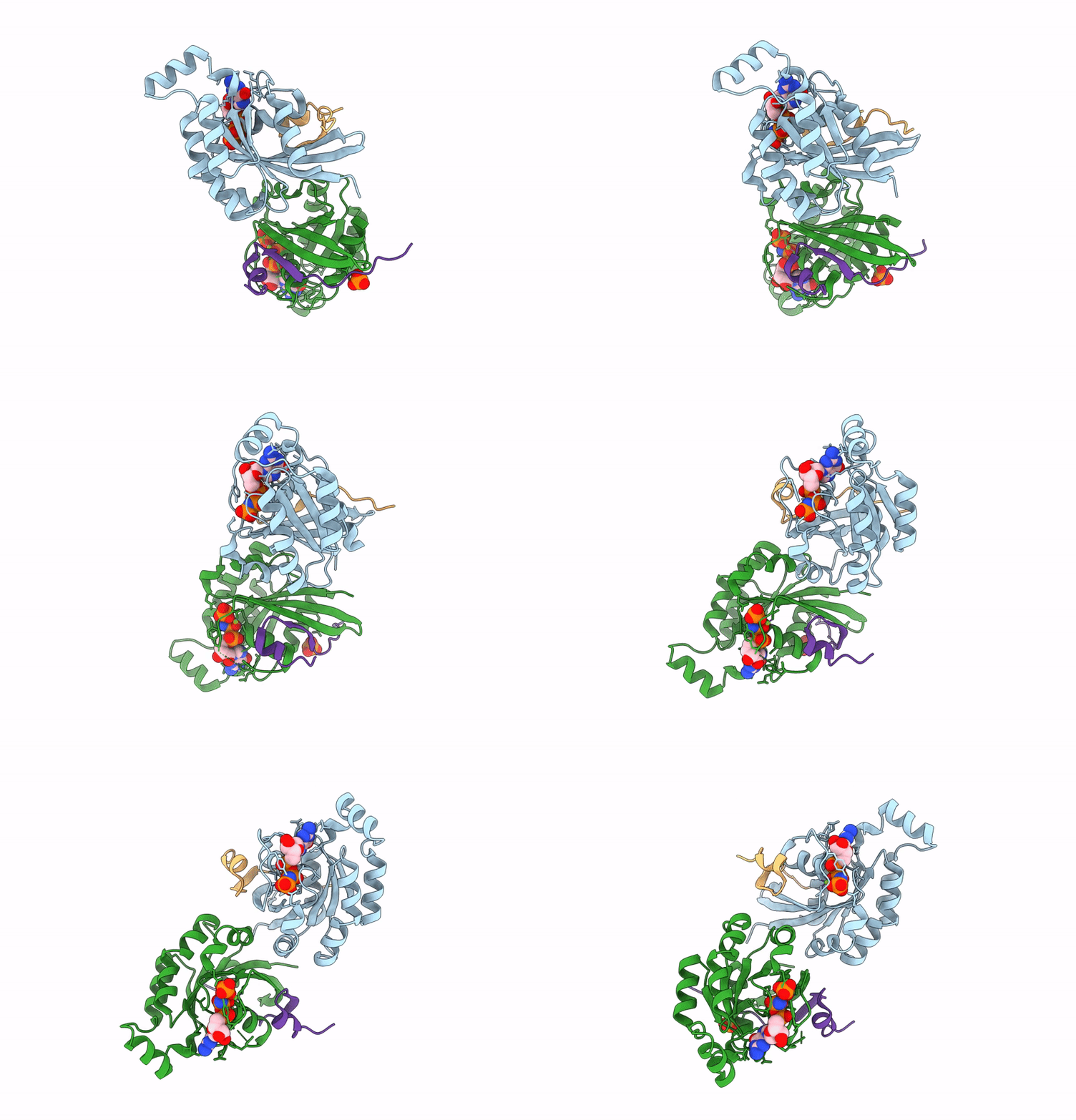
9RFB image
Deposition Date 2025-06-04
Release Date 2025-12-03
Last Version Date 2026-01-07
Entry Detail
PDB ID:
9RFB
Keywords:
Title:
Crystal Structure of Human Rac1 in Complex with the Scaffold Protein POSH (residues 321-348)
Biological Source:
Source Organism(s):
Homo sapiens (Taxon ID: 9606)
Expression System(s):
Method Details:
Experimental Method:
Resolution:
1.85 Å
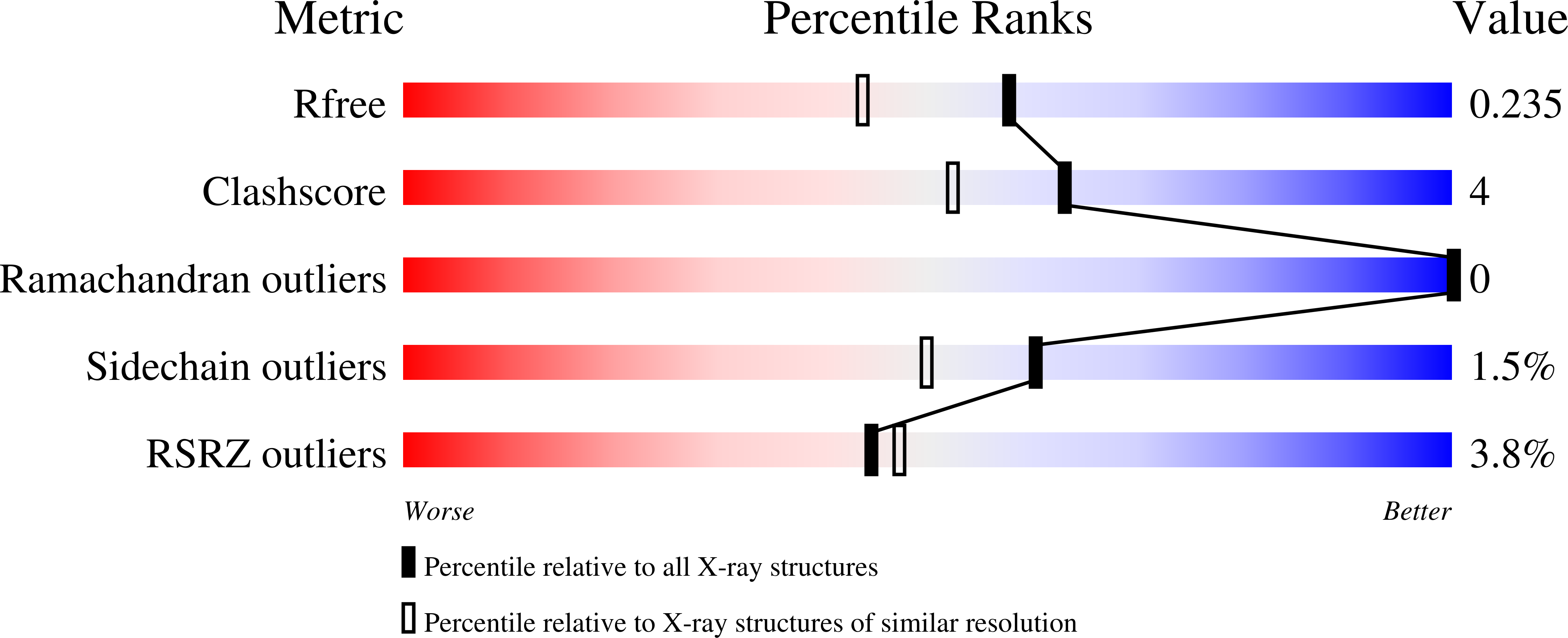
R-Value Free:
0.22
R-Value Work:
0.19
Space Group:
P 43 21 2
Macromolecular Entities
Structures with similar UniProt ID
Protein Blast
Polymer Type:polypeptide(L)
Molecule:Ras-related C3 botulinum toxin substrate 1
Gene (Uniprot):RAC1
Chain IDs:A, B
Chain Length:180
Number of Molecules:2
Biological Source:Homo sapiens
Structures with similar UniProt ID
Protein Blast
Polymer Type:polypeptide(L)
Molecule:E3 ubiquitin-protein ligase SH3RF1
Gene (Uniprot):SH3RF1
Chain IDs:C, D
Chain Length:28
Number of Molecules:2
Biological Source:Homo sapiens
Modified Residue
Compound ID Chain ID Parent Comp ID Details 2D Image
CME A CYS modified residue
Primary Citation
Hierarchical folding-upon-binding of an intrinsically disordered protein.
Nat Commun 16 11346 11346 (2025)
PMID: 41309611 DOI: 10.1038/s41467-025-66420-5

Abstact

Intrinsically disordered proteins (IDPs) often undergo folding-upon-binding to their partners via short linear motifs, typically 5-15 amino acids in length. However, a significant proportion of IDPs do not adhere to this paradigm but fold upon binding through extended regions comprising multiple molecular recognition elements. For these IDPs, the binding mechanisms and the structural characteristics of their folding intermediates remain poorly understood. Here we unveil hierarchical folding of an IDP as it binds to its partner, exemplified by the disordered signaling effector POSH and the small GTPase Rac1. By combining nuclear magnetic resonance (NMR) spectroscopy and X-ray crystallography, we resolve at atomic resolution how POSH transitions from a fully disordered state to a highly ordered, Rac1-bound conformation through two structurally distinct folding intermediates. The folding of each element is contingent on the successful structuring of the preceding element, highlighting a hierarchical folding-upon-binding mechanism. Our work highlights the potential of targeting folding intermediates and conformational transitions to unlock therapeutic opportunities for IDPs.

Legend

Protein

Chemical

Disease

Primary Citation of related structures
Feedback Form
Name
Email
Institute
Feedback