Planned Maintenance: Some services may turn out to be unavailable from 15th January, 2026 to 16th January, 2026. We apologize for the inconvenience!

9REL image
Deposition Date 2025-06-03
Release Date 2025-12-31
Last Version Date 2026-01-07
Entry Detail
PDB ID:
9REL
Keywords:
Title:
Crystal Structure of the Protein-Kinase A catalytic subunit from Cricetulus griseus in complex with F283
Biological Source:
Source Organism(s):
Method Details:
Experimental Method:
Resolution:
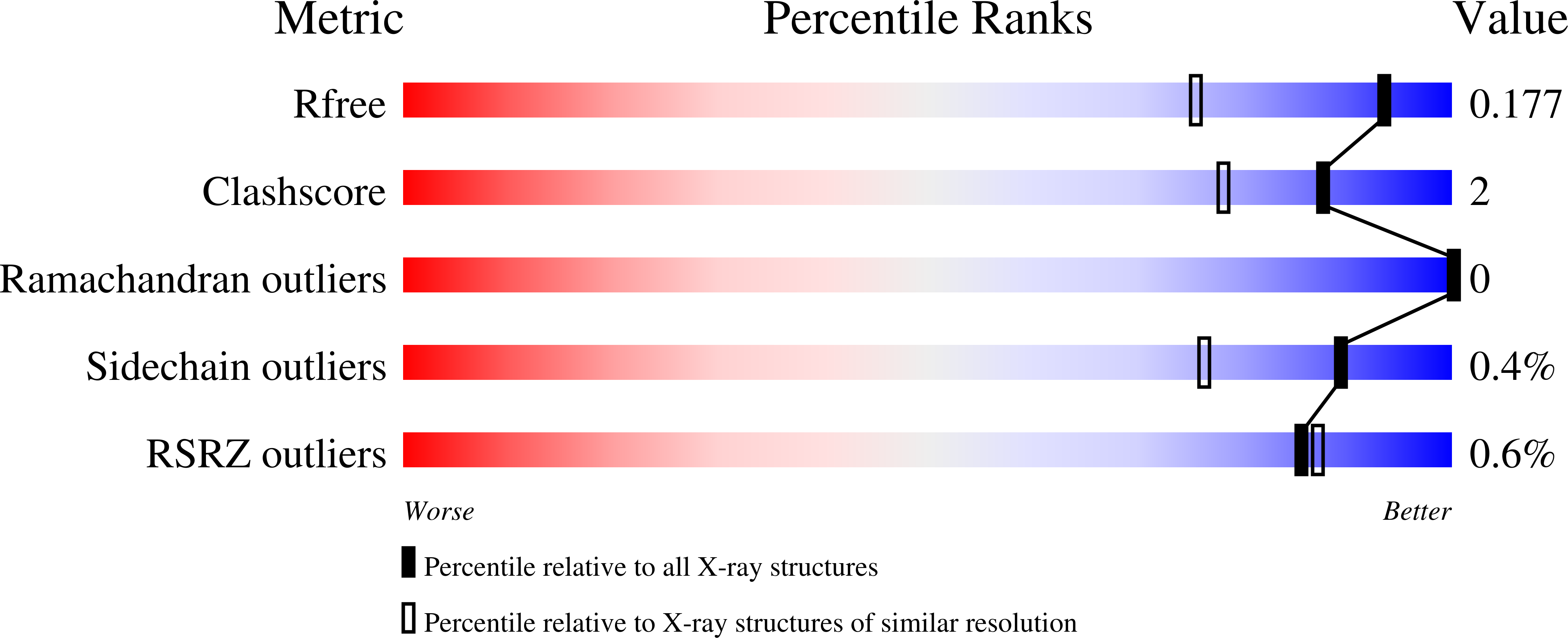
1.42 Å
R-Value Free:
0.17
R-Value Work:
0.15
R-Value Observed:
0.15
Space Group:
P 21 21 21
Macromolecular Entities
Structures with similar UniProt ID
Protein Blast
Polymer Type:polypeptide(L)
Molecule:cAMP-dependent protein kinase catalytic subunit alpha
Gene (Uniprot):PRKACA
Chain IDs:A
Chain Length:353
Number of Molecules:1
Biological Source:Cricetulus griseus
Modified Residue
Compound ID Chain ID Parent Comp ID Details 2D Image
SEP A SER modified residue
TPO A THR modified residue
Primary Citation
Natural Product-like Fragments Unlock Novel Chemotypes for a Kinase Target─Exploring Options beyond the Flatland.
J.Chem.Inf.Model. ? ? ? (2025)
PMID: 41430555 DOI: 10.1021/acs.jcim.5c01952

Abstact

In this study, we utilized a high-performance soaking system of protein kinase A (PKA) to perform a crystallographic screening of a natural product-like fragment library. We resolved 36 fragment-bound structures, corresponding to a hit rate of 41%. Nine fragments bound within the ATP site, nine peripherally, and 18 interacted with both the ATP and peripheral sites. One fragment binds to the same site as the approved allosteric kinase inhibitor asciminib, while another induces an unexpected conformational change. Systematic database mining revealed that both the fragments and their natural product parents have not been previously associated with PKA or kinase activity. A scaffold/chemotype analysis further underscored their novelty. Cheminformatics analyses confirmed that these fragments occupy a distinct chemical space, enriched in saturation, spatial complexity and molecular three-dimensional character compared to kinase binders from reference data sets. These properties have previously been linked to increased selectivity, reduced CYP450 inhibition, and higher overall clinical success rates.

Legend

Protein

Chemical

Disease

Primary Citation of related structures
Feedback Form
Name
Email
Institute
Feedback