Planned Maintenance: Some services may turn out to be unavailable from 15th January, 2026 to 16th January, 2026. We apologize for the inconvenience!

9RCK image
Deposition Date 2025-05-29
Release Date 2025-11-19
Last Version Date 2026-01-14
Entry Detail
PDB ID:
9RCK
Keywords:
Title:
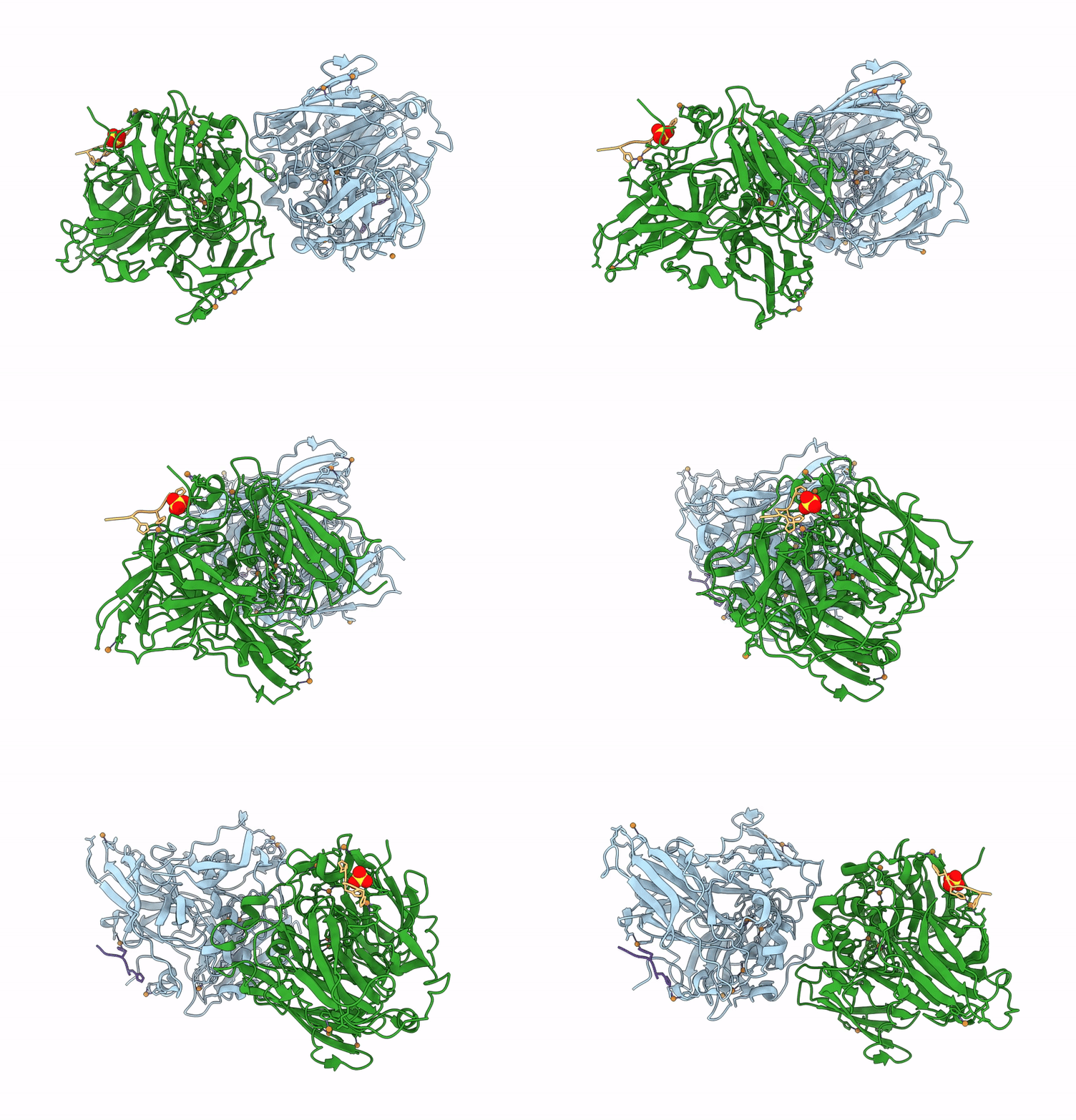
Laccase (multicopper oxidase) from Pediococcus pentosaceus 4618 mutant M455A-M456A soaked with Copper 2 minutes
Biological Source:
Source Organism(s):
Expression System(s):
Method Details:
Experimental Method:
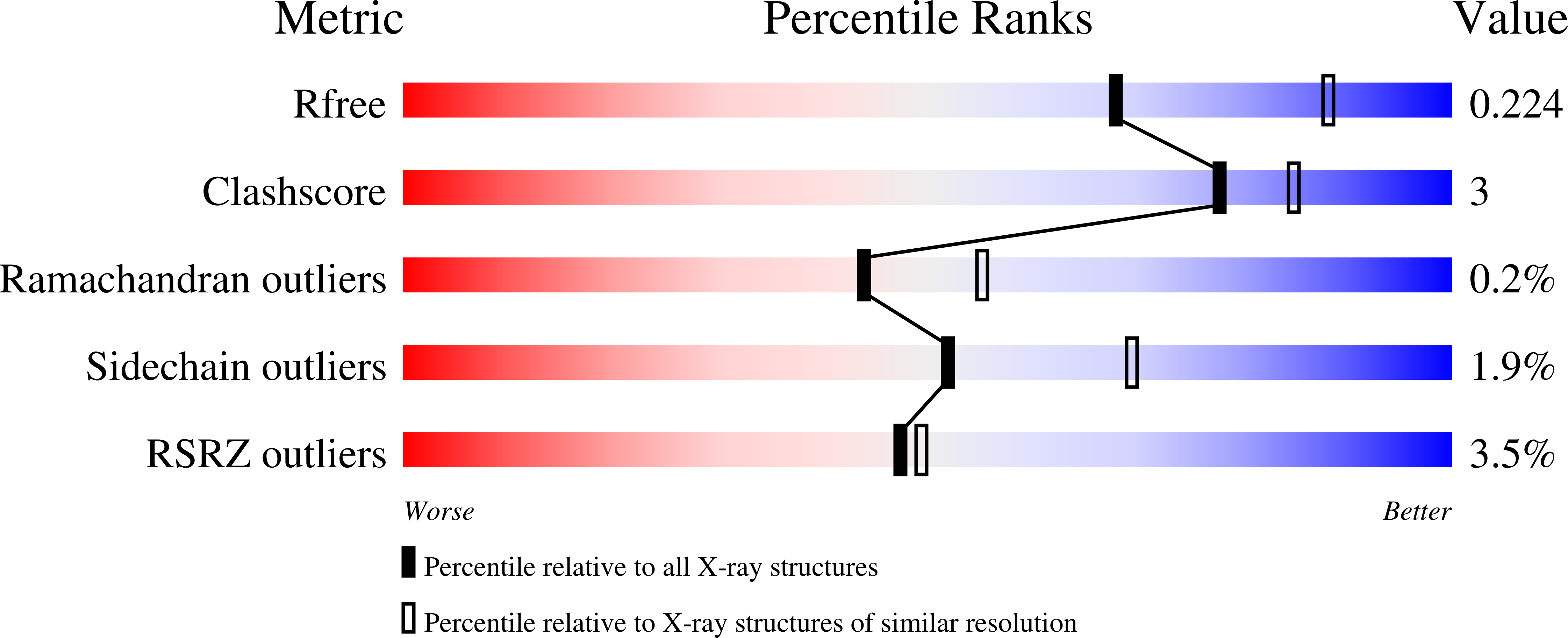
Resolution:
2.30 Å
R-Value Free:
0.21
R-Value Work:
0.18
R-Value Observed:
0.18
Space Group:
P 32 2 1
Macromolecular Entities
Structures with similar UniProt ID
Protein Blast
Polymer Type:polypeptide(L)
Molecule:Multicopper oxidase domain-containing protein
Gene (Uniprot):ITQ90_10235
Chain IDs:A (auth: C), B (auth: A), C (auth: B), D (auth: E)
Chain Length:532
Number of Molecules:4
Biological Source:Pediococcus pentosaceus 4618
Primary Citation
Laccases from lactic acid bacteria show cuprous oxidase activity and capture Cu(II) and Ag(I) ions.
Protein Sci. 35 e70385 e70385 (2026)
PMID: 41432273 DOI: 10.1002/pro.70385

Abstact

Several laccases derived from lactic acid bacteria (LAB) display specific structural features, such as two methionine residues at the entrance of the T1Cu center, and an extended C-terminal end enriched in methionine and histidine. To investigate their functional roles, we engineered mutant variants of the laccase Pp4816 from Pediococcus pentosaceus and analyzed them using both functional and structural approaches. We identified a cuprous oxidase activity that is essential for the oxidation of 2,6-dimethoxyphenol (2,6-DMP) and other substrates, but dispensable for ABTS. The two Met residues at the entrance of the T1Cu center are crucial for this activity while the C-terminus has a minor impact and shows conformational flexibility. Through anomalous diffraction studies, we located Cu(II) bound at the entrance of the T1Cu center and additional surface sites, and demonstrated that Ag(I) acts as an inhibitor of the cuprous oxidase activity, which binds to overlapping positions, including the C-terminus. This cuprous oxidase activity was found to be conserved in other laccases from LAB, suggesting that these enzymes function as copper and silver chelators with potential biotechnological applications, such as environmental copper detoxification.

Legend

Protein

Chemical

Disease

Primary Citation of related structures
Feedback Form
Name
Email
Institute
Feedback